
Get trending papers in your email inbox once a day!
Get trending papers in your email inbox!
Subscribe
AVE Speech Dataset: A Comprehensive Benchmark for Multi-Modal Speech Recognition Integrating Audio, Visual, and Electromyographic Signals
The global aging population faces considerable challenges, particularly in communication, due to the prevalence of hearing and speech impairments. To address these, we introduce the AVE speech dataset, a comprehensive multi-modal benchmark for speech recognition tasks. The dataset includes a 100-sentence Mandarin Chinese corpus with audio signals, lip-region video recordings, and six-channel electromyography (EMG) data, collected from 100 participants. Each subject read the entire corpus ten times, with each sentence averaging approximately two seconds in duration, resulting in over 55 hours of multi-modal speech data per modality. Experiments demonstrate that combining these modalities significantly improves recognition performance, particularly in cross-subject and high-noise environments. To our knowledge, this is the first publicly available sentence-level dataset integrating these three modalities for large-scale Mandarin speech recognition. We expect this dataset to drive advancements in both acoustic and non-acoustic speech recognition research, enhancing cross-modal learning and human-machine interaction.
Music2Latent2: Audio Compression with Summary Embeddings and Autoregressive Decoding
Efficiently compressing high-dimensional audio signals into a compact and informative latent space is crucial for various tasks, including generative modeling and music information retrieval (MIR). Existing audio autoencoders, however, often struggle to achieve high compression ratios while preserving audio fidelity and facilitating efficient downstream applications. We introduce Music2Latent2, a novel audio autoencoder that addresses these limitations by leveraging consistency models and a novel approach to representation learning based on unordered latent embeddings, which we call summary embeddings. Unlike conventional methods that encode local audio features into ordered sequences, Music2Latent2 compresses audio signals into sets of summary embeddings, where each embedding can capture distinct global features of the input sample. This enables to achieve higher reconstruction quality at the same compression ratio. To handle arbitrary audio lengths, Music2Latent2 employs an autoregressive consistency model trained on two consecutive audio chunks with causal masking, ensuring coherent reconstruction across segment boundaries. Additionally, we propose a novel two-step decoding procedure that leverages the denoising capabilities of consistency models to further refine the generated audio at no additional cost. Our experiments demonstrate that Music2Latent2 outperforms existing continuous audio autoencoders regarding audio quality and performance on downstream tasks. Music2Latent2 paves the way for new possibilities in audio compression.
Joint Audio and Speech Understanding
Humans are surrounded by audio signals that include both speech and non-speech sounds. The recognition and understanding of speech and non-speech audio events, along with a profound comprehension of the relationship between them, constitute fundamental cognitive capabilities. For the first time, we build a machine learning model, called LTU-AS, that has a conceptually similar universal audio perception and advanced reasoning ability. Specifically, by integrating Whisper as a perception module and LLaMA as a reasoning module, LTU-AS can simultaneously recognize and jointly understand spoken text, speech paralinguistics, and non-speech audio events - almost everything perceivable from audio signals.

ODAQ: Open Dataset of Audio Quality
Research into the prediction and analysis of perceived audio quality is hampered by the scarcity of openly available datasets of audio signals accompanied by corresponding subjective quality scores. To address this problem, we present the Open Dataset of Audio Quality (ODAQ), a new dataset containing the results of a MUSHRA listening test conducted with expert listeners from 2 international laboratories. ODAQ contains 240 audio samples and corresponding quality scores. Each audio sample is rated by 26 listeners. The audio samples are stereo audio signals sampled at 44.1 or 48 kHz and are processed by a total of 6 method classes, each operating at different quality levels. The processing method classes are designed to generate quality degradations possibly encountered during audio coding and source separation, and the quality levels for each method class span the entire quality range. The diversity of the processing methods, the large span of quality levels, the high sampling frequency, and the pool of international listeners make ODAQ particularly suited for further research into subjective and objective audio quality. The dataset is released with permissive licenses, and the software used to conduct the listening test is also made publicly available.
Audio Time-Scale Modification with Temporal Compressing Networks
We propose a novel approach for time-scale modification of audio signals. Unlike traditional methods that rely on the framing technique or the short-time Fourier transform to preserve the frequency during temporal stretching, our neural network model encodes the raw audio into a high-level latent representation, dubbed Neuralgram, where each vector represents 1024 audio sample points. Due to a sufficient compression ratio, we are able to apply arbitrary spatial interpolation of the Neuralgram to perform temporal stretching. Finally, a learned neural decoder synthesizes the time-scaled audio samples based on the stretched Neuralgram representation. Both the encoder and decoder are trained with latent regression losses and adversarial losses in order to obtain high-fidelity audio samples. Despite its simplicity, our method has comparable performance compared to the existing baselines and opens a new possibility in research into modern time-scale modification. Audio samples can be found at https://tsmnet-mmasia23.github.io
Loopy: Taming Audio-Driven Portrait Avatar with Long-Term Motion Dependency
With the introduction of diffusion-based video generation techniques, audio-conditioned human video generation has recently achieved significant breakthroughs in both the naturalness of motion and the synthesis of portrait details. Due to the limited control of audio signals in driving human motion, existing methods often add auxiliary spatial signals to stabilize movements, which may compromise the naturalness and freedom of motion. In this paper, we propose an end-to-end audio-only conditioned video diffusion model named Loopy. Specifically, we designed an inter- and intra-clip temporal module and an audio-to-latents module, enabling the model to leverage long-term motion information from the data to learn natural motion patterns and improving audio-portrait movement correlation. This method removes the need for manually specified spatial motion templates used in existing methods to constrain motion during inference. Extensive experiments show that Loopy outperforms recent audio-driven portrait diffusion models, delivering more lifelike and high-quality results across various scenarios.


AudioLDM: Text-to-Audio Generation with Latent Diffusion Models
Text-to-audio (TTA) system has recently gained attention for its ability to synthesize general audio based on text descriptions. However, previous studies in TTA have limited generation quality with high computational costs. In this study, we propose AudioLDM, a TTA system that is built on a latent space to learn the continuous audio representations from contrastive language-audio pretraining (CLAP) latents. The pretrained CLAP models enable us to train LDMs with audio embedding while providing text embedding as a condition during sampling. By learning the latent representations of audio signals and their compositions without modeling the cross-modal relationship, AudioLDM is advantageous in both generation quality and computational efficiency. Trained on AudioCaps with a single GPU, AudioLDM achieves state-of-the-art TTA performance measured by both objective and subjective metrics (e.g., frechet distance). Moreover, AudioLDM is the first TTA system that enables various text-guided audio manipulations (e.g., style transfer) in a zero-shot fashion. Our implementation and demos are available at https://audioldm.github.io.

SNAC: Multi-Scale Neural Audio Codec
Neural audio codecs have recently gained popularity because they can represent audio signals with high fidelity at very low bitrates, making it feasible to use language modeling approaches for audio generation and understanding. Residual Vector Quantization (RVQ) has become the standard technique for neural audio compression using a cascade of VQ codebooks. This paper proposes the Multi-Scale Neural Audio Codec, a simple extension of RVQ where the quantizers can operate at different temporal resolutions. By applying a hierarchy of quantizers at variable frame rates, the codec adapts to the audio structure across multiple timescales. This leads to more efficient compression, as demonstrated by extensive objective and subjective evaluations. The code and model weights are open-sourced at https://github.com/hubertsiuzdak/snac.


Neural Audio Fingerprint for High-specific Audio Retrieval based on Contrastive Learning
Most of existing audio fingerprinting systems have limitations to be used for high-specific audio retrieval at scale. In this work, we generate a low-dimensional representation from a short unit segment of audio, and couple this fingerprint with a fast maximum inner-product search. To this end, we present a contrastive learning framework that derives from the segment-level search objective. Each update in training uses a batch consisting of a set of pseudo labels, randomly selected original samples, and their augmented replicas. These replicas can simulate the degrading effects on original audio signals by applying small time offsets and various types of distortions, such as background noise and room/microphone impulse responses. In the segment-level search task, where the conventional audio fingerprinting systems used to fail, our system using 10x smaller storage has shown promising results. Our code and dataset are available at https://mimbres.github.io/neural-audio-fp/.

Amphion: An Open-Source Audio, Music and Speech Generation Toolkit
Amphion is a toolkit for Audio, Music, and Speech Generation. Its purpose is to support reproducible research and help junior researchers and engineers get started in the field of audio, music, and speech generation research and development. Amphion offers a unique feature: visualizations of classic models or architectures. We believe that these visualizations are beneficial for junior researchers and engineers who wish to gain a better understanding of the model. The North-Star objective of Amphion is to offer a platform for studying the conversion of any inputs into general audio. Amphion is designed to support individual generation tasks. In addition to the specific generation tasks, Amphion also includes several vocoders and evaluation metrics. A vocoder is an important module for producing high-quality audio signals, while evaluation metrics are critical for ensuring consistent metrics in generation tasks. In this paper, we provide a high-level overview of Amphion.





MirrorMe: Towards Realtime and High Fidelity Audio-Driven Halfbody Animation
Audio-driven portrait animation, which synthesizes realistic videos from reference images using audio signals, faces significant challenges in real-time generation of high-fidelity, temporally coherent animations. While recent diffusion-based methods improve generation quality by integrating audio into denoising processes, their reliance on frame-by-frame UNet architectures introduces prohibitive latency and struggles with temporal consistency. This paper introduces MirrorMe, a real-time, controllable framework built on the LTX video model, a diffusion transformer that compresses video spatially and temporally for efficient latent space denoising. To address LTX's trade-offs between compression and semantic fidelity, we propose three innovations: 1. A reference identity injection mechanism via VAE-encoded image concatenation and self-attention, ensuring identity consistency; 2. A causal audio encoder and adapter tailored to LTX's temporal structure, enabling precise audio-expression synchronization; and 3. A progressive training strategy combining close-up facial training, half-body synthesis with facial masking, and hand pose integration for enhanced gesture control. Extensive experiments on the EMTD Benchmark demonstrate MirrorMe's state-of-the-art performance in fidelity, lip-sync accuracy, and temporal stability.
M2D-CLAP: Masked Modeling Duo Meets CLAP for Learning General-purpose Audio-Language Representation
Contrastive language-audio pre-training (CLAP) enables zero-shot (ZS) inference of audio and exhibits promising performance in several classification tasks. However, conventional audio representations are still crucial for many tasks where ZS is not applicable (e.g., regression problems). Here, we explore a new representation, a general-purpose audio-language representation, that performs well in both ZS and transfer learning. To do so, we propose a new method, M2D-CLAP, which combines self-supervised learning Masked Modeling Duo (M2D) and CLAP. M2D learns an effective representation to model audio signals, and CLAP aligns the representation with text embedding. As a result, M2D-CLAP learns a versatile representation that allows for both ZS and transfer learning. Experiments show that M2D-CLAP performs well on linear evaluation, fine-tuning, and ZS classification with a GTZAN state-of-the-art of 75.17%, thus achieving a general-purpose audio-language representation.
OpenAVS: Training-Free Open-Vocabulary Audio Visual Segmentation with Foundational Models
Audio-visual segmentation aims to separate sounding objects from videos by predicting pixel-level masks based on audio signals. Existing methods primarily concentrate on closed-set scenarios and direct audio-visual alignment and fusion, which limits their capability to generalize to new, unseen situations. In this paper, we propose OpenAVS, a novel training-free language-based approach that, for the first time, effectively aligns audio and visual modalities using text as a proxy for open-vocabulary Audio-Visual Segmentation (AVS). Equipped with multimedia foundation models, OpenAVS directly infers masks through 1) audio-to-text prompt generation, 2) LLM-guided prompt translation, and 3) text-to-visual sounding object segmentation. The objective of OpenAVS is to establish a simple yet flexible architecture that relies on the most appropriate foundation models by fully leveraging their capabilities to enable more effective knowledge transfer to the downstream AVS task. Moreover, we present a model-agnostic framework OpenAVS-ST that enables the integration of OpenAVS with any advanced supervised AVS model via pseudo-label based self-training. This approach enhances performance by effectively utilizing large-scale unlabeled data when available. Comprehensive experiments on three benchmark datasets demonstrate the superior performance of OpenAVS. It surpasses existing unsupervised, zero-shot, and few-shot AVS methods by a significant margin, achieving absolute performance gains of approximately 9.4% and 10.9% in mIoU and F-score, respectively, in challenging scenarios.
SLAM-AAC: Enhancing Audio Captioning with Paraphrasing Augmentation and CLAP-Refine through LLMs
Automated Audio Captioning (AAC) aims to generate natural textual descriptions for input audio signals. Recent progress in audio pre-trained models and large language models (LLMs) has significantly enhanced audio understanding and textual reasoning capabilities, making improvements in AAC possible. In this paper, we propose SLAM-AAC to further enhance AAC with paraphrasing augmentation and CLAP-Refine through LLMs. Our approach uses the self-supervised EAT model to extract fine-grained audio representations, which are then aligned with textual embeddings via lightweight linear layers. The caption generation LLM is efficiently fine-tuned using the LoRA adapter. Drawing inspiration from the back-translation method in machine translation, we implement paraphrasing augmentation to expand the Clotho dataset during pre-training. This strategy helps alleviate the limitation of scarce audio-text pairs and generates more diverse captions from a small set of audio clips. During inference, we introduce the plug-and-play CLAP-Refine strategy to fully exploit multiple decoding outputs, akin to the n-best rescoring strategy in speech recognition. Using the CLAP model for audio-text similarity calculation, we could select the textual descriptions generated by multiple searching beams that best match the input audio. Experimental results show that SLAM-AAC achieves state-of-the-art performance on Clotho V2 and AudioCaps, surpassing previous mainstream models.


In-the-wild Audio Spatialization with Flexible Text-guided Localization
To enhance immersive experiences, binaural audio offers spatial awareness of sounding objects in AR, VR, and embodied AI applications. While existing audio spatialization methods can generally map any available monaural audio to binaural audio signals, they often lack the flexible and interactive control needed in complex multi-object user-interactive environments. To address this, we propose a Text-guided Audio Spatialization (TAS) framework that utilizes flexible text prompts and evaluates our model from unified generation and comprehension perspectives. Due to the limited availability of premium and large-scale stereo data, we construct the SpatialTAS dataset, which encompasses 376,000 simulated binaural audio samples to facilitate the training of our model. Our model learns binaural differences guided by 3D spatial location and relative position prompts, augmented by flipped-channel audio. It outperforms existing methods on both simulated and real-recorded datasets, demonstrating superior generalization and accuracy. Besides, we develop an assessment model based on Llama-3.1-8B, which evaluates the spatial semantic coherence between our generated binaural audio and text prompts through a spatial reasoning task. Results demonstrate that text prompts provide flexible and interactive control to generate binaural audio with excellent quality and semantic consistency in spatial locations. Dataset is available at https://github.com/Alice01010101/TASU
Progressive Confident Masking Attention Network for Audio-Visual Segmentation
Audio and visual signals typically occur simultaneously, and humans possess an innate ability to correlate and synchronize information from these two modalities. Recently, a challenging problem known as Audio-Visual Segmentation (AVS) has emerged, intending to produce segmentation maps for sounding objects within a scene. However, the methods proposed so far have not sufficiently integrated audio and visual information, and the computational costs have been extremely high. Additionally, the outputs of different stages have not been fully utilized. To facilitate this research, we introduce a novel Progressive Confident Masking Attention Network (PMCANet). It leverages attention mechanisms to uncover the intrinsic correlations between audio signals and visual frames. Furthermore, we design an efficient and effective cross-attention module to enhance semantic perception by selecting query tokens. This selection is determined through confidence-driven units based on the network's multi-stage predictive outputs. Experiments demonstrate that our network outperforms other AVS methods while requiring less computational resources. The code is available at: https://github.com/PrettyPlate/PCMANet.

MACS: Multi-source Audio-to-image Generation with Contextual Significance and Semantic Alignment
Propelled by the breakthrough in deep generative models, audio-to-image generation has emerged as a pivotal cross-model task that converts complex auditory signals into rich visual representations. However, previous works only focus on single-source audio inputs for image generation, ignoring the multi-source characteristic in natural auditory scenes, thus limiting the performance in generating comprehensive visual content. To bridge this gap, a method called MACS is proposed to conduct multi-source audio-to-image generation. This is the first work that explicitly separates multi-source audio to capture the rich audio components before image generation. MACS is a two-stage method. In the first stage, multi-source audio inputs are separated by a weakly supervised method, where the audio and text labels are semantically aligned by casting into a common space using the large pre-trained CLAP model. We introduce a ranking loss to consider the contextual significance of the separated audio signals. In the second stage, efficient image generation is achieved by mapping the separated audio signals to the generation condition using only a trainable adapter and a MLP layer. We preprocess the LLP dataset as the first full multi-source audio-to-image generation benchmark. The experiments are conducted on multi-source, mixed-source, and single-source audio-to-image generation tasks. The proposed MACS outperforms the current state-of-the-art methods in 17 of the 21 evaluation indexes on all tasks and delivers superior visual quality. The code will be publicly available.
Self-Supervised Video Forensics by Audio-Visual Anomaly Detection
Manipulated videos often contain subtle inconsistencies between their visual and audio signals. We propose a video forensics method, based on anomaly detection, that can identify these inconsistencies, and that can be trained solely using real, unlabeled data. We train an autoregressive model to generate sequences of audio-visual features, using feature sets that capture the temporal synchronization between video frames and sound. At test time, we then flag videos that the model assigns low probability. Despite being trained entirely on real videos, our model obtains strong performance on the task of detecting manipulated speech videos. Project site: https://cfeng16.github.io/audio-visual-forensics


TeleAntiFraud-28k: A Audio-Text Slow-Thinking Dataset for Telecom Fraud Detection
The detection of telecom fraud faces significant challenges due to the lack of high-quality multimodal training data that integrates audio signals with reasoning-oriented textual analysis. To address this gap, we present TeleAntiFraud-28k, the first open-source audio-text slow-thinking dataset specifically designed for automated telecom fraud analysis. Our dataset is constructed through three strategies: (1) Privacy-preserved text-truth sample generation using automatically speech recognition (ASR)-transcribed call recordings (with anonymized original audio), ensuring real-world consistency through text-to-speech (TTS) model regeneration; (2) Semantic enhancement via large language model (LLM)-based self-instruction sampling on authentic ASR outputs to expand scenario coverage; (3) Multi-agent adversarial synthesis that simulates emerging fraud tactics through predefined communication scenarios and fraud typologies. The generated dataset contains 28,511 rigorously processed speech-text pairs, complete with detailed annotations for fraud reasoning. The dataset is divided into three tasks: scenario classification, fraud detection, fraud type classification. Furthermore, we construct TeleAntiFraud-Bench, a standardized evaluation benchmark comprising proportionally sampled instances from the dataset, to facilitate systematic testing of model performance on telecom fraud detection tasks. We also contribute a production-optimized supervised fine-tuning (SFT) model trained on hybrid real/synthetic data, while open-sourcing the data processing framework to enable community-driven dataset expansion. This work establishes a foundational framework for multimodal anti-fraud research while addressing critical challenges in data privacy and scenario diversity. The project will be released at https://github.com/JimmyMa99/TeleAntiFraud.



SilentCipher: Deep Audio Watermarking
In the realm of audio watermarking, it is challenging to simultaneously encode imperceptible messages while enhancing the message capacity and robustness. Although recent advancements in deep learning-based methods bolster the message capacity and robustness over traditional methods, the encoded messages introduce audible artefacts that restricts their usage in professional settings. In this study, we introduce three key innovations. Firstly, our work is the first deep learning-based model to integrate psychoacoustic model based thresholding to achieve imperceptible watermarks. Secondly, we introduce psuedo-differentiable compression layers, enhancing the robustness of our watermarking algorithm. Lastly, we introduce a method to eliminate the need for perceptual losses, enabling us to achieve SOTA in both robustness as well as imperceptible watermarking. Our contributions lead us to SilentCipher, a model enabling users to encode messages within audio signals sampled at 44.1kHz.

AIR-Bench: Benchmarking Large Audio-Language Models via Generative Comprehension
Recently, instruction-following audio-language models have received broad attention for human-audio interaction. However, the absence of benchmarks capable of evaluating audio-centric interaction capabilities has impeded advancements in this field. Previous models primarily focus on assessing different fundamental tasks, such as Automatic Speech Recognition (ASR), and lack an assessment of the open-ended generative capabilities centered around audio. Thus, it is challenging to track the progression in the Large Audio-Language Models (LALMs) domain and to provide guidance for future improvement. In this paper, we introduce AIR-Bench (Audio InstRuction Benchmark), the first benchmark designed to evaluate the ability of LALMs to understand various types of audio signals (including human speech, natural sounds, and music), and furthermore, to interact with humans in the textual format. AIR-Bench encompasses two dimensions: foundation and chat benchmarks. The former consists of 19 tasks with approximately 19k single-choice questions, intending to inspect the basic single-task ability of LALMs. The latter one contains 2k instances of open-ended question-and-answer data, directly assessing the comprehension of the model on complex audio and its capacity to follow instructions. Both benchmarks require the model to generate hypotheses directly. We design a unified framework that leverages advanced language models, such as GPT-4, to evaluate the scores of generated hypotheses given the meta-information of the audio. Experimental results demonstrate a high level of consistency between GPT-4-based evaluation and human evaluation. By revealing the limitations of existing LALMs through evaluation results, AIR-Bench can provide insights into the direction of future research.


Attention is All You Need? Good Embeddings with Statistics are enough:Large Scale Audio Understanding without Transformers/ Convolutions/ BERTs/ Mixers/ Attention/ RNNs or ....
This paper presents a way of doing large scale audio understanding without traditional state of the art neural architectures. Ever since the introduction of deep learning for understanding audio signals in the past decade, convolutional architectures have been able to achieve state of the art results surpassing traditional hand-crafted features. In the recent past, there has been a similar shift away from traditional convolutional and recurrent neural networks towards purely end-to-end Transformer architectures. We, in this work, explore an approach, based on Bag-of-Words model. Our approach does not have any convolutions, recurrence, attention, transformers or other approaches such as BERT. We utilize micro and macro level clustered vanilla embeddings, and use a MLP head for classification. We only use feed-forward encoder-decoder models to get the bottlenecks of spectral envelops, spectral patches and slices as well as multi-resolution spectra. A classification head (a feed-forward layer), similar to the approach in SimCLR is trained on a learned representation. Using simple codes learned on latent representations, we show how we surpass traditional convolutional neural network architectures, and come strikingly close to outperforming powerful Transformer architectures. This work hopefully would pave way for exciting advancements in the field of representation learning without massive, end-to-end neural architectures.

FaceTalk: Audio-Driven Motion Diffusion for Neural Parametric Head Models
We introduce FaceTalk, a novel generative approach designed for synthesizing high-fidelity 3D motion sequences of talking human heads from input audio signal. To capture the expressive, detailed nature of human heads, including hair, ears, and finer-scale eye movements, we propose to couple speech signal with the latent space of neural parametric head models to create high-fidelity, temporally coherent motion sequences. We propose a new latent diffusion model for this task, operating in the expression space of neural parametric head models, to synthesize audio-driven realistic head sequences. In the absence of a dataset with corresponding NPHM expressions to audio, we optimize for these correspondences to produce a dataset of temporally-optimized NPHM expressions fit to audio-video recordings of people talking. To the best of our knowledge, this is the first work to propose a generative approach for realistic and high-quality motion synthesis of volumetric human heads, representing a significant advancement in the field of audio-driven 3D animation. Notably, our approach stands out in its ability to generate plausible motion sequences that can produce high-fidelity head animation coupled with the NPHM shape space. Our experimental results substantiate the effectiveness of FaceTalk, consistently achieving superior and visually natural motion, encompassing diverse facial expressions and styles, outperforming existing methods by 75% in perceptual user study evaluation.
MOSPA: Human Motion Generation Driven by Spatial Audio
Enabling virtual humans to dynamically and realistically respond to diverse auditory stimuli remains a key challenge in character animation, demanding the integration of perceptual modeling and motion synthesis. Despite its significance, this task remains largely unexplored. Most previous works have primarily focused on mapping modalities like speech, audio, and music to generate human motion. As of yet, these models typically overlook the impact of spatial features encoded in spatial audio signals on human motion. To bridge this gap and enable high-quality modeling of human movements in response to spatial audio, we introduce the first comprehensive Spatial Audio-Driven Human Motion (SAM) dataset, which contains diverse and high-quality spatial audio and motion data. For benchmarking, we develop a simple yet effective diffusion-based generative framework for human MOtion generation driven by SPatial Audio, termed MOSPA, which faithfully captures the relationship between body motion and spatial audio through an effective fusion mechanism. Once trained, MOSPA could generate diverse realistic human motions conditioned on varying spatial audio inputs. We perform a thorough investigation of the proposed dataset and conduct extensive experiments for benchmarking, where our method achieves state-of-the-art performance on this task. Our model and dataset will be open-sourced upon acceptance. Please refer to our supplementary video for more details.


Zero-Shot Unsupervised and Text-Based Audio Editing Using DDPM Inversion
Editing signals using large pre-trained models, in a zero-shot manner, has recently seen rapid advancements in the image domain. However, this wave has yet to reach the audio domain. In this paper, we explore two zero-shot editing techniques for audio signals, which use DDPM inversion on pre-trained diffusion models. The first, adopted from the image domain, allows text-based editing. The second, is a novel approach for discovering semantically meaningful editing directions without supervision. When applied to music signals, this method exposes a range of musically interesting modifications, from controlling the participation of specific instruments to improvisations on the melody. Samples can be found on our examples page in https://hilamanor.github.io/AudioEditing/ and code can be found in https://github.com/hilamanor/AudioEditing/ .


EMO2: End-Effector Guided Audio-Driven Avatar Video Generation
In this paper, we propose a novel audio-driven talking head method capable of simultaneously generating highly expressive facial expressions and hand gestures. Unlike existing methods that focus on generating full-body or half-body poses, we investigate the challenges of co-speech gesture generation and identify the weak correspondence between audio features and full-body gestures as a key limitation. To address this, we redefine the task as a two-stage process. In the first stage, we generate hand poses directly from audio input, leveraging the strong correlation between audio signals and hand movements. In the second stage, we employ a diffusion model to synthesize video frames, incorporating the hand poses generated in the first stage to produce realistic facial expressions and body movements. Our experimental results demonstrate that the proposed method outperforms state-of-the-art approaches, such as CyberHost and Vlogger, in terms of both visual quality and synchronization accuracy. This work provides a new perspective on audio-driven gesture generation and a robust framework for creating expressive and natural talking head animations.


Listen to Look into the Future: Audio-Visual Egocentric Gaze Anticipation
Egocentric gaze anticipation serves as a key building block for the emerging capability of Augmented Reality. Notably, gaze behavior is driven by both visual cues and audio signals during daily activities. Motivated by this observation, we introduce the first model that leverages both the video and audio modalities for egocentric gaze anticipation. Specifically, we propose a Contrastive Spatial-Temporal Separable (CSTS) fusion approach that adopts two modules to separately capture audio-visual correlations in spatial and temporal dimensions, and applies a contrastive loss on the re-weighted audio-visual features from fusion modules for representation learning. We conduct extensive ablation studies and thorough analysis using two egocentric video datasets: Ego4D and Aria, to validate our model design. We demonstrate the audio improves the performance by +2.5% and +2.4% on the two datasets. Our model also outperforms the prior state-of-the-art methods by at least +1.9% and +1.6%. Moreover, we provide visualizations to show the gaze anticipation results and provide additional insights into audio-visual representation learning. The code and data split are available on our website (https://bolinlai.github.io/CSTS-EgoGazeAnticipation/).



Leveraging Neural Representations for Audio Manipulation
We investigate applying audio manipulations using pretrained neural network-based autoencoders as an alternative to traditional signal processing methods, since the former may provide greater semantic or perceptual organization. To establish the potential of this approach, we first establish if representations from these models encode information about manipulations. We carry out experiments and produce visualizations using representations from two different pretrained autoencoders. Our findings indicate that, while some information about audio manipulations is encoded, this information is both limited and encoded in a non-trivial way. This is supported by our attempts to visualize these representations, which demonstrated that trajectories of representations for common manipulations are typically nonlinear and content dependent, even for linear signal manipulations. As a result, it is not yet clear how these pretrained autoencoders can be used to manipulate audio signals, however, our results indicate this may be due to the lack of disentanglement with respect to common audio manipulations.

WaveFake: A Data Set to Facilitate Audio Deepfake Detection
Deep generative modeling has the potential to cause significant harm to society. Recognizing this threat, a magnitude of research into detecting so-called "Deepfakes" has emerged. This research most often focuses on the image domain, while studies exploring generated audio signals have, so-far, been neglected. In this paper we make three key contributions to narrow this gap. First, we provide researchers with an introduction to common signal processing techniques used for analyzing audio signals. Second, we present a novel data set, for which we collected nine sample sets from five different network architectures, spanning two languages. Finally, we supply practitioners with two baseline models, adopted from the signal processing community, to facilitate further research in this area.
LEAF: A Learnable Frontend for Audio Classification
Mel-filterbanks are fixed, engineered audio features which emulate human perception and have been used through the history of audio understanding up to today. However, their undeniable qualities are counterbalanced by the fundamental limitations of handmade representations. In this work we show that we can train a single learnable frontend that outperforms mel-filterbanks on a wide range of audio signals, including speech, music, audio events and animal sounds, providing a general-purpose learned frontend for audio classification. To do so, we introduce a new principled, lightweight, fully learnable architecture that can be used as a drop-in replacement of mel-filterbanks. Our system learns all operations of audio features extraction, from filtering to pooling, compression and normalization, and can be integrated into any neural network at a negligible parameter cost. We perform multi-task training on eight diverse audio classification tasks, and show consistent improvements of our model over mel-filterbanks and previous learnable alternatives. Moreover, our system outperforms the current state-of-the-art learnable frontend on Audioset, with orders of magnitude fewer parameters.
PoseTalk: Text-and-Audio-based Pose Control and Motion Refinement for One-Shot Talking Head Generation
While previous audio-driven talking head generation (THG) methods generate head poses from driving audio, the generated poses or lips cannot match the audio well or are not editable. In this study, we propose PoseTalk, a THG system that can freely generate lip-synchronized talking head videos with free head poses conditioned on text prompts and audio. The core insight of our method is using head pose to connect visual, linguistic, and audio signals. First, we propose to generate poses from both audio and text prompts, where the audio offers short-term variations and rhythm correspondence of the head movements and the text prompts describe the long-term semantics of head motions. To achieve this goal, we devise a Pose Latent Diffusion (PLD) model to generate motion latent from text prompts and audio cues in a pose latent space. Second, we observe a loss-imbalance problem: the loss for the lip region contributes less than 4\% of the total reconstruction loss caused by both pose and lip, making optimization lean towards head movements rather than lip shapes. To address this issue, we propose a refinement-based learning strategy to synthesize natural talking videos using two cascaded networks, i.e., CoarseNet, and RefineNet. The CoarseNet estimates coarse motions to produce animated images in novel poses and the RefineNet focuses on learning finer lip motions by progressively estimating lip motions from low-to-high resolutions, yielding improved lip-synchronization performance. Experiments demonstrate our pose prediction strategy achieves better pose diversity and realness compared to text-only or audio-only, and our video generator model outperforms state-of-the-art methods in synthesizing talking videos with natural head motions. Project: https://junleen.github.io/projects/posetalk.
CAT: Causal Audio Transformer for Audio Classification
The attention-based Transformers have been increasingly applied to audio classification because of their global receptive field and ability to handle long-term dependency. However, the existing frameworks which are mainly extended from the Vision Transformers are not perfectly compatible with audio signals. In this paper, we introduce a Causal Audio Transformer (CAT) consisting of a Multi-Resolution Multi-Feature (MRMF) feature extraction with an acoustic attention block for more optimized audio modeling. In addition, we propose a causal module that alleviates over-fitting, helps with knowledge transfer, and improves interpretability. CAT obtains higher or comparable state-of-the-art classification performance on ESC50, AudioSet and UrbanSound8K datasets, and can be easily generalized to other Transformer-based models.
Video-LLaMA: An Instruction-tuned Audio-Visual Language Model for Video Understanding
We present Video-LLaMA, a multi-modal framework that empowers Large Language Models (LLMs) with the capability of understanding both visual and auditory content in the video. Video-LLaMA bootstraps cross-modal training from the frozen pre-trained visual \& audio encoders and the frozen LLMs. Unlike previous vision- LLMs that focus on static image comprehensions such as MiniGPT-4~zhu2023minigpt and LLaVA~liu2023visualit, Video-LLaMA tackles two challenges in video understanding: (1) capturing the temporal changes in visual scenes, (2) integrating audio-visual signals. For the first challenge, we propose Video Q-former to extend the pre-trained image encoder to a video encoder and introduce a video-to-text generation task to learn video-language correspondence. For the second challenge, we leverage ImageBind~girdhar2023imagebind as the pre-trained audio encoder which performs exceptionally well in aligning different modalities to a common embedding space. And then introduce an Audio Q-former to learn auditory query tokens. To align the output of both visual \& audio encoder with LLM's embedding space, we train Video-LLaMA on a large-scale vision caption dataset and a hign-quantity vision-instruction-tuning dataset. We found Video-LLaMA showcases the ability to perceive and comprehend video content, generating meaningful responses that are grounded in the visual and auditory information present in the videos. This highlights the potential of Video-LLaMA as a promising prototype for audio-visual AI assistants. Our code, pre-trained model, and demo are available at https://github.com/DAMO-NLP-SG/Video-LLaMA.


KeyVID: Keyframe-Aware Video Diffusion for Audio-Synchronized Visual Animation
Generating video from various conditions, such as text, image, and audio, enables both spatial and temporal control, leading to high-quality generation results. Videos with dramatic motions often require a higher frame rate to ensure smooth motion. Currently, most audio-to-visual animation models use uniformly sampled frames from video clips. However, these uniformly sampled frames fail to capture significant key moments in dramatic motions at low frame rates and require significantly more memory when increasing the number of frames directly. In this paper, we propose KeyVID, a keyframe-aware audio-to-visual animation framework that significantly improves the generation quality for key moments in audio signals while maintaining computation efficiency. Given an image and an audio input, we first localize keyframe time steps from the audio. Then, we use a keyframe generator to generate the corresponding visual keyframes. Finally, we generate all intermediate frames using the motion interpolator. Through extensive experiments, we demonstrate that KeyVID significantly improves audio-video synchronization and video quality across multiple datasets, particularly for highly dynamic motions. The code is released in https://github.com/XingruiWang/KeyVID.

DiMoDif: Discourse Modality-information Differentiation for Audio-visual Deepfake Detection and Localization
Deepfake technology has rapidly advanced and poses significant threats to information integrity and trust in online multimedia. While significant progress has been made in detecting deepfakes, the simultaneous manipulation of audio and visual modalities, sometimes at small parts or in subtle ways, presents highly challenging detection scenarios. To address these challenges, we present DiMoDif, an audio-visual deepfake detection framework that leverages the inter-modality differences in machine perception of speech, based on the assumption that in real samples -- in contrast to deepfakes -- visual and audio signals coincide in terms of information. DiMoDif leverages features from deep networks that specialize in visual and audio speech recognition to spot frame-level cross-modal incongruities, and in that way to temporally localize the deepfake forgery. To this end, we devise a hierarchical cross-modal fusion network, integrating adaptive temporal alignment modules and a learned discrepancy mapping layer to explicitly model the subtle differences between visual and audio representations. Then, the detection model is optimized through a composite loss function accounting for frame-level detections and fake intervals localization. DiMoDif outperforms the state-of-the-art on the Deepfake Detection task by 30.5 AUC on the highly challenging AV-Deepfake1M, while it performs exceptionally on FakeAVCeleb and LAV-DF. On the Temporal Forgery Localization task, it outperforms the state-of-the-art by 47.88 [email protected] on AV-Deepfake1M, and performs on-par on LAV-DF. Code available at https://github.com/mever-team/dimodif.

NU-Wave 2: A General Neural Audio Upsampling Model for Various Sampling Rates
Conventionally, audio super-resolution models fixed the initial and the target sampling rates, which necessitate the model to be trained for each pair of sampling rates. We introduce NU-Wave 2, a diffusion model for neural audio upsampling that enables the generation of 48 kHz audio signals from inputs of various sampling rates with a single model. Based on the architecture of NU-Wave, NU-Wave 2 uses short-time Fourier convolution (STFC) to generate harmonics to resolve the main failure modes of NU-Wave, and incorporates bandwidth spectral feature transform (BSFT) to condition the bandwidths of inputs in the frequency domain. We experimentally demonstrate that NU-Wave 2 produces high-resolution audio regardless of the sampling rate of input while requiring fewer parameters than other models. The official code and the audio samples are available at https://mindslab-ai.github.io/nuwave2.
CACE-Net: Co-guidance Attention and Contrastive Enhancement for Effective Audio-Visual Event Localization
The audio-visual event localization task requires identifying concurrent visual and auditory events from unconstrained videos within a network model, locating them, and classifying their category. The efficient extraction and integration of audio and visual modal information have always been challenging in this field. In this paper, we introduce CACE-Net, which differs from most existing methods that solely use audio signals to guide visual information. We propose an audio-visual co-guidance attention mechanism that allows for adaptive bi-directional cross-modal attentional guidance between audio and visual information, thus reducing inconsistencies between modalities. Moreover, we have observed that existing methods have difficulty distinguishing between similar background and event and lack the fine-grained features for event classification. Consequently, we employ background-event contrast enhancement to increase the discrimination of fused feature and fine-tuned pre-trained model to extract more refined and discernible features from complex multimodal inputs. Specifically, we have enhanced the model's ability to discern subtle differences between event and background and improved the accuracy of event classification in our model. Experiments on the AVE dataset demonstrate that CACE-Net sets a new benchmark in the audio-visual event localization task, proving the effectiveness of our proposed methods in handling complex multimodal learning and event localization in unconstrained videos. Code is available at https://github.com/Brain-Cog-Lab/CACE-Net.

RAVE: A variational autoencoder for fast and high-quality neural audio synthesis
Deep generative models applied to audio have improved by a large margin the state-of-the-art in many speech and music related tasks. However, as raw waveform modelling remains an inherently difficult task, audio generative models are either computationally intensive, rely on low sampling rates, are complicated to control or restrict the nature of possible signals. Among those models, Variational AutoEncoders (VAE) give control over the generation by exposing latent variables, although they usually suffer from low synthesis quality. In this paper, we introduce a Realtime Audio Variational autoEncoder (RAVE) allowing both fast and high-quality audio waveform synthesis. We introduce a novel two-stage training procedure, namely representation learning and adversarial fine-tuning. We show that using a post-training analysis of the latent space allows a direct control between the reconstruction fidelity and the representation compactness. By leveraging a multi-band decomposition of the raw waveform, we show that our model is the first able to generate 48kHz audio signals, while simultaneously running 20 times faster than real-time on a standard laptop CPU. We evaluate synthesis quality using both quantitative and qualitative subjective experiments and show the superiority of our approach compared to existing models. Finally, we present applications of our model for timbre transfer and signal compression. All of our source code and audio examples are publicly available.
One-shot Talking Face Generation from Single-speaker Audio-Visual Correlation Learning
Audio-driven one-shot talking face generation methods are usually trained on video resources of various persons. However, their created videos often suffer unnatural mouth shapes and asynchronous lips because those methods struggle to learn a consistent speech style from different speakers. We observe that it would be much easier to learn a consistent speech style from a specific speaker, which leads to authentic mouth movements. Hence, we propose a novel one-shot talking face generation framework by exploring consistent correlations between audio and visual motions from a specific speaker and then transferring audio-driven motion fields to a reference image. Specifically, we develop an Audio-Visual Correlation Transformer (AVCT) that aims to infer talking motions represented by keypoint based dense motion fields from an input audio. In particular, considering audio may come from different identities in deployment, we incorporate phonemes to represent audio signals. In this manner, our AVCT can inherently generalize to audio spoken by other identities. Moreover, as face keypoints are used to represent speakers, AVCT is agnostic against appearances of the training speaker, and thus allows us to manipulate face images of different identities readily. Considering different face shapes lead to different motions, a motion field transfer module is exploited to reduce the audio-driven dense motion field gap between the training identity and the one-shot reference. Once we obtained the dense motion field of the reference image, we employ an image renderer to generate its talking face videos from an audio clip. Thanks to our learned consistent speaking style, our method generates authentic mouth shapes and vivid movements. Extensive experiments demonstrate that our synthesized videos outperform the state-of-the-art in terms of visual quality and lip-sync.
Sample-level CNN Architectures for Music Auto-tagging Using Raw Waveforms
Recent work has shown that the end-to-end approach using convolutional neural network (CNN) is effective in various types of machine learning tasks. For audio signals, the approach takes raw waveforms as input using an 1-D convolution layer. In this paper, we improve the 1-D CNN architecture for music auto-tagging by adopting building blocks from state-of-the-art image classification models, ResNets and SENets, and adding multi-level feature aggregation to it. We compare different combinations of the modules in building CNN architectures. The results show that they achieve significant improvements over previous state-of-the-art models on the MagnaTagATune dataset and comparable results on Million Song Dataset. Furthermore, we analyze and visualize our model to show how the 1-D CNN operates.
The Interspeech 2024 Challenge on Speech Processing Using Discrete Units
Representing speech and audio signals in discrete units has become a compelling alternative to traditional high-dimensional feature vectors. Numerous studies have highlighted the efficacy of discrete units in various applications such as speech compression and restoration, speech recognition, and speech generation. To foster exploration in this domain, we introduce the Interspeech 2024 Challenge, which focuses on new speech processing benchmarks using discrete units. It encompasses three pivotal tasks, namely multilingual automatic speech recognition, text-to-speech, and singing voice synthesis, and aims to assess the potential applicability of discrete units in these tasks. This paper outlines the challenge designs and baseline descriptions. We also collate baseline and selected submission systems, along with preliminary findings, offering valuable contributions to future research in this evolving field.
Learning State-Aware Visual Representations from Audible Interactions
We propose a self-supervised algorithm to learn representations from egocentric video data. Recently, significant efforts have been made to capture humans interacting with their own environments as they go about their daily activities. In result, several large egocentric datasets of interaction-rich multi-modal data have emerged. However, learning representations from videos can be challenging. First, given the uncurated nature of long-form continuous videos, learning effective representations require focusing on moments in time when interactions take place. Second, visual representations of daily activities should be sensitive to changes in the state of the environment. However, current successful multi-modal learning frameworks encourage representation invariance over time. To address these challenges, we leverage audio signals to identify moments of likely interactions which are conducive to better learning. We also propose a novel self-supervised objective that learns from audible state changes caused by interactions. We validate these contributions extensively on two large-scale egocentric datasets, EPIC-Kitchens-100 and the recently released Ego4D, and show improvements on several downstream tasks, including action recognition, long-term action anticipation, and object state change classification.
Listen, Think, and Understand
The ability of artificial intelligence (AI) systems to perceive and comprehend audio signals is crucial for many applications. Although significant progress has been made in this area since the development of AudioSet, most existing models are designed to map audio inputs to pre-defined, discrete sound label sets. In contrast, humans possess the ability to not only classify sounds into coarse-grained categories, but also to listen to the details of the sounds, explain the reason for the predictions, think what the sound infers, and understand the scene and what action needs to be taken. Such capabilities beyond perception are not yet present in existing audio models. On the other hand, modern large language models (LLMs) exhibit emerging reasoning ability but they lack audio perception capabilities. Therefore, we ask the question: can we build an AI model that has both audio perception and a reasoning ability? In this paper, we propose a novel audio foundation model, called LTU (Listen, Think, and Understand). To train LTU, we created a new OpenAQA-5M dataset consisting of 1.9 million closed-ended and 3.7 million open-ended, diverse (audio, question, answer) tuples, and used an autoregressive training framework and a perception-to-understanding curriculum. LTU demonstrates strong performance and generalization ability on conventional audio tasks such as classification and captioning. Moreover, it exhibits remarkable reasoning and comprehension abilities in the audio domain. To the best of our knowledge, LTU is the first audio-enabled large language model that bridges audio perception with advanced reasoning.

SongComposer: A Large Language Model for Lyric and Melody Composition in Song Generation
We present SongComposer, an innovative LLM designed for song composition. It could understand and generate melodies and lyrics in symbolic song representations, by leveraging the capability of LLM. Existing music-related LLM treated the music as quantized audio signals, while such implicit encoding leads to inefficient encoding and poor flexibility. In contrast, we resort to symbolic song representation, the mature and efficient way humans designed for music, and enable LLM to explicitly compose songs like humans. In practice, we design a novel tuple design to format lyric and three note attributes (pitch, duration, and rest duration) in the melody, which guarantees the correct LLM understanding of musical symbols and realizes precise alignment between lyrics and melody. To impart basic music understanding to LLM, we carefully collected SongCompose-PT, a large-scale song pretraining dataset that includes lyrics, melodies, and paired lyrics-melodies in either Chinese or English. After adequate pre-training, 10K carefully crafted QA pairs are used to empower the LLM with the instruction-following capability and solve diverse tasks. With extensive experiments, SongComposer demonstrates superior performance in lyric-to-melody generation, melody-to-lyric generation, song continuation, and text-to-song creation, outperforming advanced LLMs like GPT-4.


OmniSync: Towards Universal Lip Synchronization via Diffusion Transformers
Lip synchronization is the task of aligning a speaker's lip movements in video with corresponding speech audio, and it is essential for creating realistic, expressive video content. However, existing methods often rely on reference frames and masked-frame inpainting, which limit their robustness to identity consistency, pose variations, facial occlusions, and stylized content. In addition, since audio signals provide weaker conditioning than visual cues, lip shape leakage from the original video will affect lip sync quality. In this paper, we present OmniSync, a universal lip synchronization framework for diverse visual scenarios. Our approach introduces a mask-free training paradigm using Diffusion Transformer models for direct frame editing without explicit masks, enabling unlimited-duration inference while maintaining natural facial dynamics and preserving character identity. During inference, we propose a flow-matching-based progressive noise initialization to ensure pose and identity consistency, while allowing precise mouth-region editing. To address the weak conditioning signal of audio, we develop a Dynamic Spatiotemporal Classifier-Free Guidance (DS-CFG) mechanism that adaptively adjusts guidance strength over time and space. We also establish the AIGC-LipSync Benchmark, the first evaluation suite for lip synchronization in diverse AI-generated videos. Extensive experiments demonstrate that OmniSync significantly outperforms prior methods in both visual quality and lip sync accuracy, achieving superior results in both real-world and AI-generated videos.
SpecDiff-GAN: A Spectrally-Shaped Noise Diffusion GAN for Speech and Music Synthesis
Generative adversarial network (GAN) models can synthesize highquality audio signals while ensuring fast sample generation. However, they are difficult to train and are prone to several issues including mode collapse and divergence. In this paper, we introduce SpecDiff-GAN, a neural vocoder based on HiFi-GAN, which was initially devised for speech synthesis from mel spectrogram. In our model, the training stability is enhanced by means of a forward diffusion process which consists in injecting noise from a Gaussian distribution to both real and fake samples before inputting them to the discriminator. We further improve the model by exploiting a spectrally-shaped noise distribution with the aim to make the discriminator's task more challenging. We then show the merits of our proposed model for speech and music synthesis on several datasets. Our experiments confirm that our model compares favorably in audio quality and efficiency compared to several baselines.
Fine-tune the pretrained ATST model for sound event detection
Sound event detection (SED) often suffers from the data deficiency problem. The recent baseline system in the DCASE2023 challenge task 4 leverages the large pretrained self-supervised learning (SelfSL) models to mitigate such restriction, where the pretrained models help to produce more discriminative features for SED. However, the pretrained models are regarded as a frozen feature extractor in the challenge baseline system and most of the challenge submissions, and fine-tuning of the pretrained models has been rarely studied. In this work, we study the fine-tuning method of the pretrained models for SED. We first introduce ATST-Frame, our newly proposed SelfSL model, to the SED system. ATST-Frame was especially designed for learning frame-level representations of audio signals and obtained state-of-the-art (SOTA) performances on a series of downstream tasks. We then propose a fine-tuning method for ATST-Frame using both (in-domain) unlabelled and labelled SED data. Our experiments show that, the proposed method overcomes the overfitting problem when fine-tuning the large pretrained network, and our SED system obtains new SOTA results of 0.587/0.812 PSDS1/PSDS2 scores on the DCASE challenge task 4 dataset.

Unsupervised Voice Activity Detection by Modeling Source and System Information using Zero Frequency Filtering
Voice activity detection (VAD) is an important pre-processing step for speech technology applications. The task consists of deriving segment boundaries of audio signals which contain voicing information. In recent years, it has been shown that voice source and vocal tract system information can be extracted using zero-frequency filtering (ZFF) without making any explicit model assumptions about the speech signal. This paper investigates the potential of zero-frequency filtering for jointly modeling voice source and vocal tract system information, and proposes two approaches for VAD. The first approach demarcates voiced regions using a composite signal composed of different zero-frequency filtered signals. The second approach feeds the composite signal as input to the rVAD algorithm. These approaches are compared with other supervised and unsupervised VAD methods in the literature, and are evaluated on the Aurora-2 database, across a range of SNRs (20 to -5 dB). Our studies show that the proposed ZFF-based methods perform comparable to state-of-art VAD methods and are more invariant to added degradation and different channel characteristics.

MEGADance: Mixture-of-Experts Architecture for Genre-Aware 3D Dance Generation
Music-driven 3D dance generation has attracted increasing attention in recent years, with promising applications in choreography, virtual reality, and creative content creation. Previous research has generated promising realistic dance movement from audio signals. However, traditional methods underutilize genre conditioning, often treating it as auxiliary modifiers rather than core semantic drivers. This oversight compromises music-motion synchronization and disrupts dance genre continuity, particularly during complex rhythmic transitions, thereby leading to visually unsatisfactory effects. To address the challenge, we propose MEGADance, a novel architecture for music-driven 3D dance generation. By decoupling choreographic consistency into dance generality and genre specificity, MEGADance demonstrates significant dance quality and strong genre controllability. It consists of two stages: (1) High-Fidelity Dance Quantization Stage (HFDQ), which encodes dance motions into a latent representation by Finite Scalar Quantization (FSQ) and reconstructs them with kinematic-dynamic constraints, and (2) Genre-Aware Dance Generation Stage (GADG), which maps music into the latent representation by synergistic utilization of Mixture-of-Experts (MoE) mechanism with Mamba-Transformer hybrid backbone. Extensive experiments on the FineDance and AIST++ dataset demonstrate the state-of-the-art performance of MEGADance both qualitatively and quantitatively. Code will be released upon acceptance.
A Suite for Acoustic Language Model Evaluation
Speech language models have recently demonstrated great potential as universal speech processing systems. Such models have the ability to model the rich acoustic information existing in audio signals, beyond spoken content, such as emotion, background noise, etc. Despite this, evaluation benchmarks which evaluate awareness to a wide range of acoustic aspects, are lacking. To help bridge this gap, we introduce SALMon, a novel evaluation suite encompassing background noise, emotion, speaker identity and room impulse response. The proposed benchmarks both evaluate the consistency of the inspected element and how much it matches the spoken text. We follow a modelling based approach, measuring whether a model gives correct samples higher scores than incorrect ones. This approach makes the benchmark fast to compute even for large models. We evaluated several speech language models on SALMon, thus highlighting the strengths and weaknesses of each evaluated method. Code and data are publicly available at https://pages.cs.huji.ac.il/adiyoss-lab/salmon/ .


Exploiting Music Source Separation for Automatic Lyrics Transcription with Whisper
Automatic lyrics transcription (ALT) remains a challenging task in the field of music information retrieval, despite great advances in automatic speech recognition (ASR) brought about by transformer-based architectures in recent years. One of the major challenges in ALT is the high amplitude of interfering audio signals relative to conventional ASR due to musical accompaniment. Recent advances in music source separation have enabled automatic extraction of high-quality separated vocals, which could potentially improve ALT performance. However, the effect of source separation has not been systematically investigated in order to establish best practices for its use. This work examines the impact of source separation on ALT using Whisper, a state-of-the-art open source ASR model. We evaluate Whisper's performance on original audio, separated vocals, and vocal stems across short-form and long-form transcription tasks. For short-form, we suggest a concatenation method that results in a consistent reduction in Word Error Rate (WER). For long-form, we propose an algorithm using source separation as a vocal activity detector to derive segment boundaries, which results in a consistent reduction in WER relative to Whisper's native long-form algorithm. Our approach achieves state-of-the-art results for an open source system on the Jam-ALT long-form ALT benchmark, without any training or fine-tuning. We also publish MUSDB-ALT, the first dataset of long-form lyric transcripts following the Jam-ALT guidelines for which vocal stems are publicly available.
LivelySpeaker: Towards Semantic-Aware Co-Speech Gesture Generation
Gestures are non-verbal but important behaviors accompanying people's speech. While previous methods are able to generate speech rhythm-synchronized gestures, the semantic context of the speech is generally lacking in the gesticulations. Although semantic gestures do not occur very regularly in human speech, they are indeed the key for the audience to understand the speech context in a more immersive environment. Hence, we introduce LivelySpeaker, a framework that realizes semantics-aware co-speech gesture generation and offers several control handles. In particular, our method decouples the task into two stages: script-based gesture generation and audio-guided rhythm refinement. Specifically, the script-based gesture generation leverages the pre-trained CLIP text embeddings as the guidance for generating gestures that are highly semantically aligned with the script. Then, we devise a simple but effective diffusion-based gesture generation backbone simply using pure MLPs, that is conditioned on only audio signals and learns to gesticulate with realistic motions. We utilize such powerful prior to rhyme the script-guided gestures with the audio signals, notably in a zero-shot setting. Our novel two-stage generation framework also enables several applications, such as changing the gesticulation style, editing the co-speech gestures via textual prompting, and controlling the semantic awareness and rhythm alignment with guided diffusion. Extensive experiments demonstrate the advantages of the proposed framework over competing methods. In addition, our core diffusion-based generative model also achieves state-of-the-art performance on two benchmarks. The code and model will be released to facilitate future research.

Learning Alignment for Multimodal Emotion Recognition from Speech
Speech emotion recognition is a challenging problem because human convey emotions in subtle and complex ways. For emotion recognition on human speech, one can either extract emotion related features from audio signals or employ speech recognition techniques to generate text from speech and then apply natural language processing to analyze the sentiment. Further, emotion recognition will be beneficial from using audio-textual multimodal information, it is not trivial to build a system to learn from multimodality. One can build models for two input sources separately and combine them in a decision level, but this method ignores the interaction between speech and text in the temporal domain. In this paper, we propose to use an attention mechanism to learn the alignment between speech frames and text words, aiming to produce more accurate multimodal feature representations. The aligned multimodal features are fed into a sequential model for emotion recognition. We evaluate the approach on the IEMOCAP dataset and the experimental results show the proposed approach achieves the state-of-the-art performance on the dataset.
Can CLIP Help Sound Source Localization?
Large-scale pre-trained image-text models demonstrate remarkable versatility across diverse tasks, benefiting from their robust representational capabilities and effective multimodal alignment. We extend the application of these models, specifically CLIP, to the domain of sound source localization. Unlike conventional approaches, we employ the pre-trained CLIP model without explicit text input, relying solely on the audio-visual correspondence. To this end, we introduce a framework that translates audio signals into tokens compatible with CLIP's text encoder, yielding audio-driven embeddings. By directly using these embeddings, our method generates audio-grounded masks for the provided audio, extracts audio-grounded image features from the highlighted regions, and aligns them with the audio-driven embeddings using the audio-visual correspondence objective. Our findings suggest that utilizing pre-trained image-text models enable our model to generate more complete and compact localization maps for the sounding objects. Extensive experiments show that our method outperforms state-of-the-art approaches by a significant margin.
V-Express: Conditional Dropout for Progressive Training of Portrait Video Generation
In the field of portrait video generation, the use of single images to generate portrait videos has become increasingly prevalent. A common approach involves leveraging generative models to enhance adapters for controlled generation. However, control signals (e.g., text, audio, reference image, pose, depth map, etc.) can vary in strength. Among these, weaker conditions often struggle to be effective due to interference from stronger conditions, posing a challenge in balancing these conditions. In our work on portrait video generation, we identified audio signals as particularly weak, often overshadowed by stronger signals such as facial pose and reference image. However, direct training with weak signals often leads to difficulties in convergence. To address this, we propose V-Express, a simple method that balances different control signals through the progressive training and the conditional dropout operation. Our method gradually enables effective control by weak conditions, thereby achieving generation capabilities that simultaneously take into account the facial pose, reference image, and audio. The experimental results demonstrate that our method can effectively generate portrait videos controlled by audio. Furthermore, a potential solution is provided for the simultaneous and effective use of conditions of varying strengths.


Democratizing High-Fidelity Co-Speech Gesture Video Generation
Co-speech gesture video generation aims to synthesize realistic, audio-aligned videos of speakers, complete with synchronized facial expressions and body gestures. This task presents challenges due to the significant one-to-many mapping between audio and visual content, further complicated by the scarcity of large-scale public datasets and high computational demands. We propose a lightweight framework that utilizes 2D full-body skeletons as an efficient auxiliary condition to bridge audio signals with visual outputs. Our approach introduces a diffusion model conditioned on fine-grained audio segments and a skeleton extracted from the speaker's reference image, predicting skeletal motions through skeleton-audio feature fusion to ensure strict audio coordination and body shape consistency. The generated skeletons are then fed into an off-the-shelf human video generation model with the speaker's reference image to synthesize high-fidelity videos. To democratize research, we present CSG-405-the first public dataset with 405 hours of high-resolution videos across 71 speech types, annotated with 2D skeletons and diverse speaker demographics. Experiments show that our method exceeds state-of-the-art approaches in visual quality and synchronization while generalizing across speakers and contexts. Code, models, and CSG-405 are publicly released at https://mpi-lab.github.io/Democratizing-CSG/
KMTalk: Speech-Driven 3D Facial Animation with Key Motion Embedding
We present a novel approach for synthesizing 3D facial motions from audio sequences using key motion embeddings. Despite recent advancements in data-driven techniques, accurately mapping between audio signals and 3D facial meshes remains challenging. Direct regression of the entire sequence often leads to over-smoothed results due to the ill-posed nature of the problem. To this end, we propose a progressive learning mechanism that generates 3D facial animations by introducing key motion capture to decrease cross-modal mapping uncertainty and learning complexity. Concretely, our method integrates linguistic and data-driven priors through two modules: the linguistic-based key motion acquisition and the cross-modal motion completion. The former identifies key motions and learns the associated 3D facial expressions, ensuring accurate lip-speech synchronization. The latter extends key motions into a full sequence of 3D talking faces guided by audio features, improving temporal coherence and audio-visual consistency. Extensive experimental comparisons against existing state-of-the-art methods demonstrate the superiority of our approach in generating more vivid and consistent talking face animations. Consistent enhancements in results through the integration of our proposed learning scheme with existing methods underscore the efficacy of our approach. Our code and weights will be at the project website: https://github.com/ffxzh/KMTalk.
TVLT: Textless Vision-Language Transformer
In this work, we present the Textless Vision-Language Transformer (TVLT), where homogeneous transformer blocks take raw visual and audio inputs for vision-and-language representation learning with minimal modality-specific design, and do not use text-specific modules such as tokenization or automatic speech recognition (ASR). TVLT is trained by reconstructing masked patches of continuous video frames and audio spectrograms (masked autoencoding) and contrastive modeling to align video and audio. TVLT attains performance comparable to its text-based counterpart on various multimodal tasks, such as visual question answering, image retrieval, video retrieval, and multimodal sentiment analysis, with 28x faster inference speed and only 1/3 of the parameters. Our findings suggest the possibility of learning compact and efficient visual-linguistic representations from low-level visual and audio signals without assuming the prior existence of text. Our code and checkpoints are available at: https://github.com/zinengtang/TVLT

High Fidelity Speech Synthesis with Adversarial Networks
Generative adversarial networks have seen rapid development in recent years and have led to remarkable improvements in generative modelling of images. However, their application in the audio domain has received limited attention, and autoregressive models, such as WaveNet, remain the state of the art in generative modelling of audio signals such as human speech. To address this paucity, we introduce GAN-TTS, a Generative Adversarial Network for Text-to-Speech. Our architecture is composed of a conditional feed-forward generator producing raw speech audio, and an ensemble of discriminators which operate on random windows of different sizes. The discriminators analyse the audio both in terms of general realism, as well as how well the audio corresponds to the utterance that should be pronounced. To measure the performance of GAN-TTS, we employ both subjective human evaluation (MOS - Mean Opinion Score), as well as novel quantitative metrics (Fr\'echet DeepSpeech Distance and Kernel DeepSpeech Distance), which we find to be well correlated with MOS. We show that GAN-TTS is capable of generating high-fidelity speech with naturalness comparable to the state-of-the-art models, and unlike autoregressive models, it is highly parallelisable thanks to an efficient feed-forward generator. Listen to GAN-TTS reading this abstract at https://storage.googleapis.com/deepmind-media/research/abstract.wav.
OmniVinci: Enhancing Architecture and Data for Omni-Modal Understanding LLM
Advancing machine intelligence requires developing the ability to perceive across multiple modalities, much as humans sense the world. We introduce OmniVinci, an initiative to build a strong, open-source, omni-modal LLM. We carefully study the design choices across model architecture and data curation. For model architecture, we present three key innovations: (i) OmniAlignNet for strengthening alignment between vision and audio embeddings in a shared omni-modal latent space; (ii) Temporal Embedding Grouping for capturing relative temporal alignment between vision and audio signals; and (iii) Constrained Rotary Time Embedding for encoding absolute temporal information in omni-modal embeddings. We introduce a curation and synthesis pipeline that generates 24M single-modal and omni-modal conversations. We find that modalities reinforce one another in both perception and reasoning. Our model, OmniVinci, outperforms Qwen2.5-Omni with +19.05 on DailyOmni (cross-modal understanding), +1.7 on MMAR (audio), and +3.9 on Video-MME (vision), while using just 0.2T training tokens - a 6 times reduction compared to Qwen2.5-Omni's 1.2T. We finally demonstrate omni-modal advantages in downstream applications spanning robotics, medical AI, and smart factory.

PG-Video-LLaVA: Pixel Grounding Large Video-Language Models
Extending image-based Large Multimodal Models (LMM) to videos is challenging due to the inherent complexity of video data. The recent approaches extending image-based LMM to videos either lack the grounding capabilities (e.g., VideoChat, Video-ChatGPT, Video-LLaMA) or do not utilize the audio-signals for better video understanding (e.g., Video-ChatGPT). Addressing these gaps, we propose Video-LLaVA, the first LMM with pixel-level grounding capability, integrating audio cues by transcribing them into text to enrich video-context understanding. Our framework uses an off-the-shelf tracker and a novel grounding module, enabling it to spatially and temporally localize objects in videos following user instructions. We evaluate Video-LLaVA using video-based generative and question-answering benchmarks and introduce new benchmarks specifically designed to measure prompt-based object grounding performance in videos. Further, we propose the use of Vicuna over GPT-3.5, as utilized in Video-ChatGPT, for video-based conversation benchmarking, ensuring reproducibility of results which is a concern with the proprietary nature of GPT-3.5. Our framework builds on SoTA image-based LLaVA model and extends its advantages to the video domain, delivering promising gains on video-based conversation and grounding tasks. Project Page: https://github.com/mbzuai-oryx/Video-LLaVA




Making Acoustic Side-Channel Attacks on Noisy Keyboards Viable with LLM-Assisted Spectrograms' "Typo" Correction
The large integration of microphones into devices increases the opportunities for Acoustic Side-Channel Attacks (ASCAs), as these can be used to capture keystrokes' audio signals that might reveal sensitive information. However, the current State-Of-The-Art (SOTA) models for ASCAs, including Convolutional Neural Networks (CNNs) and hybrid models, such as CoAtNet, still exhibit limited robustness under realistic noisy conditions. Solving this problem requires either: (i) an increased model's capacity to infer contextual information from longer sequences, allowing the model to learn that an initially noisily typed word is the same as a futurely collected non-noisy word, or (ii) an approach to fix misidentified information from the contexts, as one does not type random words, but the ones that best fit the conversation context. In this paper, we demonstrate that both strategies are viable and complementary solutions for making ASCAs practical. We observed that no existing solution leverages advanced transformer architectures' power for these tasks and propose that: (i) Visual Transformers (VTs) are the candidate solutions for capturing long-term contextual information and (ii) transformer-powered Large Language Models (LLMs) are the candidate solutions to fix the ``typos'' (mispredictions) the model might make. Thus, we here present the first-of-its-kind approach that integrates VTs and LLMs for ASCAs. We first show that VTs achieve SOTA performance in classifying keystrokes when compared to the previous CNN benchmark. Second, we demonstrate that LLMs can mitigate the impact of real-world noise. Evaluations on the natural sentences revealed that: (i) incorporating LLMs (e.g., GPT-4o) in our ASCA pipeline boosts the performance of error-correction tasks; and (ii) the comparable performance can be attained by a lightweight, fine-tuned smaller LLM (67 times smaller than GPT-4o), using...

Speechformer: Reducing Information Loss in Direct Speech Translation
Transformer-based models have gained increasing popularity achieving state-of-the-art performance in many research fields including speech translation. However, Transformer's quadratic complexity with respect to the input sequence length prevents its adoption as is with audio signals, which are typically represented by long sequences. Current solutions resort to an initial sub-optimal compression based on a fixed sampling of raw audio features. Therefore, potentially useful linguistic information is not accessible to higher-level layers in the architecture. To solve this issue, we propose Speechformer, an architecture that, thanks to reduced memory usage in the attention layers, avoids the initial lossy compression and aggregates information only at a higher level according to more informed linguistic criteria. Experiments on three language pairs (en->de/es/nl) show the efficacy of our solution, with gains of up to 0.8 BLEU on the standard MuST-C corpus and of up to 4.0 BLEU in a low resource scenario.



FantasyTalking: Realistic Talking Portrait Generation via Coherent Motion Synthesis
Creating a realistic animatable avatar from a single static portrait remains challenging. Existing approaches often struggle to capture subtle facial expressions, the associated global body movements, and the dynamic background. To address these limitations, we propose a novel framework that leverages a pretrained video diffusion transformer model to generate high-fidelity, coherent talking portraits with controllable motion dynamics. At the core of our work is a dual-stage audio-visual alignment strategy. In the first stage, we employ a clip-level training scheme to establish coherent global motion by aligning audio-driven dynamics across the entire scene, including the reference portrait, contextual objects, and background. In the second stage, we refine lip movements at the frame level using a lip-tracing mask, ensuring precise synchronization with audio signals. To preserve identity without compromising motion flexibility, we replace the commonly used reference network with a facial-focused cross-attention module that effectively maintains facial consistency throughout the video. Furthermore, we integrate a motion intensity modulation module that explicitly controls expression and body motion intensity, enabling controllable manipulation of portrait movements beyond mere lip motion. Extensive experimental results show that our proposed approach achieves higher quality with better realism, coherence, motion intensity, and identity preservation. Ours project page: https://fantasy-amap.github.io/fantasy-talking/.


Video Diffusion Models: A Survey
Diffusion generative models have recently become a powerful technique for creating and modifying high-quality, coherent video content. This survey provides a comprehensive overview of the critical components of diffusion models for video generation, including their applications, architectural design, and temporal dynamics modeling. The paper begins by discussing the core principles and mathematical formulations, then explores various architectural choices and methods for maintaining temporal consistency. A taxonomy of applications is presented, categorizing models based on input modalities such as text prompts, images, videos, and audio signals. Advancements in text-to-video generation are discussed to illustrate the state-of-the-art capabilities and limitations of current approaches. Additionally, the survey summarizes recent developments in training and evaluation practices, including the use of diverse video and image datasets and the adoption of various evaluation metrics to assess model performance. The survey concludes with an examination of ongoing challenges, such as generating longer videos and managing computational costs, and offers insights into potential future directions for the field. By consolidating the latest research and developments, this survey aims to serve as a valuable resource for researchers and practitioners working with video diffusion models. Website: https://github.com/ndrwmlnk/Awesome-Video-Diffusion-Models



MuseControlLite: Multifunctional Music Generation with Lightweight Conditioners
We propose MuseControlLite, a lightweight mechanism designed to fine-tune text-to-music generation models for precise conditioning using various time-varying musical attributes and reference audio signals. The key finding is that positional embeddings, which have been seldom used by text-to-music generation models in the conditioner for text conditions, are critical when the condition of interest is a function of time. Using melody control as an example, our experiments show that simply adding rotary positional embeddings to the decoupled cross-attention layers increases control accuracy from 56.6% to 61.1%, while requiring 6.75 times fewer trainable parameters than state-of-the-art fine-tuning mechanisms, using the same pre-trained diffusion Transformer model of Stable Audio Open. We evaluate various forms of musical attribute control, audio inpainting, and audio outpainting, demonstrating improved controllability over MusicGen-Large and Stable Audio Open ControlNet at a significantly lower fine-tuning cost, with only 85M trainble parameters. Source code, model checkpoints, and demo examples are available at: https://musecontrollite.github.io/web/.

Mel-RoFormer for Vocal Separation and Vocal Melody Transcription
Developing a versatile deep neural network to model music audio is crucial in MIR. This task is challenging due to the intricate spectral variations inherent in music signals, which convey melody, harmonics, and timbres of diverse instruments. In this paper, we introduce Mel-RoFormer, a spectrogram-based model featuring two key designs: a novel Mel-band Projection module at the front-end to enhance the model's capability to capture informative features across multiple frequency bands, and interleaved RoPE Transformers to explicitly model the frequency and time dimensions as two separate sequences. We apply Mel-RoFormer to tackle two essential MIR tasks: vocal separation and vocal melody transcription, aimed at isolating singing voices from audio mixtures and transcribing their lead melodies, respectively. Despite their shared focus on singing signals, these tasks possess distinct optimization objectives. Instead of training a unified model, we adopt a two-step approach. Initially, we train a vocal separation model, which subsequently serves as a foundation model for fine-tuning for vocal melody transcription. Through extensive experiments conducted on benchmark datasets, we showcase that our models achieve state-of-the-art performance in both vocal separation and melody transcription tasks, underscoring the efficacy and versatility of Mel-RoFormer in modeling complex music audio signals.
Embodied Multi-Modal Agent trained by an LLM from a Parallel TextWorld
While large language models (LLMs) excel in a simulated world of texts, they struggle to interact with the more realistic world without perceptions of other modalities such as visual or audio signals. Although vision-language models (VLMs) integrate LLM modules (1) aligned with static image features, and (2) may possess prior knowledge of world dynamics (as demonstrated in the text world), they have not been trained in an embodied visual world and thus cannot align with its dynamics. On the other hand, training an embodied agent in a noisy visual world without expert guidance is often challenging and inefficient. In this paper, we train a VLM agent living in a visual world using an LLM agent excelling in a parallel text world (but inapplicable to the visual world). Specifically, we distill LLM's reflection outcomes (improved actions by analyzing mistakes) in a text world's tasks to finetune the VLM on the same tasks of the visual world, resulting in an Embodied Multi-Modal Agent (EMMA) quickly adapting to the visual world dynamics. Such cross-modality imitation learning between the two parallel worlds enables EMMA to generalize to a broad scope of new tasks without any further guidance from the LLM expert. Extensive evaluations on the ALFWorld benchmark highlight EMMA's superior performance to SOTA VLM-based agents across diverse tasks, e.g., 20%-70% improvement in the success rate.



Regression-based music emotion prediction using triplet neural networks
In this paper, we adapt triplet neural networks (TNNs) to a regression task, music emotion prediction. Since TNNs were initially introduced for classification, and not for regression, we propose a mechanism that allows them to provide meaningful low dimensional representations for regression tasks. We then use these new representations as the input for regression algorithms such as support vector machines and gradient boosting machines. To demonstrate the TNNs' effectiveness at creating meaningful representations, we compare them to different dimensionality reduction methods on music emotion prediction, i.e., predicting valence and arousal values from musical audio signals. Our results on the DEAM dataset show that by using TNNs we achieve 90% feature dimensionality reduction with a 9% improvement in valence prediction and 4% improvement in arousal prediction with respect to our baseline models (without TNN). Our TNN method outperforms other dimensionality reduction methods such as principal component analysis (PCA) and autoencoders (AE). This shows that, in addition to providing a compact latent space representation of audio features, the proposed approach has a higher performance than the baseline models.

Position: Empowering Time Series Reasoning with Multimodal LLMs
Understanding time series data is crucial for multiple real-world applications. While large language models (LLMs) show promise in time series tasks, current approaches often rely on numerical data alone, overlooking the multimodal nature of time-dependent information, such as textual descriptions, visual data, and audio signals. Moreover, these methods underutilize LLMs' reasoning capabilities, limiting the analysis to surface-level interpretations instead of deeper temporal and multimodal reasoning. In this position paper, we argue that multimodal LLMs (MLLMs) can enable more powerful and flexible reasoning for time series analysis, enhancing decision-making and real-world applications. We call on researchers and practitioners to leverage this potential by developing strategies that prioritize trust, interpretability, and robust reasoning in MLLMs. Lastly, we highlight key research directions, including novel reasoning paradigms, architectural innovations, and domain-specific applications, to advance time series reasoning with MLLMs.

The Tug-of-War Between Deepfake Generation and Detection
Multimodal generative models are rapidly evolving, leading to a surge in the generation of realistic video and audio that offers exciting possibilities but also serious risks. Deepfake videos, which can convincingly impersonate individuals, have particularly garnered attention due to their potential misuse in spreading misinformation and creating fraudulent content. This survey paper examines the dual landscape of deepfake video generation and detection, emphasizing the need for effective countermeasures against potential abuses. We provide a comprehensive overview of current deepfake generation techniques, including face swapping, reenactment, and audio-driven animation, which leverage cutting-edge technologies like GANs and diffusion models to produce highly realistic fake videos. Additionally, we analyze various detection approaches designed to differentiate authentic from altered videos, from detecting visual artifacts to deploying advanced algorithms that pinpoint inconsistencies across video and audio signals. The effectiveness of these detection methods heavily relies on the diversity and quality of datasets used for training and evaluation. We discuss the evolution of deepfake datasets, highlighting the importance of robust, diverse, and frequently updated collections to enhance the detection accuracy and generalizability. As deepfakes become increasingly indistinguishable from authentic content, developing advanced detection techniques that can keep pace with generation technologies is crucial. We advocate for a proactive approach in the "tug-of-war" between deepfake creators and detectors, emphasizing the need for continuous research collaboration, standardization of evaluation metrics, and the creation of comprehensive benchmarks.

ESC: Efficient Speech Coding with Cross-Scale Residual Vector Quantized Transformers
Existing neural audio codecs usually sacrifice computational complexity for audio quality. They build the feature transformation layers mainly on convolutional blocks, which are not inherently appropriate for capturing local redundancies of audio signals. As compensation, either adversarial losses from a discriminator or a large number of model parameters are required to improve the codec. To that end, we propose Efficient Speech Codec (ESC), a lightweight parameter-efficient codec laid on cross-scale residual vector quantization and transformers. Our model leverages mirrored hierarchical window-attention transformer blocks and performs step-wise decoding from coarse-to-fine feature representations. To enhance codebook utilization, we design a learning paradigm that involves a pre-training stage to assist with codec training. Extensive results show that ESC can achieve high audio quality with much lower complexity, which is a prospective alternative in place of existing codecs.
Speech Enhancement with Score-Based Generative Models in the Complex STFT Domain
Score-based generative models (SGMs) have recently shown impressive results for difficult generative tasks such as the unconditional and conditional generation of natural images and audio signals. In this work, we extend these models to the complex short-time Fourier transform (STFT) domain, proposing a novel training task for speech enhancement using a complex-valued deep neural network. We derive this training task within the formalism of stochastic differential equations (SDEs), thereby enabling the use of predictor-corrector samplers. We provide alternative formulations inspired by previous publications on using generative diffusion models for speech enhancement, avoiding the need for any prior assumptions on the noise distribution and making the training task purely generative which, as we show, results in improved enhancement performance.
TIM: A Time Interval Machine for Audio-Visual Action Recognition
Diverse actions give rise to rich audio-visual signals in long videos. Recent works showcase that the two modalities of audio and video exhibit different temporal extents of events and distinct labels. We address the interplay between the two modalities in long videos by explicitly modelling the temporal extents of audio and visual events. We propose the Time Interval Machine (TIM) where a modality-specific time interval poses as a query to a transformer encoder that ingests a long video input. The encoder then attends to the specified interval, as well as the surrounding context in both modalities, in order to recognise the ongoing action. We test TIM on three long audio-visual video datasets: EPIC-KITCHENS, Perception Test, and AVE, reporting state-of-the-art (SOTA) for recognition. On EPIC-KITCHENS, we beat previous SOTA that utilises LLMs and significantly larger pre-training by 2.9% top-1 action recognition accuracy. Additionally, we show that TIM can be adapted for action detection, using dense multi-scale interval queries, outperforming SOTA on EPIC-KITCHENS-100 for most metrics, and showing strong performance on the Perception Test. Our ablations show the critical role of integrating the two modalities and modelling their time intervals in achieving this performance. Code and models at: https://github.com/JacobChalk/TIM


Sound2Vision: Generating Diverse Visuals from Audio through Cross-Modal Latent Alignment
How does audio describe the world around us? In this work, we propose a method for generating images of visual scenes from diverse in-the-wild sounds. This cross-modal generation task is challenging due to the significant information gap between auditory and visual signals. We address this challenge by designing a model that aligns audio-visual modalities by enriching audio features with visual information and translating them into the visual latent space. These features are then fed into the pre-trained image generator to produce images. To enhance image quality, we use sound source localization to select audio-visual pairs with strong cross-modal correlations. Our method achieves substantially better results on the VEGAS and VGGSound datasets compared to previous work and demonstrates control over the generation process through simple manipulations to the input waveform or latent space. Furthermore, we analyze the geometric properties of the learned embedding space and demonstrate that our learning approach effectively aligns audio-visual signals for cross-modal generation. Based on this analysis, we show that our method is agnostic to specific design choices, showing its generalizability by integrating various model architectures and different types of audio-visual data.

Sentiment-enhanced Graph-based Sarcasm Explanation in Dialogue
Sarcasm Explanation in Dialogue (SED) is a new yet challenging task, which aims to generate a natural language explanation for the given sarcastic dialogue that involves multiple modalities (\ie utterance, video, and audio). Although existing studies have achieved great success based on the generative pretrained language model BART, they overlook exploiting the sentiments residing in the utterance, video and audio, which play important roles in reflecting sarcasm that essentially involves subtle sentiment contrasts. Nevertheless, it is non-trivial to incorporate sentiments for boosting SED performance, due to three main challenges: 1) diverse effects of utterance tokens on sentiments; 2) gap between video-audio sentiment signals and the embedding space of BART; and 3) various relations among utterances, utterance sentiments, and video-audio sentiments. To tackle these challenges, we propose a novel sEntiment-enhanceD Graph-based multimodal sarcasm Explanation framework, named EDGE. In particular, we first propose a lexicon-guided utterance sentiment inference module, where a heuristic utterance sentiment refinement strategy is devised. We then develop a module named Joint Cross Attention-based Sentiment Inference (JCA-SI) by extending the multimodal sentiment analysis model JCA to derive the joint sentiment label for each video-audio clip. Thereafter, we devise a context-sentiment graph to comprehensively model the semantic relations among the utterances, utterance sentiments, and video-audio sentiments, to facilitate sarcasm explanation generation. Extensive experiments on the publicly released dataset WITS verify the superiority of our model over cutting-edge methods.


Empathy Detection from Text, Audiovisual, Audio or Physiological Signals: A Systematic Review of Task Formulations and Machine Learning Methods
Empathy indicates an individual's ability to understand others. Over the past few years, empathy has drawn attention from various disciplines, including but not limited to Affective Computing, Cognitive Science, and Psychology. Detecting empathy has potential applications in society, healthcare and education. Despite being a broad and overlapping topic, the avenue of empathy detection leveraging Machine Learning remains underexplored from a systematic literature review perspective. We collected 849 papers from 10 well-known academic databases, systematically screened them and analysed the final 82 papers. Our analyses reveal several prominent task formulations - including empathy on localised utterances or overall expressions, unidirectional or parallel empathy, and emotional contagion - in monadic, dyadic and group interactions. Empathy detection methods are summarised based on four input modalities - text, audiovisual, audio and physiological signals - thereby presenting modality-specific network architecture design protocols. We discuss challenges, research gaps and potential applications in the Affective Computing-based empathy domain, which can facilitate new avenues of exploration. We further enlist the public availability of datasets and codes. This paper, therefore, provides a structured overview of recent advancements and remaining challenges towards developing a robust empathy detection system that could meaningfully contribute to enhancing human well-being.

Diffusion Models as Masked Audio-Video Learners
Over the past several years, the synchronization between audio and visual signals has been leveraged to learn richer audio-visual representations. Aided by the large availability of unlabeled videos, many unsupervised training frameworks have demonstrated impressive results in various downstream audio and video tasks. Recently, Masked Audio-Video Learners (MAViL) has emerged as a state-of-the-art audio-video pre-training framework. MAViL couples contrastive learning with masked autoencoding to jointly reconstruct audio spectrograms and video frames by fusing information from both modalities. In this paper, we study the potential synergy between diffusion models and MAViL, seeking to derive mutual benefits from these two frameworks. The incorporation of diffusion into MAViL, combined with various training efficiency methodologies that include the utilization of a masking ratio curriculum and adaptive batch sizing, results in a notable 32% reduction in pre-training Floating-Point Operations (FLOPS) and an 18% decrease in pre-training wall clock time. Crucially, this enhanced efficiency does not compromise the model's performance in downstream audio-classification tasks when compared to MAViL's performance.

Draw an Audio: Leveraging Multi-Instruction for Video-to-Audio Synthesis
Foley is a term commonly used in filmmaking, referring to the addition of daily sound effects to silent films or videos to enhance the auditory experience. Video-to-Audio (V2A), as a particular type of automatic foley task, presents inherent challenges related to audio-visual synchronization. These challenges encompass maintaining the content consistency between the input video and the generated audio, as well as the alignment of temporal and loudness properties within the video. To address these issues, we construct a controllable video-to-audio synthesis model, termed Draw an Audio, which supports multiple input instructions through drawn masks and loudness signals. To ensure content consistency between the synthesized audio and target video, we introduce the Mask-Attention Module (MAM), which employs masked video instruction to enable the model to focus on regions of interest. Additionally, we implement the Time-Loudness Module (TLM), which uses an auxiliary loudness signal to ensure the synthesis of sound that aligns with the video in both loudness and temporal dimensions. Furthermore, we have extended a large-scale V2A dataset, named VGGSound-Caption, by annotating caption prompts. Extensive experiments on challenging benchmarks across two large-scale V2A datasets verify Draw an Audio achieves the state-of-the-art. Project page: https://yannqi.github.io/Draw-an-Audio/.


EchoInk-R1: Exploring Audio-Visual Reasoning in Multimodal LLMs via Reinforcement Learning
Multimodal large language models (MLLMs) have advanced perception across text, vision, and audio, yet they often struggle with structured cross-modal reasoning, particularly when integrating audio and visual signals. We introduce EchoInk-R1, a reinforcement learning framework that enhances such reasoning in MLLMs. Built upon the Qwen2.5-Omni-7B foundation and optimized with Group Relative Policy Optimization (GRPO), EchoInk-R1 tackles multiple-choice question answering over synchronized audio-image pairs. To enable this, we curate AVQA-R1-6K, a dataset pairing such audio-image inputs with multiple-choice questions derived from OmniInstruct-v1. EchoInk-R1-7B achieves 85.77% accuracy on the validation set, outperforming the base model, which scores 80.53%, using only 562 reinforcement learning steps. Beyond accuracy, EchoInk-R1 demonstrates reflective reasoning by revisiting initial interpretations and refining responses when facing ambiguous multimodal inputs. These results suggest that lightweight reinforcement learning fine-tuning enhances cross-modal reasoning in MLLMs. EchoInk-R1 is the first framework to unify audio, visual, and textual modalities for general open-world reasoning via reinforcement learning. Code and data are publicly released to facilitate further research.

AVHBench: A Cross-Modal Hallucination Benchmark for Audio-Visual Large Language Models
Following the success of Large Language Models (LLMs), expanding their boundaries to new modalities represents a significant paradigm shift in multimodal understanding. Human perception is inherently multimodal, relying not only on text but also on auditory and visual cues for a complete understanding of the world. In recognition of this fact, audio-visual LLMs have recently emerged. Despite promising developments, the lack of dedicated benchmarks poses challenges for understanding and evaluating models. In this work, we show that audio-visual LLMs struggle to discern subtle relationships between audio and visual signals, leading to hallucinations, underscoring the need for reliable benchmarks. To address this, we introduce AVHBench, the first comprehensive benchmark specifically designed to evaluate the perception and comprehension capabilities of audio-visual LLMs. Our benchmark includes tests for assessing hallucinations, as well as the cross-modal matching and reasoning abilities of these models. Our results reveal that most existing audio-visual LLMs struggle with hallucinations caused by cross-interactions between modalities, due to their limited capacity to perceive complex multimodal signals and their relationships. Additionally, we demonstrate that simple training with our AVHBench improves robustness of audio-visual LLMs against hallucinations.

Cough-E: A multimodal, privacy-preserving cough detection algorithm for the edge
Continuous cough monitors can greatly aid doctors in home monitoring and treatment of respiratory diseases. Although many algorithms have been proposed, they still face limitations in data privacy and short-term monitoring. Edge-AI offers a promising solution by processing privacy-sensitive data near the source, but challenges arise in deploying resource-intensive algorithms on constrained devices. From a suitable selection of audio and kinematic signals, our methodology aims at the optimal selection of features via Recursive Feature Elimination with Cross-Validation (RFECV), which exploits the explainability of the selected XGB model. Additionally, it analyzes the use of Mel spectrogram features, instead of the more common MFCC. Moreover, a set of hyperparameters for a multimodal implementation of the classifier is explored. Finally, it evaluates the performance based on clinically relevant event-based metrics. We apply our methodology to develop Cough-E, an energy-efficient, multimodal and edge AI cough detection algorithm. It exploits audio and kinematic data in two distinct classifiers, jointly cooperating for a balanced energy and performance trade-off. We demonstrate that our algorithm can be executed in real-time on an ARM Cortex M33 microcontroller. Cough-E achieves a 70.56\% energy saving when compared to the audio-only approach, at the cost of a 1.26\% relative performance drop, resulting in a 0.78 F1-score. Both Cough-E and the edge-aware model optimization methodology are publicly available as open-source code. This approach demonstrates the benefits of the proposed hardware-aware methodology to enable privacy-preserving cough monitors on the edge, paving the way to efficient cough monitoring.
Omni-Captioner: Data Pipeline, Models, and Benchmark for Omni Detailed Perception
Fine-grained perception of multimodal information is critical for advancing human-AI interaction. With recent progress in audio-visual technologies, Omni Language Models (OLMs), capable of processing audio and video signals in parallel, have emerged as a promising paradigm for achieving richer understanding and reasoning. However, their capacity to capture and describe fine-grained details remains limited explored. In this work, we present a systematic and comprehensive investigation of omni detailed perception from the perspectives of the data pipeline, models, and benchmark. We first identify an inherent "co-growth" between detail and hallucination in current OLMs. To address this, we propose Omni-Detective, an agentic data generation pipeline integrating tool-calling, to autonomously produce highly detailed yet minimally hallucinatory multimodal data. Based on the data generated with Omni-Detective, we train two captioning models: Audio-Captioner for audio-only detailed perception, and Omni-Captioner for audio-visual detailed perception. Under the cascade evaluation protocol, Audio-Captioner achieves the best performance on MMAU and MMAR among all open-source models, surpassing Gemini 2.5 Flash and delivering performance comparable to Gemini 2.5 Pro. On existing detailed captioning benchmarks, Omni-Captioner sets a new state-of-the-art on VDC and achieves the best trade-off between detail and hallucination on the video-SALMONN 2 testset. Given the absence of a dedicated benchmark for omni detailed perception, we design Omni-Cloze, a novel cloze-style evaluation for detailed audio, visual, and audio-visual captioning that ensures stable, efficient, and reliable assessment. Experimental results and analysis demonstrate the effectiveness of Omni-Detective in generating high-quality detailed captions, as well as the superiority of Omni-Cloze in evaluating such detailed captions.
ARIG: Autoregressive Interactive Head Generation for Real-time Conversations
Face-to-face communication, as a common human activity, motivates the research on interactive head generation. A virtual agent can generate motion responses with both listening and speaking capabilities based on the audio or motion signals of the other user and itself. However, previous clip-wise generation paradigm or explicit listener/speaker generator-switching methods have limitations in future signal acquisition, contextual behavioral understanding, and switching smoothness, making it challenging to be real-time and realistic. In this paper, we propose an autoregressive (AR) based frame-wise framework called ARIG to realize the real-time generation with better interaction realism. To achieve real-time generation, we model motion prediction as a non-vector-quantized AR process. Unlike discrete codebook-index prediction, we represent motion distribution using diffusion procedure, achieving more accurate predictions in continuous space. To improve interaction realism, we emphasize interactive behavior understanding (IBU) and detailed conversational state understanding (CSU). In IBU, based on dual-track dual-modal signals, we summarize short-range behaviors through bidirectional-integrated learning and perform contextual understanding over long ranges. In CSU, we use voice activity signals and context features of IBU to understand the various states (interruption, feedback, pause, etc.) that exist in actual conversations. These serve as conditions for the final progressive motion prediction. Extensive experiments have verified the effectiveness of our model.
Responsive Listening Head Generation: A Benchmark Dataset and Baseline
We present a new listening head generation benchmark, for synthesizing responsive feedbacks of a listener (e.g., nod, smile) during a face-to-face conversation. As the indispensable complement to talking heads generation, listening head generation has seldomly been studied in literature. Automatically synthesizing listening behavior that actively responds to a talking head, is critical to applications such as digital human, virtual agents and social robots. In this work, we propose a novel dataset "ViCo", highlighting the listening head generation during a face-to-face conversation. A total number of 92 identities (67 speakers and 76 listeners) are involved in ViCo, featuring 483 clips in a paired "speaking-listening" pattern, where listeners show three listening styles based on their attitudes: positive, neutral, negative. Different from traditional speech-to-gesture or talking-head generation, listening head generation takes as input both the audio and visual signals from the speaker, and gives non-verbal feedbacks (e.g., head motions, facial expressions) in a real-time manner. Our dataset supports a wide range of applications such as human-to-human interaction, video-to-video translation, cross-modal understanding and generation. To encourage further research, we also release a listening head generation baseline, conditioning on different listening attitudes. Code & ViCo dataset: https://project.mhzhou.com/vico.
Self-Supervised Audio-Visual Soundscape Stylization
Speech sounds convey a great deal of information about the scenes, resulting in a variety of effects ranging from reverberation to additional ambient sounds. In this paper, we manipulate input speech to sound as though it was recorded within a different scene, given an audio-visual conditional example recorded from that scene. Our model learns through self-supervision, taking advantage of the fact that natural video contains recurring sound events and textures. We extract an audio clip from a video and apply speech enhancement. We then train a latent diffusion model to recover the original speech, using another audio-visual clip taken from elsewhere in the video as a conditional hint. Through this process, the model learns to transfer the conditional example's sound properties to the input speech. We show that our model can be successfully trained using unlabeled, in-the-wild videos, and that an additional visual signal can improve its sound prediction abilities. Please see our project webpage for video results: https://tinglok.netlify.app/files/avsoundscape/
Quantifying Spatial Audio Quality Impairment
Spatial audio quality is a highly multifaceted concept, with many interactions between environmental, geometrical, anatomical, psychological, and contextual considerations. Methods for characterization or evaluation of the geometrical components of spatial audio quality, however, remain scarce, despite being perhaps the least subjective aspect of spatial audio quality to quantify. By considering interchannel time and level differences relative to a reference signal, it is possible to construct a signal model to isolate some of the spatial distortion. By using a combination of least-square optimization and heuristics, we propose a signal decomposition method to isolate the spatial error from a processed signal, in terms of interchannel gain leakages and changes in relative delays. This allows the computation of simple energy-ratio metrics, providing objective measures of spatial and non-spatial signal qualities, with minimal assumptions and no dataset dependency. Experiments demonstrate the robustness of the method against common spatial signal degradation introduced by, e.g., audio compression and music source separation. Implementation is available at https://github.com/karnwatcharasupat/spauq.


Fast Timing-Conditioned Latent Audio Diffusion
Generating long-form 44.1kHz stereo audio from text prompts can be computationally demanding. Further, most previous works do not tackle that music and sound effects naturally vary in their duration. Our research focuses on the efficient generation of long-form, variable-length stereo music and sounds at 44.1kHz using text prompts with a generative model. Stable Audio is based on latent diffusion, with its latent defined by a fully-convolutional variational autoencoder. It is conditioned on text prompts as well as timing embeddings, allowing for fine control over both the content and length of the generated music and sounds. Stable Audio is capable of rendering stereo signals of up to 95 sec at 44.1kHz in 8 sec on an A100 GPU. Despite its compute efficiency and fast inference, it is one of the best in two public text-to-music and -audio benchmarks and, differently from state-of-the-art models, can generate music with structure and stereo sounds.



Joint Audio and Symbolic Conditioning for Temporally Controlled Text-to-Music Generation
We present JASCO, a temporally controlled text-to-music generation model utilizing both symbolic and audio-based conditions. JASCO can generate high-quality music samples conditioned on global text descriptions along with fine-grained local controls. JASCO is based on the Flow Matching modeling paradigm together with a novel conditioning method. This allows music generation controlled both locally (e.g., chords) and globally (text description). Specifically, we apply information bottleneck layers in conjunction with temporal blurring to extract relevant information with respect to specific controls. This allows the incorporation of both symbolic and audio-based conditions in the same text-to-music model. We experiment with various symbolic control signals (e.g., chords, melody), as well as with audio representations (e.g., separated drum tracks, full-mix). We evaluate JASCO considering both generation quality and condition adherence, using both objective metrics and human studies. Results suggest that JASCO is comparable to the evaluated baselines considering generation quality while allowing significantly better and more versatile controls over the generated music. Samples are available on our demo page https://pages.cs.huji.ac.il/adiyoss-lab/JASCO.

SayAnything: Audio-Driven Lip Synchronization with Conditional Video Diffusion
Recent advances in diffusion models have led to significant progress in audio-driven lip synchronization. However, existing methods typically rely on constrained audio-visual alignment priors or multi-stage learning of intermediate representations to force lip motion synthesis. This leads to complex training pipelines and limited motion naturalness. In this paper, we present SayAnything, a conditional video diffusion framework that directly synthesizes lip movements from audio input while preserving speaker identity. Specifically, we propose three specialized modules including identity preservation module, audio guidance module, and editing control module. Our novel design effectively balances different condition signals in the latent space, enabling precise control over appearance, motion, and region-specific generation without requiring additional supervision signals or intermediate representations. Extensive experiments demonstrate that SayAnything generates highly realistic videos with improved lip-teeth coherence, enabling unseen characters to say anything, while effectively generalizing to animated characters.
STARSS23: An Audio-Visual Dataset of Spatial Recordings of Real Scenes with Spatiotemporal Annotations of Sound Events
While direction of arrival (DOA) of sound events is generally estimated from multichannel audio data recorded in a microphone array, sound events usually derive from visually perceptible source objects, e.g., sounds of footsteps come from the feet of a walker. This paper proposes an audio-visual sound event localization and detection (SELD) task, which uses multichannel audio and video information to estimate the temporal activation and DOA of target sound events. Audio-visual SELD systems can detect and localize sound events using signals from a microphone array and audio-visual correspondence. We also introduce an audio-visual dataset, Sony-TAu Realistic Spatial Soundscapes 2023 (STARSS23), which consists of multichannel audio data recorded with a microphone array, video data, and spatiotemporal annotation of sound events. Sound scenes in STARSS23 are recorded with instructions, which guide recording participants to ensure adequate activity and occurrences of sound events. STARSS23 also serves human-annotated temporal activation labels and human-confirmed DOA labels, which are based on tracking results of a motion capture system. Our benchmark results demonstrate the benefits of using visual object positions in audio-visual SELD tasks. The data is available at https://zenodo.org/record/7880637.
Codec-SUPERB: An In-Depth Analysis of Sound Codec Models
The sound codec's dual roles in minimizing data transmission latency and serving as tokenizers underscore its critical importance. Recent years have witnessed significant developments in codec models. The ideal sound codec should preserve content, paralinguistics, speakers, and audio information. However, the question of which codec achieves optimal sound information preservation remains unanswered, as in different papers, models are evaluated on their selected experimental settings. This study introduces Codec-SUPERB, an acronym for Codec sound processing Universal PERformance Benchmark. It is an ecosystem designed to assess codec models across representative sound applications and signal-level metrics rooted in sound domain knowledge.Codec-SUPERB simplifies result sharing through an online leaderboard, promoting collaboration within a community-driven benchmark database, thereby stimulating new development cycles for codecs. Furthermore, we undertake an in-depth analysis to offer insights into codec models from both application and signal perspectives, diverging from previous codec papers mainly concentrating on signal-level comparisons. Finally, we will release codes, the leaderboard, and data to accelerate progress within the community.

Audio-visual Controlled Video Diffusion with Masked Selective State Spaces Modeling for Natural Talking Head Generation
Talking head synthesis is vital for virtual avatars and human-computer interaction. However, most existing methods are typically limited to accepting control from a single primary modality, restricting their practical utility. To this end, we introduce ACTalker, an end-to-end video diffusion framework that supports both multi-signals control and single-signal control for talking head video generation. For multiple control, we design a parallel mamba structure with multiple branches, each utilizing a separate driving signal to control specific facial regions. A gate mechanism is applied across all branches, providing flexible control over video generation. To ensure natural coordination of the controlled video both temporally and spatially, we employ the mamba structure, which enables driving signals to manipulate feature tokens across both dimensions in each branch. Additionally, we introduce a mask-drop strategy that allows each driving signal to independently control its corresponding facial region within the mamba structure, preventing control conflicts. Experimental results demonstrate that our method produces natural-looking facial videos driven by diverse signals and that the mamba layer seamlessly integrates multiple driving modalities without conflict.



Understanding Audio Features via Trainable Basis Functions
In this paper we explore the possibility of maximizing the information represented in spectrograms by making the spectrogram basis functions trainable. We experiment with two different tasks, namely keyword spotting (KWS) and automatic speech recognition (ASR). For most neural network models, the architecture and hyperparameters are typically fine-tuned and optimized in experiments. Input features, however, are often treated as fixed. In the case of audio, signals can be mainly expressed in two main ways: raw waveforms (time-domain) or spectrograms (time-frequency-domain). In addition, different spectrogram types are often used and tailored to fit different applications. In our experiments, we allow for this tailoring directly as part of the network. Our experimental results show that using trainable basis functions can boost the accuracy of Keyword Spotting (KWS) by 14.2 percentage points, and lower the Phone Error Rate (PER) by 9.5 percentage points. Although models using trainable basis functions become less effective as the model complexity increases, the trained filter shapes could still provide us with insights on which frequency bins are important for that specific task. From our experiments, we can conclude that trainable basis functions are a useful tool to boost the performance when the model complexity is limited.
Modulation Extraction for LFO-driven Audio Effects
Low frequency oscillator (LFO) driven audio effects such as phaser, flanger, and chorus, modify an input signal using time-varying filters and delays, resulting in characteristic sweeping or widening effects. It has been shown that these effects can be modeled using neural networks when conditioned with the ground truth LFO signal. However, in most cases, the LFO signal is not accessible and measurement from the audio signal is nontrivial, hindering the modeling process. To address this, we propose a framework capable of extracting arbitrary LFO signals from processed audio across multiple digital audio effects, parameter settings, and instrument configurations. Since our system imposes no restrictions on the LFO signal shape, we demonstrate its ability to extract quasiperiodic, combined, and distorted modulation signals that are relevant to effect modeling. Furthermore, we show how coupling the extraction model with a simple processing network enables training of end-to-end black-box models of unseen analog or digital LFO-driven audio effects using only dry and wet audio pairs, overcoming the need to access the audio effect or internal LFO signal. We make our code available and provide the trained audio effect models in a real-time VST plugin.

AVA-AVD: Audio-Visual Speaker Diarization in the Wild
Audio-visual speaker diarization aims at detecting "who spoke when" using both auditory and visual signals. Existing audio-visual diarization datasets are mainly focused on indoor environments like meeting rooms or news studios, which are quite different from in-the-wild videos in many scenarios such as movies, documentaries, and audience sitcoms. To develop diarization methods for these challenging videos, we create the AVA Audio-Visual Diarization (AVA-AVD) dataset. Our experiments demonstrate that adding AVA-AVD into training set can produce significantly better diarization models for in-the-wild videos despite that the data is relatively small. Moreover, this benchmark is challenging due to the diverse scenes, complicated acoustic conditions, and completely off-screen speakers. As a first step towards addressing the challenges, we design the Audio-Visual Relation Network (AVR-Net) which introduces a simple yet effective modality mask to capture discriminative information based on face visibility. Experiments show that our method not only can outperform state-of-the-art methods but is more robust as varying the ratio of off-screen speakers. Our data and code has been made publicly available at https://github.com/showlab/AVA-AVD.

High-Fidelity Audio Compression with Improved RVQGAN
Language models have been successfully used to model natural signals, such as images, speech, and music. A key component of these models is a high quality neural compression model that can compress high-dimensional natural signals into lower dimensional discrete tokens. To that end, we introduce a high-fidelity universal neural audio compression algorithm that achieves ~90x compression of 44.1 KHz audio into tokens at just 8kbps bandwidth. We achieve this by combining advances in high-fidelity audio generation with better vector quantization techniques from the image domain, along with improved adversarial and reconstruction losses. We compress all domains (speech, environment, music, etc.) with a single universal model, making it widely applicable to generative modeling of all audio. We compare with competing audio compression algorithms, and find our method outperforms them significantly. We provide thorough ablations for every design choice, as well as open-source code and trained model weights. We hope our work can lay the foundation for the next generation of high-fidelity audio modeling.



MusiCRS: Benchmarking Audio-Centric Conversational Recommendation
Conversational recommendation has advanced rapidly with large language models (LLMs), yet music remains a uniquely challenging domain where effective recommendations require reasoning over audio content beyond what text or metadata can capture. We present MusiCRS, the first benchmark for audio-centric conversational recommendation that links authentic user conversations from Reddit with corresponding audio tracks. MusiCRS contains 477 high-quality conversations spanning diverse genres (classical, hip-hop, electronic, metal, pop, indie, jazz) with 3,589 unique musical entities and audio grounding via YouTube links. MusiCRS enables evaluation across three input modality configurations: audio-only, query-only, and audio+query (multimodal), allowing systematic comparison of audio-LLMs, retrieval models, and traditional approaches. Our experiments reveal that current systems rely heavily on textual signals and struggle with nuanced audio reasoning. This exposes fundamental limitations in cross-modal knowledge integration where models excel at dialogue semantics but cannot effectively ground abstract musical concepts in actual audio content. To facilitate progress, we release the MusiCRS dataset (https://huggingface.co/datasets/rohan2810/MusiCRS), evaluation code (https://github.com/rohan2810/musiCRS), and comprehensive baselines.
EgoSonics: Generating Synchronized Audio for Silent Egocentric Videos
We introduce EgoSonics, a method to generate semantically meaningful and synchronized audio tracks conditioned on silent egocentric videos. Generating audio for silent egocentric videos could open new applications in virtual reality, assistive technologies, or for augmenting existing datasets. Existing work has been limited to domains like speech, music, or impact sounds and cannot easily capture the broad range of audio frequencies found in egocentric videos. EgoSonics addresses these limitations by building on the strength of latent diffusion models for conditioned audio synthesis. We first encode and process audio and video data into a form that is suitable for generation. The encoded data is used to train our model to generate audio tracks that capture the semantics of the input video. Our proposed SyncroNet builds on top of ControlNet to provide control signals that enables temporal synchronization to the synthesized audio. Extensive evaluations show that our model outperforms existing work in audio quality, and in our newly proposed synchronization evaluation method. Furthermore, we demonstrate downstream applications of our model in improving video summarization.
Distortion Audio Effects: Learning How to Recover the Clean Signal
Given the recent advances in music source separation and automatic mixing, removing audio effects in music tracks is a meaningful step toward developing an automated remixing system. This paper focuses on removing distortion audio effects applied to guitar tracks in music production. We explore whether effect removal can be solved by neural networks designed for source separation and audio effect modeling. Our approach proves particularly effective for effects that mix the processed and clean signals. The models achieve better quality and significantly faster inference compared to state-of-the-art solutions based on sparse optimization. We demonstrate that the models are suitable not only for declipping but also for other types of distortion effects. By discussing the results, we stress the usefulness of multiple evaluation metrics to assess different aspects of reconstruction in distortion effect removal.

AERO: Audio Super Resolution in the Spectral Domain
We present AERO, a audio super-resolution model that processes speech and music signals in the spectral domain. AERO is based on an encoder-decoder architecture with U-Net like skip connections. We optimize the model using both time and frequency domain loss functions. Specifically, we consider a set of reconstruction losses together with perceptual ones in the form of adversarial and feature discriminator loss functions. To better handle phase information the proposed method operates over the complex-valued spectrogram using two separate channels. Unlike prior work which mainly considers low and high frequency concatenation for audio super-resolution, the proposed method directly predicts the full frequency range. We demonstrate high performance across a wide range of sample rates considering both speech and music. AERO outperforms the evaluated baselines considering Log-Spectral Distance, ViSQOL, and the subjective MUSHRA test. Audio samples and code are available at https://pages.cs.huji.ac.il/adiyoss-lab/aero
GACELA -- A generative adversarial context encoder for long audio inpainting
We introduce GACELA, a generative adversarial network (GAN) designed to restore missing musical audio data with a duration ranging between hundreds of milliseconds to a few seconds, i.e., to perform long-gap audio inpainting. While previous work either addressed shorter gaps or relied on exemplars by copying available information from other signal parts, GACELA addresses the inpainting of long gaps in two aspects. First, it considers various time scales of audio information by relying on five parallel discriminators with increasing resolution of receptive fields. Second, it is conditioned not only on the available information surrounding the gap, i.e., the context, but also on the latent variable of the conditional GAN. This addresses the inherent multi-modality of audio inpainting at such long gaps and provides the option of user-defined inpainting. GACELA was tested in listening tests on music signals of varying complexity and gap durations ranging from 375~ms to 1500~ms. While our subjects were often able to detect the inpaintings, the severity of the artifacts decreased from unacceptable to mildly disturbing. GACELA represents a framework capable to integrate future improvements such as processing of more auditory-related features or more explicit musical features.

GAID: Frame-Level Gated Audio-Visual Integration with Directional Perturbation for Text-Video Retrieval
Text-to-video retrieval requires precise alignment between language and temporally rich video signals. Existing methods predominantly exploit visual cues and often overlook complementary audio semantics or adopt coarse fusion strategies, leading to suboptimal multimodal representations. We present GAID, a framework that jointly address this gap via two key components: (i) a Frame-level Gated Fusion (FGF) that adaptively integrates audio and visual features under textual guidance, enabling fine-grained temporal alignment; and (ii) a Directional Adaptive Semantic Perturbation (DASP) that injects structure-aware perturbations into text embeddings, enhancing robustness and discrimination without incurring multi-pass inference. These modules complement each other -- fusion reduces modality gaps while perturbation regularizes cross-modal matching -- yielding more stable and expressive representations. Extensive experiments on MSR-VTT, DiDeMo, LSMDC, and VATEX show consistent state-of-the-art results across all retrieval metrics with notable efficiency gains. Our code is available at https://github.com/YangBowenn/GAID.
Audio-Visual Scene Analysis with Self-Supervised Multisensory Features
The thud of a bouncing ball, the onset of speech as lips open -- when visual and audio events occur together, it suggests that there might be a common, underlying event that produced both signals. In this paper, we argue that the visual and audio components of a video signal should be modeled jointly using a fused multisensory representation. We propose to learn such a representation in a self-supervised way, by training a neural network to predict whether video frames and audio are temporally aligned. We use this learned representation for three applications: (a) sound source localization, i.e. visualizing the source of sound in a video; (b) audio-visual action recognition; and (c) on/off-screen audio source separation, e.g. removing the off-screen translator's voice from a foreign official's speech. Code, models, and video results are available on our webpage: http://andrewowens.com/multisensory
WavTokenizer: an Efficient Acoustic Discrete Codec Tokenizer for Audio Language Modeling
Language models have been effectively applied to modeling natural signals, such as images, video, speech, and audio. A crucial component of these models is the codec tokenizer, which compresses high-dimensional natural signals into lower-dimensional discrete tokens. In this paper, we introduce WavTokenizer, which offers several advantages over previous SOTA acoustic codec models in the audio domain: 1)extreme compression. By compressing the layers of quantizers and the temporal dimension of the discrete codec, one-second audio of 24kHz sampling rate requires only a single quantizer with 40 or 75 tokens. 2)improved subjective quality. Despite the reduced number of tokens, WavTokenizer achieves state-of-the-art reconstruction quality with outstanding UTMOS scores and inherently contains richer semantic information. Specifically, we achieve these results by designing a broader VQ space, extended contextual windows, and improved attention networks, as well as introducing a powerful multi-scale discriminator and an inverse Fourier transform structure. We conducted extensive reconstruction experiments in the domains of speech, audio, and music. WavTokenizer exhibited strong performance across various objective and subjective metrics compared to state-of-the-art models. We also tested semantic information, VQ utilization, and adaptability to generative models. Comprehensive ablation studies confirm the necessity of each module in WavTokenizer. The related code, demos, and pre-trained models are available at https://github.com/jishengpeng/WavTokenizer.



SPEAR: A Unified SSL Framework for Learning Speech and Audio Representations
Self-Supervised Learning (SSL) excels at learning generic representations of acoustic signals, yet prevailing methods remain domain-specific, tailored to either speech or general audio, hindering the development of a unified representation model with a comprehensive capability over both domains. To address this, we present SPEAR (SPEech and Audio Representations), the first SSL framework to successfully learn unified speech and audio representations from a mixture of speech and audio data. SPEAR proposes a unified pre-training objective based on masked prediction of fine-grained discrete tokens for both speech and general audio. These tokens are derived from continuous speech and audio representations using a Multi-codebook Vector Quantisation (MVQ) method, retaining rich acoustic detail essential for modelling both speech and complex audio events. SPEAR is applied to pre-train both single-domain and unified speech-and-audio SSL models. Our speech-domain model establishes a new state-of-the-art on the SUPERB benchmark, a speech processing benchmark for SSL models, matching or surpassing the highly competitive WavLM Large on 12 out of 15 tasks with the same pre-training corpora and a similar model size. Crucially, our unified model learns complementary features and demonstrates comprehensive capabilities across two major benchmarks, SUPERB and HEAR, for evaluating audio representations. By further scaling up the model size and pre-training data, we present a unified model with 600M parameters that excels in both domains, establishing it as one of the most powerful and versatile open-source SSL models for auditory understanding. The inference code and pre-trained models will be made publicly available.


LenslessMic: Audio Encryption and Authentication via Lensless Computational Imaging
With society's increasing reliance on digital data sharing, the protection of sensitive information has become critical. Encryption serves as one of the privacy-preserving methods; however, its realization in the audio domain predominantly relies on signal processing or software methods embedded into hardware. In this paper, we introduce LenslessMic, a hybrid optical hardware-based encryption method that utilizes a lensless camera as a physical layer of security applicable to multiple types of audio. We show that LenslessMic enables (1) robust authentication of audio recordings and (2) encryption strength that can rival the search space of 256-bit digital standards, while maintaining high-quality signals and minimal loss of content information. The approach is validated with a low-cost Raspberry Pi prototype and is open-sourced together with datasets to facilitate research in the area.

AudCast: Audio-Driven Human Video Generation by Cascaded Diffusion Transformers
Despite the recent progress of audio-driven video generation, existing methods mostly focus on driving facial movements, leading to non-coherent head and body dynamics. Moving forward, it is desirable yet challenging to generate holistic human videos with both accurate lip-sync and delicate co-speech gestures w.r.t. given audio. In this work, we propose AudCast, a generalized audio-driven human video generation framework adopting a cascade Diffusion-Transformers (DiTs) paradigm, which synthesizes holistic human videos based on a reference image and a given audio. 1) Firstly, an audio-conditioned Holistic Human DiT architecture is proposed to directly drive the movements of any human body with vivid gesture dynamics. 2) Then to enhance hand and face details that are well-knownly difficult to handle, a Regional Refinement DiT leverages regional 3D fitting as the bridge to reform the signals, producing the final results. Extensive experiments demonstrate that our framework generates high-fidelity audio-driven holistic human videos with temporal coherence and fine facial and hand details. Resources can be found at https://guanjz20.github.io/projects/AudCast.
FLAP: Fully-controllable Audio-driven Portrait Video Generation through 3D head conditioned diffusion model
Diffusion-based video generation techniques have significantly improved zero-shot talking-head avatar generation, enhancing the naturalness of both head motion and facial expressions. However, existing methods suffer from poor controllability, making them less applicable to real-world scenarios such as filmmaking and live streaming for e-commerce. To address this limitation, we propose FLAP, a novel approach that integrates explicit 3D intermediate parameters (head poses and facial expressions) into the diffusion model for end-to-end generation of realistic portrait videos. The proposed architecture allows the model to generate vivid portrait videos from audio while simultaneously incorporating additional control signals, such as head rotation angles and eye-blinking frequency. Furthermore, the decoupling of head pose and facial expression allows for independent control of each, offering precise manipulation of both the avatar's pose and facial expressions. We also demonstrate its flexibility in integrating with existing 3D head generation methods, bridging the gap between 3D model-based approaches and end-to-end diffusion techniques. Extensive experiments show that our method outperforms recent audio-driven portrait video models in both naturalness and controllability.
MODA: Mapping-Once Audio-driven Portrait Animation with Dual Attentions
Audio-driven portrait animation aims to synthesize portrait videos that are conditioned by given audio. Animating high-fidelity and multimodal video portraits has a variety of applications. Previous methods have attempted to capture different motion modes and generate high-fidelity portrait videos by training different models or sampling signals from given videos. However, lacking correlation learning between lip-sync and other movements (e.g., head pose/eye blinking) usually leads to unnatural results. In this paper, we propose a unified system for multi-person, diverse, and high-fidelity talking portrait generation. Our method contains three stages, i.e., 1) Mapping-Once network with Dual Attentions (MODA) generates talking representation from given audio. In MODA, we design a dual-attention module to encode accurate mouth movements and diverse modalities. 2) Facial composer network generates dense and detailed face landmarks, and 3) temporal-guided renderer syntheses stable videos. Extensive evaluations demonstrate that the proposed system produces more natural and realistic video portraits compared to previous methods.
IDEAW: Robust Neural Audio Watermarking with Invertible Dual-Embedding
The audio watermarking technique embeds messages into audio and accurately extracts messages from the watermarked audio. Traditional methods develop algorithms based on expert experience to embed watermarks into the time-domain or transform-domain of signals. With the development of deep neural networks, deep learning-based neural audio watermarking has emerged. Compared to traditional algorithms, neural audio watermarking achieves better robustness by considering various attacks during training. However, current neural watermarking methods suffer from low capacity and unsatisfactory imperceptibility. Additionally, the issue of watermark locating, which is extremely important and even more pronounced in neural audio watermarking, has not been adequately studied. In this paper, we design a dual-embedding watermarking model for efficient locating. We also consider the impact of the attack layer on the invertible neural network in robustness training, improving the model to enhance both its reasonableness and stability. Experiments show that the proposed model, IDEAW, can withstand various attacks with higher capacity and more efficient locating ability compared to existing methods.


Sparsity and cosparsity for audio declipping: a flexible non-convex approach
This work investigates the empirical performance of the sparse synthesis versus sparse analysis regularization for the ill-posed inverse problem of audio declipping. We develop a versatile non-convex heuristics which can be readily used with both data models. Based on this algorithm, we report that, in most cases, the two models perform almost similarly in terms of signal enhancement. However, the analysis version is shown to be amenable for real time audio processing, when certain analysis operators are considered. Both versions outperform state-of-the-art methods in the field, especially for the severely saturated signals.
Weakly-supervised Audio Separation via Bi-modal Semantic Similarity
Conditional sound separation in multi-source audio mixtures without having access to single source sound data during training is a long standing challenge. Existing mix-and-separate based methods suffer from significant performance drop with multi-source training mixtures due to the lack of supervision signal for single source separation cases during training. However, in the case of language-conditional audio separation, we do have access to corresponding text descriptions for each audio mixture in our training data, which can be seen as (rough) representations of the audio samples in the language modality. To this end, in this paper, we propose a generic bi-modal separation framework which can enhance the existing unsupervised frameworks to separate single-source signals in a target modality (i.e., audio) using the easily separable corresponding signals in the conditioning modality (i.e., language), without having access to single-source samples in the target modality during training. We empirically show that this is well within reach if we have access to a pretrained joint embedding model between the two modalities (i.e., CLAP). Furthermore, we propose to incorporate our framework into two fundamental scenarios to enhance separation performance. First, we show that our proposed methodology significantly improves the performance of purely unsupervised baselines by reducing the distribution shift between training and test samples. In particular, we show that our framework can achieve 71% boost in terms of Signal-to-Distortion Ratio (SDR) over the baseline, reaching 97.5% of the supervised learning performance. Second, we show that we can further improve the performance of the supervised learning itself by 17% if we augment it by our proposed weakly-supervised framework, that enables a powerful semi-supervised framework for audio separation.
EBEN: Extreme bandwidth extension network applied to speech signals captured with noise-resilient body-conduction microphones
In this paper, we present Extreme Bandwidth Extension Network (EBEN), a Generative Adversarial network (GAN) that enhances audio measured with body-conduction microphones. This type of capture equipment suppresses ambient noise at the expense of speech bandwidth, thereby requiring signal enhancement techniques to recover the wideband speech signal. EBEN leverages a multiband decomposition of the raw captured speech to decrease the data time-domain dimensions, and give better control over the full-band signal. This multiband representation is fed to a U-Net-like model, which adopts a combination of feature and adversarial losses to recover an enhanced audio signal. We also benefit from this original representation in the proposed discriminator architecture. Our approach can achieve state-of-the-art results with a lightweight generator and real-time compatible operation.

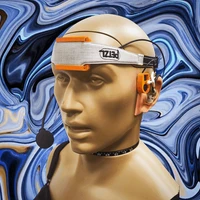
Looking to Listen at the Cocktail Party: A Speaker-Independent Audio-Visual Model for Speech Separation
We present a joint audio-visual model for isolating a single speech signal from a mixture of sounds such as other speakers and background noise. Solving this task using only audio as input is extremely challenging and does not provide an association of the separated speech signals with speakers in the video. In this paper, we present a deep network-based model that incorporates both visual and auditory signals to solve this task. The visual features are used to "focus" the audio on desired speakers in a scene and to improve the speech separation quality. To train our joint audio-visual model, we introduce AVSpeech, a new dataset comprised of thousands of hours of video segments from the Web. We demonstrate the applicability of our method to classic speech separation tasks, as well as real-world scenarios involving heated interviews, noisy bars, and screaming children, only requiring the user to specify the face of the person in the video whose speech they want to isolate. Our method shows clear advantage over state-of-the-art audio-only speech separation in cases of mixed speech. In addition, our model, which is speaker-independent (trained once, applicable to any speaker), produces better results than recent audio-visual speech separation methods that are speaker-dependent (require training a separate model for each speaker of interest).

UniAVGen: Unified Audio and Video Generation with Asymmetric Cross-Modal Interactions
Due to the lack of effective cross-modal modeling, existing open-source audio-video generation methods often exhibit compromised lip synchronization and insufficient semantic consistency. To mitigate these drawbacks, we propose UniAVGen, a unified framework for joint audio and video generation. UniAVGen is anchored in a dual-branch joint synthesis architecture, incorporating two parallel Diffusion Transformers (DiTs) to build a cohesive cross-modal latent space. At its heart lies an Asymmetric Cross-Modal Interaction mechanism, which enables bidirectional, temporally aligned cross-attention, thus ensuring precise spatiotemporal synchronization and semantic consistency. Furthermore, this cross-modal interaction is augmented by a Face-Aware Modulation module, which dynamically prioritizes salient regions in the interaction process. To enhance generative fidelity during inference, we additionally introduce Modality-Aware Classifier-Free Guidance, a novel strategy that explicitly amplifies cross-modal correlation signals. Notably, UniAVGen's robust joint synthesis design enables seamless unification of pivotal audio-video tasks within a single model, such as joint audio-video generation and continuation, video-to-audio dubbing, and audio-driven video synthesis. Comprehensive experiments validate that, with far fewer training samples (1.3M vs. 30.1M), UniAVGen delivers overall advantages in audio-video synchronization, timbre consistency, and emotion consistency.

Watch and Listen: Understanding Audio-Visual-Speech Moments with Multimodal LLM
Humans naturally understand moments in a video by integrating visual and auditory cues. For example, localizing a scene in the video like "A scientist passionately speaks on wildlife conservation as dramatic orchestral music plays, with the audience nodding and applauding" requires simultaneous processing of visual, audio, and speech signals. However, existing models often struggle to effectively fuse and interpret audio information, limiting their capacity for comprehensive video temporal understanding. To address this, we present TriSense, a triple-modality large language model designed for holistic video temporal understanding through the integration of visual, audio, and speech modalities. Central to TriSense is a Query-Based Connector that adaptively reweights modality contributions based on the input query, enabling robust performance under modality dropout and allowing flexible combinations of available inputs. To support TriSense's multimodal capabilities, we introduce TriSense-2M, a high-quality dataset of over 2 million curated samples generated via an automated pipeline powered by fine-tuned LLMs. TriSense-2M includes long-form videos and diverse modality combinations, facilitating broad generalization. Extensive experiments across multiple benchmarks demonstrate the effectiveness of TriSense and its potential to advance multimodal video analysis. Code and dataset will be publicly released.

Vibravox: A Dataset of French Speech Captured with Body-conduction Audio Sensors
Vibravox is a dataset compliant with the General Data Protection Regulation (GDPR) containing audio recordings using five different body-conduction audio sensors : two in-ear microphones, two bone conduction vibration pickups and a laryngophone. The data set also includes audio data from an airborne microphone used as a reference. The Vibravox corpus contains 38 hours of speech samples and physiological sounds recorded by 188 participants under different acoustic conditions imposed by an high order ambisonics 3D spatializer. Annotations about the recording conditions and linguistic transcriptions are also included in the corpus. We conducted a series of experiments on various speech-related tasks, including speech recognition, speech enhancement and speaker verification. These experiments were carried out using state-of-the-art models to evaluate and compare their performances on signals captured by the different audio sensors offered by the Vibravox dataset, with the aim of gaining a better grasp of their individual characteristics.

On The Open Prompt Challenge In Conditional Audio Generation
Text-to-audio generation (TTA) produces audio from a text description, learning from pairs of audio samples and hand-annotated text. However, commercializing audio generation is challenging as user-input prompts are often under-specified when compared to text descriptions used to train TTA models. In this work, we treat TTA models as a ``blackbox'' and address the user prompt challenge with two key insights: (1) User prompts are generally under-specified, leading to a large alignment gap between user prompts and training prompts. (2) There is a distribution of audio descriptions for which TTA models are better at generating higher quality audio, which we refer to as ``audionese''. To this end, we rewrite prompts with instruction-tuned models and propose utilizing text-audio alignment as feedback signals via margin ranking learning for audio improvements. On both objective and subjective human evaluations, we observed marked improvements in both text-audio alignment and music audio quality.
The NPU-ASLP System for Audio-Visual Speech Recognition in MISP 2022 Challenge
This paper describes our NPU-ASLP system for the Audio-Visual Diarization and Recognition (AVDR) task in the Multi-modal Information based Speech Processing (MISP) 2022 Challenge. Specifically, the weighted prediction error (WPE) and guided source separation (GSS) techniques are used to reduce reverberation and generate clean signals for each single speaker first. Then, we explore the effectiveness of Branchformer and E-Branchformer based ASR systems. To better make use of the visual modality, a cross-attention based multi-modal fusion module is proposed, which explicitly learns the contextual relationship between different modalities. Experiments show that our system achieves a concatenated minimum-permutation character error rate (cpCER) of 28.13\% and 31.21\% on the Dev and Eval set, and obtains second place in the challenge.

VATT: Transformers for Multimodal Self-Supervised Learning from Raw Video, Audio and Text
We present a framework for learning multimodal representations from unlabeled data using convolution-free Transformer architectures. Specifically, our Video-Audio-Text Transformer (VATT) takes raw signals as inputs and extracts multimodal representations that are rich enough to benefit a variety of downstream tasks. We train VATT end-to-end from scratch using multimodal contrastive losses and evaluate its performance by the downstream tasks of video action recognition, audio event classification, image classification, and text-to-video retrieval. Furthermore, we study a modality-agnostic, single-backbone Transformer by sharing weights among the three modalities. We show that the convolution-free VATT outperforms state-of-the-art ConvNet-based architectures in the downstream tasks. Especially, VATT's vision Transformer achieves the top-1 accuracy of 82.1% on Kinetics-400, 83.6% on Kinetics-600, 72.7% on Kinetics-700, and 41.1% on Moments in Time, new records while avoiding supervised pre-training. Transferring to image classification leads to 78.7% top-1 accuracy on ImageNet compared to 64.7% by training the same Transformer from scratch, showing the generalizability of our model despite the domain gap between videos and images. VATT's audio Transformer also sets a new record on waveform-based audio event recognition by achieving the mAP of 39.4% on AudioSet without any supervised pre-training. VATT's source code is publicly available.
Fork-Merge Decoding: Enhancing Multimodal Understanding in Audio-Visual Large Language Models
The goal of this work is to enhance balanced multimodal understanding in audio-visual large language models (AV-LLMs) by addressing modality bias without requiring additional training. In current AV-LLMs, audio and video features are typically processed jointly in the decoder. While this strategy facilitates unified multimodal understanding, it may introduce modality bias, where the model tends to over-rely on one modality due to imbalanced training signals. To mitigate this, we propose Fork-Merge Decoding (FMD), a simple yet effective inference-time strategy that requires no additional training or architectural modifications. FMD first performs modality-specific reasoning by processing audio-only and video-only inputs through the early decoder layers (a fork phase), and then merges the resulting hidden states for joint reasoning in the remaining layers (a merge phase). This approach promotes balanced modality contributions and leverages complementary information across modalities. We evaluate our method on two representative AV-LLMs, VideoLLaMA2 and video-SALMONN, using three benchmark datasets. Experimental results demonstrate consistent performance improvements on tasks focused on audio, video, and combined audio-visual reasoning, demonstrating the effectiveness of inference-time interventions for robust multimodal understanding.

From Discrete Tokens to High-Fidelity Audio Using Multi-Band Diffusion
Deep generative models can generate high-fidelity audio conditioned on various types of representations (e.g., mel-spectrograms, Mel-frequency Cepstral Coefficients (MFCC)). Recently, such models have been used to synthesize audio waveforms conditioned on highly compressed representations. Although such methods produce impressive results, they are prone to generate audible artifacts when the conditioning is flawed or imperfect. An alternative modeling approach is to use diffusion models. However, these have mainly been used as speech vocoders (i.e., conditioned on mel-spectrograms) or generating relatively low sampling rate signals. In this work, we propose a high-fidelity multi-band diffusion-based framework that generates any type of audio modality (e.g., speech, music, environmental sounds) from low-bitrate discrete representations. At equal bit rate, the proposed approach outperforms state-of-the-art generative techniques in terms of perceptual quality. Training and, evaluation code, along with audio samples, are available on the facebookresearch/audiocraft Github page.





AudioDec: An Open-source Streaming High-fidelity Neural Audio Codec
A good audio codec for live applications such as telecommunication is characterized by three key properties: (1) compression, i.e.\ the bitrate that is required to transmit the signal should be as low as possible; (2) latency, i.e.\ encoding and decoding the signal needs to be fast enough to enable communication without or with only minimal noticeable delay; and (3) reconstruction quality of the signal. In this work, we propose an open-source, streamable, and real-time neural audio codec that achieves strong performance along all three axes: it can reconstruct highly natural sounding 48~kHz speech signals while operating at only 12~kbps and running with less than 6~ms (GPU)/10~ms (CPU) latency. An efficient training paradigm is also demonstrated for developing such neural audio codecs for real-world scenarios. Both objective and subjective evaluations using the VCTK corpus are provided. To sum up, AudioDec is a well-developed plug-and-play benchmark for audio codec applications.
RAVEN: Query-Guided Representation Alignment for Question Answering over Audio, Video, Embedded Sensors, and Natural Language
Multimodal question answering (QA) often requires identifying which video, audio, or sensor tokens are relevant to the question. Yet modality disagreements are common: off-camera speech, background noise, or motion outside the field of view often mislead fusion models that weight all streams equally. We present RAVEN, a unified QA architecture whose core is QuART, a query-conditioned cross-modal gating module that assigns scalar relevance scores to each token across modalities, enabling the model to amplify informative signals and suppress distractors before fusion. RAVEN is trained through a three-stage pipeline comprising unimodal pretraining, query-aligned fusion, and disagreement-oriented fine-tuning -- each stage targeting a distinct challenge in multi-modal reasoning: representation quality, cross-modal relevance, and robustness to modality mismatch. To support training and evaluation, we release AVS-QA, a dataset of 300K synchronized Audio--Video-Sensor streams paired with automatically generated question-answer pairs. Experimental results on seven multi-modal QA benchmarks -- including egocentric and exocentric tasks -- show that RAVEN achieves up to 14.5\% and 8.0\% gains in accuracy compared to state-of-the-art multi-modal large language models, respectively. Incorporating sensor data provides an additional 16.4\% boost, and the model remains robust under modality corruption, outperforming SOTA baselines by 50.23\%. Our code and dataset are available at https://github.com/BASHLab/RAVEN.
Cooperation Does Matter: Exploring Multi-Order Bilateral Relations for Audio-Visual Segmentation
Recently, an audio-visual segmentation (AVS) task has been introduced, aiming to group pixels with sounding objects within a given video. This task necessitates a first-ever audio-driven pixel-level understanding of the scene, posing significant challenges. In this paper, we propose an innovative audio-visual transformer framework, termed COMBO, an acronym for COoperation of Multi-order Bilateral relatiOns. For the first time, our framework explores three types of bilateral entanglements within AVS: pixel entanglement, modality entanglement, and temporal entanglement. Regarding pixel entanglement, we employ a Siam-Encoder Module (SEM) that leverages prior knowledge to generate more precise visual features from the foundational model. For modality entanglement, we design a Bilateral-Fusion Module (BFM), enabling COMBO to align corresponding visual and auditory signals bi-directionally. As for temporal entanglement, we introduce an innovative adaptive inter-frame consistency loss according to the inherent rules of temporal. Comprehensive experiments and ablation studies on AVSBench-object (84.7 mIoU on S4, 59.2 mIou on MS3) and AVSBench-semantic (42.1 mIoU on AVSS) datasets demonstrate that COMBO surpasses previous state-of-the-art methods. Code and more results will be publicly available at https://combo-avs.github.io/.
Sonic: Shifting Focus to Global Audio Perception in Portrait Animation
The study of talking face generation mainly explores the intricacies of synchronizing facial movements and crafting visually appealing, temporally-coherent animations. However, due to the limited exploration of global audio perception, current approaches predominantly employ auxiliary visual and spatial knowledge to stabilize the movements, which often results in the deterioration of the naturalness and temporal inconsistencies.Considering the essence of audio-driven animation, the audio signal serves as the ideal and unique priors to adjust facial expressions and lip movements, without resorting to interference of any visual signals. Based on this motivation, we propose a novel paradigm, dubbed as Sonic, to {s}hift f{o}cus on the exploration of global audio per{c}ept{i}o{n}.To effectively leverage global audio knowledge, we disentangle it into intra- and inter-clip audio perception and collaborate with both aspects to enhance overall perception.For the intra-clip audio perception, 1). Context-enhanced audio learning, in which long-range intra-clip temporal audio knowledge is extracted to provide facial expression and lip motion priors implicitly expressed as the tone and speed of speech. 2). Motion-decoupled controller, in which the motion of the head and expression movement are disentangled and independently controlled by intra-audio clips. Most importantly, for inter-clip audio perception, as a bridge to connect the intra-clips to achieve the global perception, Time-aware position shift fusion, in which the global inter-clip audio information is considered and fused for long-audio inference via through consecutively time-aware shifted windows. Extensive experiments demonstrate that the novel audio-driven paradigm outperform existing SOTA methodologies in terms of video quality, temporally consistency, lip synchronization precision, and motion diversity.
VERSA: A Versatile Evaluation Toolkit for Speech, Audio, and Music
In this work, we introduce VERSA, a unified and standardized evaluation toolkit designed for various speech, audio, and music signals. The toolkit features a Pythonic interface with flexible configuration and dependency control, making it user-friendly and efficient. With full installation, VERSA offers 63 metrics with 711 metric variations based on different configurations. These metrics encompass evaluations utilizing diverse external resources, including matching and non-matching reference audio, text transcriptions, and text captions. As a lightweight yet comprehensive toolkit, VERSA is versatile to support the evaluation of a wide range of downstream scenarios. To demonstrate its capabilities, this work highlights example use cases for VERSA, including audio coding, speech synthesis, speech enhancement, singing synthesis, and music generation. The toolkit is available at https://github.com/shinjiwlab/versa.


Mind the Gap! Static and Interactive Evaluations of Large Audio Models
As AI chatbots become ubiquitous, voice interaction presents a compelling way to enable rapid, high-bandwidth communication for both semantic and social signals. This has driven research into Large Audio Models (LAMs) to power voice-native experiences. However, aligning LAM development with user goals requires a clear understanding of user needs and preferences to establish reliable progress metrics. This study addresses these challenges by introducing an interactive approach to evaluate LAMs and collecting 7,500 LAM interactions from 484 participants. Through topic modeling of user queries, we identify primary use cases for audio interfaces. We then analyze user preference rankings and qualitative feedback to determine which models best align with user needs. Finally, we evaluate how static benchmarks predict interactive performance - our analysis reveals no individual benchmark strongly correlates with interactive results (tau leq 0.33 for all benchmarks). While combining multiple coarse-grained features yields modest predictive power (R^2=0.30), only two out of twenty datasets on spoken question answering and age prediction show significantly positive correlations. This suggests a clear need to develop LAM evaluations that better correlate with user preferences.




Spectral Codecs: Spectrogram-Based Audio Codecs for High Quality Speech Synthesis
Historically, most speech models in machine-learning have used the mel-spectrogram as a speech representation. Recently, discrete audio tokens produced by neural audio codecs have become a popular alternate speech representation for speech synthesis tasks such as text-to-speech (TTS). However, the data distribution produced by such codecs is too complex for some TTS models to predict, hence requiring large autoregressive models to get reasonable quality. Typical audio codecs compress and reconstruct the time-domain audio signal. We propose a spectral codec which compresses the mel-spectrogram and reconstructs the time-domain audio signal. A study of objective audio quality metrics suggests that our spectral codec has comparable perceptual quality to equivalent audio codecs. Furthermore, non-autoregressive TTS models trained with the proposed spectral codec generate audio with significantly higher quality than when trained with mel-spectrograms or audio codecs.

Filtering Video Noise as Audio with Motion Detection to Form a Musical Instrument
Even though they differ in the physical domain, digital video and audio share many characteristics. Both are temporal data streams often stored in buffers with 8-bit values. This paper investigates a method for creating harmonic sounds with a video signal as input. A musical instrument is proposed, that utilizes video in both a sound synthesis method, and in a controller interface for selecting musical notes at specific velocities. The resulting instrument was informally determined by the author to sound both pleasant and interesting, but hard to control, and therefore suited for synth pad sounds.

SignalTrain: Profiling Audio Compressors with Deep Neural Networks
In this work we present a data-driven approach for predicting the behavior of (i.e., profiling) a given non-linear audio signal processing effect (henceforth "audio effect"). Our objective is to learn a mapping function that maps the unprocessed audio to the processed by the audio effect to be profiled, using time-domain samples. To that aim, we employ a deep auto-encoder model that is conditioned on both time-domain samples and the control parameters of the target audio effect. As a test-case study, we focus on the offline profiling of two dynamic range compression audio effects, one software-based and the other analog. Compressors were chosen because they are a widely used and important set of effects and because their parameterized nonlinear time-dependent nature makes them a challenging problem for a system aiming to profile "general" audio effects. Results from our experimental procedure show that the primary functional and auditory characteristics of the compressors can be captured, however there is still sufficient audible noise to merit further investigation before such methods are applied to real-world audio processing workflows.
ASAudio: A Survey of Advanced Spatial Audio Research
With the rapid development of spatial audio technologies today, applications in AR, VR, and other scenarios have garnered extensive attention. Unlike traditional mono sound, spatial audio offers a more realistic and immersive auditory experience. Despite notable progress in the field, there remains a lack of comprehensive surveys that systematically organize and analyze these methods and their underlying technologies. In this paper, we provide a comprehensive overview of spatial audio and systematically review recent literature in the area. To address this, we chronologically outlining existing work related to spatial audio and categorize these studies based on input-output representations, as well as generation and understanding tasks, thereby summarizing various research aspects of spatial audio. In addition, we review related datasets, evaluation metrics, and benchmarks, offering insights from both training and evaluation perspectives. Related materials are available at https://github.com/dieKarotte/ASAudio.

Sparks of Large Audio Models: A Survey and Outlook
This survey paper provides a comprehensive overview of the recent advancements and challenges in applying large language models to the field of audio signal processing. Audio processing, with its diverse signal representations and a wide range of sources--from human voices to musical instruments and environmental sounds--poses challenges distinct from those found in traditional Natural Language Processing scenarios. Nevertheless, Large Audio Models, epitomized by transformer-based architectures, have shown marked efficacy in this sphere. By leveraging massive amount of data, these models have demonstrated prowess in a variety of audio tasks, spanning from Automatic Speech Recognition and Text-To-Speech to Music Generation, among others. Notably, recently these Foundational Audio Models, like SeamlessM4T, have started showing abilities to act as universal translators, supporting multiple speech tasks for up to 100 languages without any reliance on separate task-specific systems. This paper presents an in-depth analysis of state-of-the-art methodologies regarding Foundational Large Audio Models, their performance benchmarks, and their applicability to real-world scenarios. We also highlight current limitations and provide insights into potential future research directions in the realm of Large Audio Models with the intent to spark further discussion, thereby fostering innovation in the next generation of audio-processing systems. Furthermore, to cope with the rapid development in this area, we will consistently update the relevant repository with relevant recent articles and their open-source implementations at https://github.com/EmulationAI/awesome-large-audio-models.
Structure from Silence: Learning Scene Structure from Ambient Sound
From whirling ceiling fans to ticking clocks, the sounds that we hear subtly vary as we move through a scene. We ask whether these ambient sounds convey information about 3D scene structure and, if so, whether they provide a useful learning signal for multimodal models. To study this, we collect a dataset of paired audio and RGB-D recordings from a variety of quiet indoor scenes. We then train models that estimate the distance to nearby walls, given only audio as input. We also use these recordings to learn multimodal representations through self-supervision, by training a network to associate images with their corresponding sounds. These results suggest that ambient sound conveys a surprising amount of information about scene structure, and that it is a useful signal for learning multimodal features.

EvMic: Event-based Non-contact sound recovery from effective spatial-temporal modeling
When sound waves hit an object, they induce vibrations that produce high-frequency and subtle visual changes, which can be used for recovering the sound. Early studies always encounter trade-offs related to sampling rate, bandwidth, field of view, and the simplicity of the optical path. Recent advances in event camera hardware show good potential for its application in visual sound recovery, because of its superior ability in capturing high-frequency signals. However, existing event-based vibration recovery methods are still sub-optimal for sound recovery. In this work, we propose a novel pipeline for non-contact sound recovery, fully utilizing spatial-temporal information from the event stream. We first generate a large training set using a novel simulation pipeline. Then we designed a network that leverages the sparsity of events to capture spatial information and uses Mamba to model long-term temporal information. Lastly, we train a spatial aggregation block to aggregate information from different locations to further improve signal quality. To capture event signals caused by sound waves, we also designed an imaging system using a laser matrix to enhance the gradient and collected multiple data sequences for testing. Experimental results on synthetic and real-world data demonstrate the effectiveness of our method.

Comparison of Time-Frequency Representations for Environmental Sound Classification using Convolutional Neural Networks
Recent successful applications of convolutional neural networks (CNNs) to audio classification and speech recognition have motivated the search for better input representations for more efficient training. Visual displays of an audio signal, through various time-frequency representations such as spectrograms offer a rich representation of the temporal and spectral structure of the original signal. In this letter, we compare various popular signal processing methods to obtain this representation, such as short-time Fourier transform (STFT) with linear and Mel scales, constant-Q transform (CQT) and continuous Wavelet transform (CWT), and assess their impact on the classification performance of two environmental sound datasets using CNNs. This study supports the hypothesis that time-frequency representations are valuable in learning useful features for sound classification. Moreover, the actual transformation used is shown to impact the classification accuracy, with Mel-scaled STFT outperforming the other discussed methods slightly and baseline MFCC features to a large degree. Additionally, we observe that the optimal window size during transformation is dependent on the characteristics of the audio signal and architecturally, 2D convolution yielded better results in most cases compared to 1D.
Taming Visually Guided Sound Generation
Recent advances in visually-induced audio generation are based on sampling short, low-fidelity, and one-class sounds. Moreover, sampling 1 second of audio from the state-of-the-art model takes minutes on a high-end GPU. In this work, we propose a single model capable of generating visually relevant, high-fidelity sounds prompted with a set of frames from open-domain videos in less time than it takes to play it on a single GPU. We train a transformer to sample a new spectrogram from the pre-trained spectrogram codebook given the set of video features. The codebook is obtained using a variant of VQGAN trained to produce a compact sampling space with a novel spectrogram-based perceptual loss. The generated spectrogram is transformed into a waveform using a window-based GAN that significantly speeds up generation. Considering the lack of metrics for automatic evaluation of generated spectrograms, we also build a family of metrics called FID and MKL. These metrics are based on a novel sound classifier, called Melception, and designed to evaluate the fidelity and relevance of open-domain samples. Both qualitative and quantitative studies are conducted on small- and large-scale datasets to evaluate the fidelity and relevance of generated samples. We also compare our model to the state-of-the-art and observe a substantial improvement in quality, size, and computation time. Code, demo, and samples: v-iashin.github.io/SpecVQGAN

Sound Event Detection in Multichannel Audio Using Spatial and Harmonic Features
In this paper, we propose the use of spatial and harmonic features in combination with long short term memory (LSTM) recurrent neural network (RNN) for automatic sound event detection (SED) task. Real life sound recordings typically have many overlapping sound events, making it hard to recognize with just mono channel audio. Human listeners have been successfully recognizing the mixture of overlapping sound events using pitch cues and exploiting the stereo (multichannel) audio signal available at their ears to spatially localize these events. Traditionally SED systems have only been using mono channel audio, motivated by the human listener we propose to extend them to use multichannel audio. The proposed SED system is compared against the state of the art mono channel method on the development subset of TUT sound events detection 2016 database. The usage of spatial and harmonic features are shown to improve the performance of SED.
AudioGen: Textually Guided Audio Generation
We tackle the problem of generating audio samples conditioned on descriptive text captions. In this work, we propose AaudioGen, an auto-regressive generative model that generates audio samples conditioned on text inputs. AudioGen operates on a learnt discrete audio representation. The task of text-to-audio generation poses multiple challenges. Due to the way audio travels through a medium, differentiating ``objects'' can be a difficult task (e.g., separating multiple people simultaneously speaking). This is further complicated by real-world recording conditions (e.g., background noise, reverberation, etc.). Scarce text annotations impose another constraint, limiting the ability to scale models. Finally, modeling high-fidelity audio requires encoding audio at high sampling rate, leading to extremely long sequences. To alleviate the aforementioned challenges we propose an augmentation technique that mixes different audio samples, driving the model to internally learn to separate multiple sources. We curated 10 datasets containing different types of audio and text annotations to handle the scarcity of text-audio data points. For faster inference, we explore the use of multi-stream modeling, allowing the use of shorter sequences while maintaining a similar bitrate and perceptual quality. We apply classifier-free guidance to improve adherence to text. Comparing to the evaluated baselines, AudioGen outperforms over both objective and subjective metrics. Finally, we explore the ability of the proposed method to generate audio continuation conditionally and unconditionally. Samples: https://felixkreuk.github.io/audiogen


A Dataset of Dynamic Reverberant Sound Scenes with Directional Interferers for Sound Event Localization and Detection
This report presents the dataset and baseline of Task 3 of the DCASE2021 Challenge on Sound Event Localization and Detection (SELD). The dataset is based on emulation of real recordings of static or moving sound events under real conditions of reverberation and ambient noise, using spatial room impulse responses captured in a variety of rooms and delivered in two spatial formats. The acoustical synthesis remains the same as in the previous iteration of the challenge, however the new dataset brings more challenging conditions of polyphony and overlapping instances of the same class. The most important difference of the new dataset is the introduction of directional interferers, meaning sound events that are localized in space but do not belong to the target classes to be detected and are not annotated. Since such interfering events are expected in every real-world scenario of SELD, the new dataset aims to promote systems that deal with this condition effectively. A modified SELDnet baseline employing the recent ACCDOA representation of SELD problems accompanies the dataset and it is shown to outperform the previous one. The new dataset is shown to be significantly more challenging for both baselines according to all considered metrics. To investigate the individual and combined effects of ambient noise, interferers, and reverberation, we study the performance of the baseline on different versions of the dataset excluding or including combinations of these factors. The results indicate that by far the most detrimental effects are caused by directional interferers.
Look Once to Hear: Target Speech Hearing with Noisy Examples
In crowded settings, the human brain can focus on speech from a target speaker, given prior knowledge of how they sound. We introduce a novel intelligent hearable system that achieves this capability, enabling target speech hearing to ignore all interfering speech and noise, but the target speaker. A naive approach is to require a clean speech example to enroll the target speaker. This is however not well aligned with the hearable application domain since obtaining a clean example is challenging in real world scenarios, creating a unique user interface problem. We present the first enrollment interface where the wearer looks at the target speaker for a few seconds to capture a single, short, highly noisy, binaural example of the target speaker. This noisy example is used for enrollment and subsequent speech extraction in the presence of interfering speakers and noise. Our system achieves a signal quality improvement of 7.01 dB using less than 5 seconds of noisy enrollment audio and can process 8 ms of audio chunks in 6.24 ms on an embedded CPU. Our user studies demonstrate generalization to real-world static and mobile speakers in previously unseen indoor and outdoor multipath environments. Finally, our enrollment interface for noisy examples does not cause performance degradation compared to clean examples, while being convenient and user-friendly. Taking a step back, this paper takes an important step towards enhancing the human auditory perception with artificial intelligence. We provide code and data at: https://github.com/vb000/LookOnceToHear.


WaveGrad: Estimating Gradients for Waveform Generation
This paper introduces WaveGrad, a conditional model for waveform generation which estimates gradients of the data density. The model is built on prior work on score matching and diffusion probabilistic models. It starts from a Gaussian white noise signal and iteratively refines the signal via a gradient-based sampler conditioned on the mel-spectrogram. WaveGrad offers a natural way to trade inference speed for sample quality by adjusting the number of refinement steps, and bridges the gap between non-autoregressive and autoregressive models in terms of audio quality. We find that it can generate high fidelity audio samples using as few as six iterations. Experiments reveal WaveGrad to generate high fidelity audio, outperforming adversarial non-autoregressive baselines and matching a strong likelihood-based autoregressive baseline using fewer sequential operations. Audio samples are available at https://wavegrad.github.io/.

Exploring Quality and Generalizability in Parameterized Neural Audio Effects
Deep neural networks have shown promise for music audio signal processing applications, often surpassing prior approaches, particularly as end-to-end models in the waveform domain. Yet results to date have tended to be constrained by low sample rates, noise, narrow domains of signal types, and/or lack of parameterized controls (i.e. "knobs"), making their suitability for professional audio engineering workflows still lacking. This work expands on prior research published on modeling nonlinear time-dependent signal processing effects associated with music production by means of a deep neural network, one which includes the ability to emulate the parameterized settings you would see on an analog piece of equipment, with the goal of eventually producing commercially viable, high quality audio, i.e. 44.1 kHz sampling rate at 16-bit resolution. The results in this paper highlight progress in modeling these effects through architecture and optimization changes, towards increasing computational efficiency, lowering signal-to-noise ratio, and extending to a larger variety of nonlinear audio effects. Toward these ends, the strategies employed involved a three-pronged approach: model speed, model accuracy, and model generalizability. Most of the presented methods provide marginal or no increase in output accuracy over the original model, with the exception of dataset manipulation. We found that limiting the audio content of the dataset, for example using datasets of just a single instrument, provided a significant improvement in model accuracy over models trained on more general datasets.
Real Time Speech Enhancement in the Waveform Domain
We present a causal speech enhancement model working on the raw waveform that runs in real-time on a laptop CPU. The proposed model is based on an encoder-decoder architecture with skip-connections. It is optimized on both time and frequency domains, using multiple loss functions. Empirical evidence shows that it is capable of removing various kinds of background noise including stationary and non-stationary noises, as well as room reverb. Additionally, we suggest a set of data augmentation techniques applied directly on the raw waveform which further improve model performance and its generalization abilities. We perform evaluations on several standard benchmarks, both using objective metrics and human judgements. The proposed model matches state-of-the-art performance of both causal and non causal methods while working directly on the raw waveform.
Adversarial Approximate Inference for Speech to Electroglottograph Conversion
Speech produced by human vocal apparatus conveys substantial non-semantic information including the gender of the speaker, voice quality, affective state, abnormalities in the vocal apparatus etc. Such information is attributed to the properties of the voice source signal, which is usually estimated from the speech signal. However, most of the source estimation techniques depend heavily on the goodness of the model assumptions and are prone to noise. A popular alternative is to indirectly obtain the source information through the Electroglottographic (EGG) signal that measures the electrical admittance around the vocal folds using dedicated hardware. In this paper, we address the problem of estimating the EGG signal directly from the speech signal, devoid of any hardware. Sampling from the intractable conditional distribution of the EGG signal given the speech signal is accomplished through optimization of an evidence lower bound. This is constructed via minimization of the KL-divergence between the true and the approximated posteriors of a latent variable learned using a deep neural auto-encoder that serves an informative prior. We demonstrate the efficacy of the method at generating the EGG signal by conducting several experiments on datasets comprising multiple speakers, voice qualities, noise settings and speech pathologies. The proposed method is evaluated on many benchmark metrics and is found to agree with the gold standard while proving better than the state-of-the-art algorithms on a few tasks such as epoch extraction.


BeepBank-500: A Synthetic Earcon Mini-Corpus for UI Sound Research and Psychoacoustics Research
We introduce BeepBank-500, a compact, fully synthetic earcon/alert dataset (300-500 clips) designed for rapid, rights-clean experimentation in human-computer interaction and audio machine learning. Each clip is generated from a parametric recipe controlling waveform family (sine, square, triangle, FM), fundamental frequency, duration, amplitude envelope, amplitude modulation (AM), and lightweight Schroeder-style reverberation. We use three reverberation settings: dry, and two synthetic rooms denoted 'rir small' ('small') and 'rir medium' ('medium') throughout the paper and in the metadata. We release mono 48 kHz WAV audio (16-bit), a rich metadata table (signal/spectral features), and tiny reproducible baselines for (i) waveform-family classification and (ii) f0 regression on single tones. The corpus targets tasks such as earcon classification, timbre analyses, and onset detection, with clearly stated licensing and limitations. Audio is dedicated to the public domain via CC0-1.0; code is under MIT. Data DOI: https://doi.org/10.5281/zenodo.17172015. Code: https://github.com/mandip42/earcons-mini-500.

SyncFusion: Multimodal Onset-synchronized Video-to-Audio Foley Synthesis
Sound design involves creatively selecting, recording, and editing sound effects for various media like cinema, video games, and virtual/augmented reality. One of the most time-consuming steps when designing sound is synchronizing audio with video. In some cases, environmental recordings from video shoots are available, which can aid in the process. However, in video games and animations, no reference audio exists, requiring manual annotation of event timings from the video. We propose a system to extract repetitive actions onsets from a video, which are then used - in conjunction with audio or textual embeddings - to condition a diffusion model trained to generate a new synchronized sound effects audio track. In this way, we leave complete creative control to the sound designer while removing the burden of synchronization with video. Furthermore, editing the onset track or changing the conditioning embedding requires much less effort than editing the audio track itself, simplifying the sonification process. We provide sound examples, source code, and pretrained models to faciliate reproducibility
SEE-2-SOUND: Zero-Shot Spatial Environment-to-Spatial Sound
Generating combined visual and auditory sensory experiences is critical for the consumption of immersive content. Recent advances in neural generative models have enabled the creation of high-resolution content across multiple modalities such as images, text, speech, and videos. Despite these successes, there remains a significant gap in the generation of high-quality spatial audio that complements generated visual content. Furthermore, current audio generation models excel in either generating natural audio or speech or music but fall short in integrating spatial audio cues necessary for immersive experiences. In this work, we introduce SEE-2-SOUND, a zero-shot approach that decomposes the task into (1) identifying visual regions of interest; (2) locating these elements in 3D space; (3) generating mono-audio for each; and (4) integrating them into spatial audio. Using our framework, we demonstrate compelling results for generating spatial audio for high-quality videos, images, and dynamic images from the internet, as well as media generated by learned approaches.




SpA2V: Harnessing Spatial Auditory Cues for Audio-driven Spatially-aware Video Generation
Audio-driven video generation aims to synthesize realistic videos that align with input audio recordings, akin to the human ability to visualize scenes from auditory input. However, existing approaches predominantly focus on exploring semantic information, such as the classes of sounding sources present in the audio, limiting their ability to generate videos with accurate content and spatial composition. In contrast, we humans can not only naturally identify the semantic categories of sounding sources but also determine their deeply encoded spatial attributes, including locations and movement directions. This useful information can be elucidated by considering specific spatial indicators derived from the inherent physical properties of sound, such as loudness or frequency. As prior methods largely ignore this factor, we present SpA2V, the first framework explicitly exploits these spatial auditory cues from audios to generate videos with high semantic and spatial correspondence. SpA2V decomposes the generation process into two stages: 1) Audio-guided Video Planning: We meticulously adapt a state-of-the-art MLLM for a novel task of harnessing spatial and semantic cues from input audio to construct Video Scene Layouts (VSLs). This serves as an intermediate representation to bridge the gap between the audio and video modalities. 2) Layout-grounded Video Generation: We develop an efficient and effective approach to seamlessly integrate VSLs as conditional guidance into pre-trained diffusion models, enabling VSL-grounded video generation in a training-free manner. Extensive experiments demonstrate that SpA2V excels in generating realistic videos with semantic and spatial alignment to the input audios.

Differentiable Black-box and Gray-box Modeling of Nonlinear Audio Effects
Audio effects are extensively used at every stage of audio and music content creation. The majority of differentiable audio effects modeling approaches fall into the black-box or gray-box paradigms; and most models have been proposed and applied to nonlinear effects like guitar amplifiers, overdrive, distortion, fuzz and compressor. Although a plethora of architectures have been introduced for the task at hand there is still lack of understanding on the state of the art, since most publications experiment with one type of nonlinear audio effect and a very small number of devices. In this work we aim to shed light on the audio effects modeling landscape by comparing black-box and gray-box architectures on a large number of nonlinear audio effects, identifying the most suitable for a wide range of devices. In the process, we also: introduce time-varying gray-box models and propose models for compressor, distortion and fuzz, publish a large dataset for audio effects research - ToneTwist AFx https://github.com/mcomunita/tonetwist-afx-dataset - that is also the first open to community contributions, evaluate models on a variety of metrics and conduct extensive subjective evaluation. Code https://github.com/mcomunita/nablafx and supplementary material https://github.com/mcomunita/nnlinafx-supp-material are also available.
AISHELL-5: The First Open-Source In-Car Multi-Channel Multi-Speaker Speech Dataset for Automatic Speech Diarization and Recognition
This paper delineates AISHELL-5, the first open-source in-car multi-channel multi-speaker Mandarin automatic speech recognition (ASR) dataset. AISHLL-5 includes two parts: (1) over 100 hours of multi-channel speech data recorded in an electric vehicle across more than 60 real driving scenarios. This audio data consists of four far-field speech signals captured by microphones located on each car door, as well as near-field signals obtained from high-fidelity headset microphones worn by each speaker. (2) a collection of 40 hours of real-world environmental noise recordings, which supports the in-car speech data simulation. Moreover, we also provide an open-access, reproducible baseline system based on this dataset. This system features a speech frontend model that employs speech source separation to extract each speaker's clean speech from the far-field signals, along with a speech recognition module that accurately transcribes the content of each individual speaker. Experimental results demonstrate the challenges faced by various mainstream ASR models when evaluated on the AISHELL-5. We firmly believe the AISHELL-5 dataset will significantly advance the research on ASR systems under complex driving scenarios by establishing the first publicly available in-car ASR benchmark.
HiFi-GAN: Generative Adversarial Networks for Efficient and High Fidelity Speech Synthesis
Several recent work on speech synthesis have employed generative adversarial networks (GANs) to produce raw waveforms. Although such methods improve the sampling efficiency and memory usage, their sample quality has not yet reached that of autoregressive and flow-based generative models. In this work, we propose HiFi-GAN, which achieves both efficient and high-fidelity speech synthesis. As speech audio consists of sinusoidal signals with various periods, we demonstrate that modeling periodic patterns of an audio is crucial for enhancing sample quality. A subjective human evaluation (mean opinion score, MOS) of a single speaker dataset indicates that our proposed method demonstrates similarity to human quality while generating 22.05 kHz high-fidelity audio 167.9 times faster than real-time on a single V100 GPU. We further show the generality of HiFi-GAN to the mel-spectrogram inversion of unseen speakers and end-to-end speech synthesis. Finally, a small footprint version of HiFi-GAN generates samples 13.4 times faster than real-time on CPU with comparable quality to an autoregressive counterpart.

ItôWave: Itô Stochastic Differential Equation Is All You Need For Wave Generation
In this paper, we propose a vocoder based on a pair of forward and reverse-time linear stochastic differential equations (SDE). The solutions of this SDE pair are two stochastic processes, one of which turns the distribution of wave, that we want to generate, into a simple and tractable distribution. The other is the generation procedure that turns this tractable simple signal into the target wave. The model is called It\^oWave. It\^oWave use the Wiener process as a driver to gradually subtract the excess signal from the noise signal to generate realistic corresponding meaningful audio respectively, under the conditional inputs of original mel spectrogram. The results of the experiment show that the mean opinion scores (MOS) of It\^oWave can exceed the current state-of-the-art (SOTA) methods, and reached 4.35pm0.115. The generated audio samples are available online.
Both Ears Wide Open: Towards Language-Driven Spatial Audio Generation
Recently, diffusion models have achieved great success in mono-channel audio generation. However, when it comes to stereo audio generation, the soundscapes often have a complex scene of multiple objects and directions. Controlling stereo audio with spatial contexts remains challenging due to high data costs and unstable generative models. To the best of our knowledge, this work represents the first attempt to address these issues. We first construct a large-scale, simulation-based, and GPT-assisted dataset, BEWO-1M, with abundant soundscapes and descriptions even including moving and multiple sources. Beyond text modality, we have also acquired a set of images and rationally paired stereo audios through retrieval to advance multimodal generation. Existing audio generation models tend to generate rather random and indistinct spatial audio. To provide accurate guidance for Latent Diffusion Models, we introduce the SpatialSonic model utilizing spatial-aware encoders and azimuth state matrices to reveal reasonable spatial guidance. By leveraging spatial guidance, our model not only achieves the objective of generating immersive and controllable spatial audio from text but also extends to other modalities as the pioneer attempt. Finally, under fair settings, we conduct subjective and objective evaluations on simulated and real-world data to compare our approach with prevailing methods. The results demonstrate the effectiveness of our method, highlighting its capability to generate spatial audio that adheres to physical rules.

Mirasol3B: A Multimodal Autoregressive model for time-aligned and contextual modalities
One of the main challenges of multimodal learning is the need to combine heterogeneous modalities (e.g., video, audio, text). For example, video and audio are obtained at much higher rates than text and are roughly aligned in time. They are often not synchronized with text, which comes as a global context, e.g., a title, or a description. Furthermore, video and audio inputs are of much larger volumes, and grow as the video length increases, which naturally requires more compute dedicated to these modalities and makes modeling of long-range dependencies harder. We here decouple the multimodal modeling, dividing it into separate, focused autoregressive models, processing the inputs according to the characteristics of the modalities. We propose a multimodal model, called Mirasol3B, consisting of an autoregressive component for the time-synchronized modalities (audio and video), and an autoregressive component for the context modalities which are not necessarily aligned in time but are still sequential. To address the long-sequences of the video-audio inputs, we propose to further partition the video and audio sequences in consecutive snippets and autoregressively process their representations. To that end, we propose a Combiner mechanism, which models the audio-video information jointly within a timeframe. The Combiner learns to extract audio and video features from raw spatio-temporal signals, and then learns to fuse these features producing compact but expressive representations per snippet. Our approach achieves the state-of-the-art on well established multimodal benchmarks, outperforming much larger models. It effectively addresses the high computational demand of media inputs by both learning compact representations, controlling the sequence length of the audio-video feature representations, and modeling their dependencies in time.

DiffuSeq: Sequence to Sequence Text Generation with Diffusion Models
Recently, diffusion models have emerged as a new paradigm for generative models. Despite the success in domains using continuous signals such as vision and audio, adapting diffusion models to natural language is under-explored due to the discrete nature of texts, especially for conditional generation. We tackle this challenge by proposing DiffuSeq: a diffusion model designed for sequence-to-sequence (Seq2Seq) text generation tasks. Upon extensive evaluation over a wide range of Seq2Seq tasks, we find DiffuSeq achieving comparable or even better performance than six established baselines, including a state-of-the-art model that is based on pre-trained language models. Apart from quality, an intriguing property of DiffuSeq is its high diversity during generation, which is desired in many Seq2Seq tasks. We further include a theoretical analysis revealing the connection between DiffuSeq and autoregressive/non-autoregressive models. Bringing together theoretical analysis and empirical evidence, we demonstrate the great potential of diffusion models in complex conditional language generation tasks. Code is available at https://github.com/Shark-NLP/DiffuSeq


BANSpEmo: A Bangla Emotional Speech Recognition Dataset
In the field of audio and speech analysis, the ability to identify emotions from acoustic signals is essential. Human-computer interaction (HCI) and behavioural analysis are only a few of the many areas where the capacity to distinguish emotions from speech signals has an extensive range of applications. Here, we are introducing BanSpEmo, a corpus of emotional speech that only consists of audio recordings and has been created specifically for the Bangla language. This corpus contains 792 audio recordings over a duration of more than 1 hour and 23 minutes. 22 native speakers took part in the recording of two sets of sentences that represent the six desired emotions. The data set consists of 12 Bangla sentences which are uttered in 6 emotions as Disgust, Happy, Sad, Surprised, Anger, and Fear. This corpus is not also gender balanced. Ten individuals who either have experience in related field or have acting experience took part in the assessment of this corpus. It has a balanced number of audio recordings in each emotion class. BanSpEmo can be considered as a useful resource to promote emotion and speech recognition research and related applications in the Bangla language. The dataset can be found here: https://data.mendeley.com/datasets/rdwn4bs5ky and might be employed for academic research.
WHAM!: Extending Speech Separation to Noisy Environments
Recent progress in separating the speech signals from multiple overlapping speakers using a single audio channel has brought us closer to solving the cocktail party problem. However, most studies in this area use a constrained problem setup, comparing performance when speakers overlap almost completely, at artificially low sampling rates, and with no external background noise. In this paper, we strive to move the field towards more realistic and challenging scenarios. To that end, we created the WSJ0 Hipster Ambient Mixtures (WHAM!) dataset, consisting of two speaker mixtures from the wsj0-2mix dataset combined with real ambient noise samples. The samples were collected in coffee shops, restaurants, and bars in the San Francisco Bay Area, and are made publicly available. We benchmark various speech separation architectures and objective functions to evaluate their robustness to noise. While separation performance decreases as a result of noise, we still observe substantial gains relative to the noisy signals for most approaches.
OmniHuman-1: Rethinking the Scaling-Up of One-Stage Conditioned Human Animation Models
End-to-end human animation, such as audio-driven talking human generation, has undergone notable advancements in the recent few years. However, existing methods still struggle to scale up as large general video generation models, limiting their potential in real applications. In this paper, we propose OmniHuman, a Diffusion Transformer-based framework that scales up data by mixing motion-related conditions into the training phase. To this end, we introduce two training principles for these mixed conditions, along with the corresponding model architecture and inference strategy. These designs enable OmniHuman to fully leverage data-driven motion generation, ultimately achieving highly realistic human video generation. More importantly, OmniHuman supports various portrait contents (face close-up, portrait, half-body, full-body), supports both talking and singing, handles human-object interactions and challenging body poses, and accommodates different image styles. Compared to existing end-to-end audio-driven methods, OmniHuman not only produces more realistic videos, but also offers greater flexibility in inputs. It also supports multiple driving modalities (audio-driven, video-driven and combined driving signals). Video samples are provided on the ttfamily project page (https://omnihuman-lab.github.io)

Block-State Transformer
State space models (SSMs) have shown impressive results on tasks that require modeling long-range dependencies and efficiently scale to long sequences owing to their subquadratic runtime complexity. Originally designed for continuous signals, SSMs have shown superior performance on a plethora of tasks, in vision and audio; however, SSMs still lag Transformer performance in Language Modeling tasks. In this work, we propose a hybrid layer named Block-State Transformer (BST), that internally combines an SSM sublayer for long-range contextualization, and a Block Transformer sublayer for short-term representation of sequences. We study three different, and completely parallelizable, variants that integrate SSMs and block-wise attention. We show that our model outperforms similar Transformer-based architectures on language modeling perplexity and generalizes to longer sequences. In addition, the Block-State Transformer demonstrates more than tenfold increase in speed at the layer level compared to the Block-Recurrent Transformer when model parallelization is employed.

DINOISER: Diffused Conditional Sequence Learning by Manipulating Noises
While diffusion models have achieved great success in generating continuous signals such as images and audio, it remains elusive for diffusion models in learning discrete sequence data like natural languages. Although recent advances circumvent this challenge of discreteness by embedding discrete tokens as continuous surrogates, they still fall short of satisfactory generation quality. To understand this, we first dive deep into the denoised training protocol of diffusion-based sequence generative models and determine their three severe problems, i.e., 1) failing to learn, 2) lack of scalability, and 3) neglecting source conditions. We argue that these problems can be boiled down to the pitfall of the not completely eliminated discreteness in the embedding space, and the scale of noises is decisive herein. In this paper, we introduce DINOISER to facilitate diffusion models for sequence generation by manipulating noises. We propose to adaptively determine the range of sampled noise scales for counter-discreteness training; and encourage the proposed diffused sequence learner to leverage source conditions with amplified noise scales during inference. Experiments show that DINOISER enables consistent improvement over the baselines of previous diffusion-based sequence generative models on several conditional sequence modeling benchmarks thanks to both effective training and inference strategies. Analyses further verify that DINOISER can make better use of source conditions to govern its generative process.

MODMA dataset: a Multi-modal Open Dataset for Mental-disorder Analysis
According to the World Health Organization, the number of mental disorder patients, especially depression patients, has grown rapidly and become a leading contributor to the global burden of disease. However, the present common practice of depression diagnosis is based on interviews and clinical scales carried out by doctors, which is not only labor-consuming but also time-consuming. One important reason is due to the lack of physiological indicators for mental disorders. With the rising of tools such as data mining and artificial intelligence, using physiological data to explore new possible physiological indicators of mental disorder and creating new applications for mental disorder diagnosis has become a new research hot topic. However, good quality physiological data for mental disorder patients are hard to acquire. We present a multi-modal open dataset for mental-disorder analysis. The dataset includes EEG and audio data from clinically depressed patients and matching normal controls. All our patients were carefully diagnosed and selected by professional psychiatrists in hospitals. The EEG dataset includes not only data collected using traditional 128-electrodes mounted elastic cap, but also a novel wearable 3-electrode EEG collector for pervasive applications. The 128-electrodes EEG signals of 53 subjects were recorded as both in resting state and under stimulation; the 3-electrode EEG signals of 55 subjects were recorded in resting state; the audio data of 52 subjects were recorded during interviewing, reading, and picture description. We encourage other researchers in the field to use it for testing their methods of mental-disorder analysis.
OmniSep: Unified Omni-Modality Sound Separation with Query-Mixup
The scaling up has brought tremendous success in the fields of vision and language in recent years. When it comes to audio, however, researchers encounter a major challenge in scaling up the training data, as most natural audio contains diverse interfering signals. To address this limitation, we introduce Omni-modal Sound Separation (OmniSep), a novel framework capable of isolating clean soundtracks based on omni-modal queries, encompassing both single-modal and multi-modal composed queries. Specifically, we introduce the Query-Mixup strategy, which blends query features from different modalities during training. This enables OmniSep to optimize multiple modalities concurrently, effectively bringing all modalities under a unified framework for sound separation. We further enhance this flexibility by allowing queries to influence sound separation positively or negatively, facilitating the retention or removal of specific sounds as desired. Finally, OmniSep employs a retrieval-augmented approach known as Query-Aug, which enables open-vocabulary sound separation. Experimental evaluations on MUSIC, VGGSOUND-CLEAN+, and MUSIC-CLEAN+ datasets demonstrate effectiveness of OmniSep, achieving state-of-the-art performance in text-, image-, and audio-queried sound separation tasks. For samples and further information, please visit the demo page at https://omnisep.github.io/.

CLIPSep: Learning Text-queried Sound Separation with Noisy Unlabeled Videos
Recent years have seen progress beyond domain-specific sound separation for speech or music towards universal sound separation for arbitrary sounds. Prior work on universal sound separation has investigated separating a target sound out of an audio mixture given a text query. Such text-queried sound separation systems provide a natural and scalable interface for specifying arbitrary target sounds. However, supervised text-queried sound separation systems require costly labeled audio-text pairs for training. Moreover, the audio provided in existing datasets is often recorded in a controlled environment, causing a considerable generalization gap to noisy audio in the wild. In this work, we aim to approach text-queried universal sound separation by using only unlabeled data. We propose to leverage the visual modality as a bridge to learn the desired audio-textual correspondence. The proposed CLIPSep model first encodes the input query into a query vector using the contrastive language-image pretraining (CLIP) model, and the query vector is then used to condition an audio separation model to separate out the target sound. While the model is trained on image-audio pairs extracted from unlabeled videos, at test time we can instead query the model with text inputs in a zero-shot setting, thanks to the joint language-image embedding learned by the CLIP model. Further, videos in the wild often contain off-screen sounds and background noise that may hinder the model from learning the desired audio-textual correspondence. To address this problem, we further propose an approach called noise invariant training for training a query-based sound separation model on noisy data. Experimental results show that the proposed models successfully learn text-queried universal sound separation using only noisy unlabeled videos, even achieving competitive performance against a supervised model in some settings.



Multimodal Data and Resource Efficient Device-Directed Speech Detection with Large Foundation Models
Interactions with virtual assistants typically start with a trigger phrase followed by a command. In this work, we explore the possibility of making these interactions more natural by eliminating the need for a trigger phrase. Our goal is to determine whether a user addressed the virtual assistant based on signals obtained from the streaming audio recorded by the device microphone. We address this task by combining 1-best hypotheses and decoder signals from an automatic speech recognition system with acoustic representations from an audio encoder as input features to a large language model (LLM). In particular, we are interested in data and resource efficient systems that require only a small amount of training data and can operate in scenarios with only a single frozen LLM available on a device. For this reason, our model is trained on 80k or less examples of multimodal data using a combination of low-rank adaptation and prefix tuning. We compare the proposed system to unimodal baselines and show that the multimodal approach achieves lower equal-error-rates (EERs), while using only a fraction of the training data. We also show that low-dimensional specialized audio representations lead to lower EERs than high-dimensional general audio representations.


Towards Lossless Implicit Neural Representation via Bit Plane Decomposition
We quantify the upper bound on the size of the implicit neural representation (INR) model from a digital perspective. The upper bound of the model size increases exponentially as the required bit-precision increases. To this end, we present a bit-plane decomposition method that makes INR predict bit-planes, producing the same effect as reducing the upper bound of the model size. We validate our hypothesis that reducing the upper bound leads to faster convergence with constant model size. Our method achieves lossless representation in 2D image and audio fitting, even for high bit-depth signals, such as 16-bit, which was previously unachievable. We pioneered the presence of bit bias, which INR prioritizes as the most significant bit (MSB). We expand the application of the INR task to bit depth expansion, lossless image compression, and extreme network quantization. Our source code is available at https://github.com/WooKyoungHan/LosslessINR

ItôTTS and ItôWave: Linear Stochastic Differential Equation Is All You Need For Audio Generation
In this paper, we propose to unify the two aspects of voice synthesis, namely text-to-speech (TTS) and vocoder, into one framework based on a pair of forward and reverse-time linear stochastic differential equations (SDE). The solutions of this SDE pair are two stochastic processes, one of which turns the distribution of mel spectrogram (or wave), that we want to generate, into a simple and tractable distribution. The other is the generation procedure that turns this tractable simple signal into the target mel spectrogram (or wave). The model that generates mel spectrogram is called It\^oTTS, and the model that generates wave is called It\^oWave. It\^oTTS and It\^oWave use the Wiener process as a driver to gradually subtract the excess signal from the noise signal to generate realistic corresponding meaningful mel spectrogram and audio respectively, under the conditional inputs of original text or mel spectrogram. The results of the experiment show that the mean opinion scores (MOS) of It\^oTTS and It\^oWave can exceed the current state-of-the-art methods, and reached 3.925pm0.160 and 4.35pm0.115 respectively. The generated audio samples are available at https://wushoule.github.io/ItoAudio/. All authors contribute equally to this work.

neural concatenative singing voice conversion: rethinking concatenation-based approach for one-shot singing voice conversion
Any-to-any singing voice conversion is confronted with a significant challenge of ``timbre leakage'' issue caused by inadequate disentanglement between the content and the speaker timbre. To address this issue, this study introduces a novel neural concatenative singing voice conversion (NeuCoSVC) framework. The NeuCoSVC framework comprises a self-supervised learning (SSL) representation extractor, a neural harmonic signal generator, and a waveform synthesizer. Specifically, the SSL extractor condenses the audio into a sequence of fixed-dimensional SSL features. The harmonic signal generator produces both raw and filtered harmonic signals as the pitch information by leveraging a linear time-varying (LTV) filter. Finally, the audio generator reconstructs the audio waveform based on the SSL features, as well as the harmonic signals and the loudness information. During inference, the system performs voice conversion by substituting source SSL features with their nearest counterparts from a matching pool, which comprises SSL representations extracted from the target audio, while the raw harmonic signals and the loudness are extracted from the source audio and are kept unchanged. Since the utilized SSL features in the conversion stage are directly from the target audio, the proposed framework has great potential to address the ``timbre leakage'' issue caused by previous disentanglement-based approaches. Experimental results confirm that the proposed system delivers much better performance than the speaker embedding approach (disentanglement-based) in the context of one-shot SVC across intra-language, cross-language, and cross-domain evaluations.
Make-A-Voice: Unified Voice Synthesis With Discrete Representation
Various applications of voice synthesis have been developed independently despite the fact that they generate "voice" as output in common. In addition, the majority of voice synthesis models currently rely on annotated audio data, but it is crucial to scale them to self-supervised datasets in order to effectively capture the wide range of acoustic variations present in human voice, including speaker identity, emotion, and prosody. In this work, we propose Make-A-Voice, a unified framework for synthesizing and manipulating voice signals from discrete representations. Make-A-Voice leverages a "coarse-to-fine" approach to model the human voice, which involves three stages: 1) semantic stage: model high-level transformation between linguistic content and self-supervised semantic tokens, 2) acoustic stage: introduce varying control signals as acoustic conditions for semantic-to-acoustic modeling, and 3) generation stage: synthesize high-fidelity waveforms from acoustic tokens. Make-A-Voice offers notable benefits as a unified voice synthesis framework: 1) Data scalability: the major backbone (i.e., acoustic and generation stage) does not require any annotations, and thus the training data could be scaled up. 2) Controllability and conditioning flexibility: we investigate different conditioning mechanisms and effectively handle three voice synthesis applications, including text-to-speech (TTS), voice conversion (VC), and singing voice synthesis (SVS) by re-synthesizing the discrete voice representations with prompt guidance. Experimental results demonstrate that Make-A-Voice exhibits superior audio quality and style similarity compared with competitive baseline models. Audio samples are available at https://Make-A-Voice.github.io
SonicVisionLM: Playing Sound with Vision Language Models
There has been a growing interest in the task of generating sound for silent videos, primarily because of its practicality in streamlining video post-production. However, existing methods for video-sound generation attempt to directly create sound from visual representations, which can be challenging due to the difficulty of aligning visual representations with audio representations. In this paper, we present SonicVisionLM, a novel framework aimed at generating a wide range of sound effects by leveraging vision-language models(VLMs). Instead of generating audio directly from video, we use the capabilities of powerful VLMs. When provided with a silent video, our approach first identifies events within the video using a VLM to suggest possible sounds that match the video content. This shift in approach transforms the challenging task of aligning image and audio into more well-studied sub-problems of aligning image-to-text and text-to-audio through the popular diffusion models. To improve the quality of audio recommendations with LLMs, we have collected an extensive dataset that maps text descriptions to specific sound effects and developed a time-controlled audio adapter. Our approach surpasses current state-of-the-art methods for converting video to audio, enhancing synchronization with the visuals, and improving alignment between audio and video components. Project page: https://yusiissy.github.io/SonicVisionLM.github.io/
SALSA: Spatial Cue-Augmented Log-Spectrogram Features for Polyphonic Sound Event Localization and Detection
Sound event localization and detection (SELD) consists of two subtasks, which are sound event detection and direction-of-arrival estimation. While sound event detection mainly relies on time-frequency patterns to distinguish different sound classes, direction-of-arrival estimation uses amplitude and/or phase differences between microphones to estimate source directions. As a result, it is often difficult to jointly optimize these two subtasks. We propose a novel feature called Spatial cue-Augmented Log-SpectrogrAm (SALSA) with exact time-frequency mapping between the signal power and the source directional cues, which is crucial for resolving overlapping sound sources. The SALSA feature consists of multichannel log-spectrograms stacked along with the normalized principal eigenvector of the spatial covariance matrix at each corresponding time-frequency bin. Depending on the microphone array format, the principal eigenvector can be normalized differently to extract amplitude and/or phase differences between the microphones. As a result, SALSA features are applicable for different microphone array formats such as first-order ambisonics (FOA) and multichannel microphone array (MIC). Experimental results on the TAU-NIGENS Spatial Sound Events 2021 dataset with directional interferences showed that SALSA features outperformed other state-of-the-art features. Specifically, the use of SALSA features in the FOA format increased the F1 score and localization recall by 6% each, compared to the multichannel log-mel spectrograms with intensity vectors. For the MIC format, using SALSA features increased F1 score and localization recall by 16% and 7%, respectively, compared to using multichannel log-mel spectrograms with generalized cross-correlation spectra.
Speech Bandwidth Expansion Via High Fidelity Generative Adversarial Networks
Speech bandwidth expansion is crucial for expanding the frequency range of low-bandwidth speech signals, thereby improving audio quality, clarity and perceptibility in digital applications. Its applications span telephony, compression, text-to-speech synthesis, and speech recognition. This paper presents a novel approach using a high-fidelity generative adversarial network, unlike cascaded systems, our system is trained end-to-end on paired narrowband and wideband speech signals. Our method integrates various bandwidth upsampling ratios into a single unified model specifically designed for speech bandwidth expansion applications. Our approach exhibits robust performance across various bandwidth expansion factors, including those not encountered during training, demonstrating zero-shot capability. To the best of our knowledge, this is the first work to showcase this capability. The experimental results demonstrate that our method outperforms previous end-to-end approaches, as well as interpolation and traditional techniques, showcasing its effectiveness in practical speech enhancement applications.
AccEar: Accelerometer Acoustic Eavesdropping with Unconstrained Vocabulary
With the increasing popularity of voice-based applications, acoustic eavesdropping has become a serious threat to users' privacy. While on smartphones the access to microphones needs an explicit user permission, acoustic eavesdropping attacks can rely on motion sensors (such as accelerometer and gyroscope), which access is unrestricted. However, previous instances of such attacks can only recognize a limited set of pre-trained words or phrases. In this paper, we present AccEar, an accelerometerbased acoustic eavesdropping attack that can reconstruct any audio played on the smartphone's loudspeaker with unconstrained vocabulary. We show that an attacker can employ a conditional Generative Adversarial Network (cGAN) to reconstruct highfidelity audio from low-frequency accelerometer signals. The presented cGAN model learns to recreate high-frequency components of the user's voice from low-frequency accelerometer signals through spectrogram enhancement. We assess the feasibility and effectiveness of AccEar attack in a thorough set of experiments using audio from 16 public personalities. As shown by the results in both objective and subjective evaluations, AccEar successfully reconstructs user speeches from accelerometer signals in different scenarios including varying sampling rate, audio volume, device model, etc.
A Dataset of Reverberant Spatial Sound Scenes with Moving Sources for Sound Event Localization and Detection
This report presents the dataset and the evaluation setup of the Sound Event Localization & Detection (SELD) task for the DCASE 2020 Challenge. The SELD task refers to the problem of trying to simultaneously classify a known set of sound event classes, detect their temporal activations, and estimate their spatial directions or locations while they are active. To train and test SELD systems, datasets of diverse sound events occurring under realistic acoustic conditions are needed. Compared to the previous challenge, a significantly more complex dataset was created for DCASE 2020. The two key differences are a more diverse range of acoustical conditions, and dynamic conditions, i.e. moving sources. The spatial sound scenes are created using real room impulse responses captured in a continuous manner with a slowly moving excitation source. Both static and moving sound events are synthesized from them. Ambient noise recorded on location is added to complete the generation of scene recordings. A baseline SELD method accompanies the dataset, based on a convolutional recurrent neural network, to provide benchmark scores for the task. The baseline is an updated version of the one used in the previous challenge, with input features and training modifications to improve its performance.
Tri-Modal Severity Fused Diagnosis across Depression and Post-traumatic Stress Disorders
Depression and post traumatic stress disorder (PTSD) often co-occur with connected symptoms, complicating automated assessment, which is often binary and disorder specific. Clinically useful diagnosis needs severity aware cross disorder estimates and decision support explanations. Our unified tri modal affective severity framework synchronizes and fuses interview text with sentence level transformer embeddings, audio with log Mel statistics with deltas, and facial signals with action units, gaze, head and pose descriptors to output graded severities for diagnosing both depression (PHQ-8; 5 classes) and PTSD (3 classes). Standardized features are fused via a calibrated late fusion classifier, yielding per disorder probabilities and feature-level attributions. This severity aware tri-modal affective fusion approach is demoed on multi disorder concurrent depression and PTSD assessment. Stratified cross validation on DAIC derived corpora outperforms unimodal/ablation baselines. The fused model matches the strongest unimodal baseline on accuracy and weighted F1, while improving decision curve utility and robustness under noisy or missing modalities. For PTSD specifically, fusion reduces regression error and improves class concordance. Errors cluster between adjacent severities; extreme classes are identified reliably. Ablations show text contributes most to depression severity, audio and facial cues are critical for PTSD, whereas attributions align with linguistic and behavioral markers. Our approach offers reproducible evaluation and clinician in the loop support for affective clinical decision making.

Music Source Separation with Band-split RNN
The performance of music source separation (MSS) models has been greatly improved in recent years thanks to the development of novel neural network architectures and training pipelines. However, recent model designs for MSS were mainly motivated by other audio processing tasks or other research fields, while the intrinsic characteristics and patterns of the music signals were not fully discovered. In this paper, we propose band-split RNN (BSRNN), a frequency-domain model that explictly splits the spectrogram of the mixture into subbands and perform interleaved band-level and sequence-level modeling. The choices of the bandwidths of the subbands can be determined by a priori knowledge or expert knowledge on the characteristics of the target source in order to optimize the performance on a certain type of target musical instrument. To better make use of unlabeled data, we also describe a semi-supervised model finetuning pipeline that can further improve the performance of the model. Experiment results show that BSRNN trained only on MUSDB18-HQ dataset significantly outperforms several top-ranking models in Music Demixing (MDX) Challenge 2021, and the semi-supervised finetuning stage further improves the performance on all four instrument tracks.
Solla: Towards a Speech-Oriented LLM That Hears Acoustic Context
Large Language Models (LLMs) have recently shown remarkable ability to process not only text but also multimodal inputs such as speech and audio. However, most existing models primarily focus on analyzing input signals using text instructions, overlooking scenarios in which speech instructions and audio are mixed and serve as inputs to the model. To address these challenges, we introduce Solla, a novel framework designed to understand speech-based questions and hear the acoustic context concurrently. Solla incorporates an audio tagging module to effectively identify and represent audio events, as well as an ASR-assisted prediction method to improve comprehension of spoken content. To rigorously evaluate Solla and other publicly available models, we propose a new benchmark dataset called SA-Eval, which includes three tasks: audio event classification, audio captioning, and audio question answering. SA-Eval has diverse speech instruction with various speaking styles, encompassing two difficulty levels, easy and hard, to capture the range of real-world acoustic conditions. Experimental results show that Solla performs on par with or outperforms baseline models on both the easy and hard test sets, underscoring its effectiveness in jointly understanding speech and audio.
ARC-Hunyuan-Video-7B: Structured Video Comprehension of Real-World Shorts
Real-world user-generated short videos, especially those distributed on platforms such as WeChat Channel and TikTok, dominate the mobile internet. However, current large multimodal models lack essential temporally-structured, detailed, and in-depth video comprehension capabilities, which are the cornerstone of effective video search and recommendation, as well as emerging video applications. Understanding real-world shorts is actually challenging due to their complex visual elements, high information density in both visuals and audio, and fast pacing that focuses on emotional expression and viewpoint delivery. This requires advanced reasoning to effectively integrate multimodal information, including visual, audio, and text. In this work, we introduce ARC-Hunyuan-Video, a multimodal model that processes visual, audio, and textual signals from raw video inputs end-to-end for structured comprehension. The model is capable of multi-granularity timestamped video captioning and summarization, open-ended video question answering, temporal video grounding, and video reasoning. Leveraging high-quality data from an automated annotation pipeline, our compact 7B-parameter model is trained through a comprehensive regimen: pre-training, instruction fine-tuning, cold start, reinforcement learning (RL) post-training, and final instruction fine-tuning. Quantitative evaluations on our introduced benchmark ShortVid-Bench and qualitative comparisons demonstrate its strong performance in real-world video comprehension, and it supports zero-shot or fine-tuning with a few samples for diverse downstream applications. The real-world production deployment of our model has yielded tangible and measurable improvements in user engagement and satisfaction, a success supported by its remarkable efficiency, with stress tests indicating an inference time of just 10 seconds for a one-minute video on H20 GPU.


CLaMP 3: Universal Music Information Retrieval Across Unaligned Modalities and Unseen Languages
CLaMP 3 is a unified framework developed to address challenges of cross-modal and cross-lingual generalization in music information retrieval. Using contrastive learning, it aligns all major music modalities--including sheet music, performance signals, and audio recordings--with multilingual text in a shared representation space, enabling retrieval across unaligned modalities with text as a bridge. It features a multilingual text encoder adaptable to unseen languages, exhibiting strong cross-lingual generalization. Leveraging retrieval-augmented generation, we curated M4-RAG, a web-scale dataset consisting of 2.31 million music-text pairs. This dataset is enriched with detailed metadata that represents a wide array of global musical traditions. To advance future research, we release WikiMT-X, a benchmark comprising 1,000 triplets of sheet music, audio, and richly varied text descriptions. Experiments show that CLaMP 3 achieves state-of-the-art performance on multiple MIR tasks, significantly surpassing previous strong baselines and demonstrating excellent generalization in multimodal and multilingual music contexts.


PAVE: Patching and Adapting Video Large Language Models
Pre-trained video large language models (Video LLMs) exhibit remarkable reasoning capabilities, yet adapting these models to new tasks involving additional modalities or data types (e.g., audio or 3D information) remains challenging. In this paper, we present PAVE, a flexible framework for adapting pre-trained Video LLMs to downstream tasks with side-channel signals, such as audio, 3D cues, or multi-view videos. PAVE introduces lightweight adapters, referred to as "patches," which add a small number of parameters and operations to a base model without modifying its architecture or pre-trained weights. In doing so, PAVE can effectively adapt the pre-trained base model to support diverse downstream tasks, including audio-visual question answering, 3D reasoning, multi-view video recognition, and high frame rate video understanding. Across these tasks, PAVE significantly enhances the performance of the base model, surpassing state-of-the-art task-specific models while incurring a minor cost of ~0.1% additional FLOPs and parameters. Further, PAVE supports multi-task learning and generalizes well across different Video LLMs. Our code is available at https://github.com/dragonlzm/PAVE.

Are We There Yet? A Brief Survey of Music Emotion Prediction Datasets, Models and Outstanding Challenges
Deep learning models for music have advanced drastically in recent years, but how good are machine learning models at capturing emotion, and what challenges are researchers facing? In this paper, we provide a comprehensive overview of the available music-emotion datasets and discuss evaluation standards as well as competitions in the field. We also offer a brief overview of various types of music emotion prediction models that have been built over the years, providing insights into the diverse approaches within the field. Through this examination, we highlight the challenges that persist in accurately capturing emotion in music, including issues related to dataset quality, annotation consistency, and model generalization. Additionally, we explore the impact of different modalities, such as audio, MIDI, and physiological signals, on the effectiveness of emotion prediction models. Recognizing the dynamic nature of this field, we have complemented our findings with an accompanying GitHub repository. This repository contains a comprehensive list of music emotion datasets and recent predictive models.
Spectral Bottleneck in Deep Neural Networks: Noise is All You Need
Deep neural networks are known to exhibit a spectral learning bias, wherein low-frequency components are learned early in training, while high-frequency modes emerge more gradually in later epochs. However, when the target signal lacks low-frequency components and is dominated by broadband high frequencies, training suffers from a 'spectral bottleneck', and the model fails to reconstruct the entire signal, including the frequency components that lie within the network's representational capacity. We examine such a scenario in the context of implicit neural representations (INRs) with sinusoidal representation networks (SIRENs), focusing on the challenge of fitting high-frequency-dominant signals that are susceptible to spectral bottleneck. To effectively fit any target signal irrespective of it's frequency content, we propose a generalized target-aware 'weight perturbation scheme' (WINNER - weight initialization with noise for neural representations) for network initialization. The scheme perturbs uniformly initialized weights with Gaussian noise, where the noise scales are adaptively determined by the spectral centroid of the target signal. We show that the noise scales can provide control over the spectra of network activations and the eigenbasis of the empirical neural tangent kernel. This method not only addresses the spectral bottleneck but also yields faster convergence and with improved representation accuracy, outperforming state-of-the-art approaches in audio fitting and achieving notable gains in image fitting and denoising tasks. Beyond signal reconstruction, our approach opens new directions for adaptive weight initialization strategies in computer vision and scientific machine learning.

SynchroRaMa : Lip-Synchronized and Emotion-Aware Talking Face Generation via Multi-Modal Emotion Embedding
Audio-driven talking face generation has received growing interest, particularly for applications requiring expressive and natural human-avatar interaction. However, most existing emotion-aware methods rely on a single modality (either audio or image) for emotion embedding, limiting their ability to capture nuanced affective cues. Additionally, most methods condition on a single reference image, restricting the model's ability to represent dynamic changes in actions or attributes across time. To address these issues, we introduce SynchroRaMa, a novel framework that integrates a multi-modal emotion embedding by combining emotional signals from text (via sentiment analysis) and audio (via speech-based emotion recognition and audio-derived valence-arousal features), enabling the generation of talking face videos with richer and more authentic emotional expressiveness and fidelity. To ensure natural head motion and accurate lip synchronization, SynchroRaMa includes an audio-to-motion (A2M) module that generates motion frames aligned with the input audio. Finally, SynchroRaMa incorporates scene descriptions generated by Large Language Model (LLM) as additional textual input, enabling it to capture dynamic actions and high-level semantic attributes. Conditioning the model on both visual and textual cues enhances temporal consistency and visual realism. Quantitative and qualitative experiments on benchmark datasets demonstrate that SynchroRaMa outperforms the state-of-the-art, achieving improvements in image quality, expression preservation, and motion realism. A user study further confirms that SynchroRaMa achieves higher subjective ratings than competing methods in overall naturalness, motion diversity, and video smoothness. Our project page is available at <https://novicemm.github.io/synchrorama>.
Think-Before-Draw: Decomposing Emotion Semantics & Fine-Grained Controllable Expressive Talking Head Generation
Emotional talking-head generation has emerged as a pivotal research area at the intersection of computer vision and multimodal artificial intelligence, with its core value lying in enhancing human-computer interaction through immersive and empathetic engagement.With the advancement of multimodal large language models, the driving signals for emotional talking-head generation has shifted from audio and video to more flexible text. However, current text-driven methods rely on predefined discrete emotion label texts, oversimplifying the dynamic complexity of real facial muscle movements and thus failing to achieve natural emotional expressiveness.This study proposes the Think-Before-Draw framework to address two key challenges: (1) In-depth semantic parsing of emotions--by innovatively introducing Chain-of-Thought (CoT), abstract emotion labels are transformed into physiologically grounded facial muscle movement descriptions, enabling the mapping from high-level semantics to actionable motion features; and (2) Fine-grained expressiveness optimization--inspired by artists' portrait painting process, a progressive guidance denoising strategy is proposed, employing a "global emotion localization--local muscle control" mechanism to refine micro-expression dynamics in generated videos.Our experiments demonstrate that our approach achieves state-of-the-art performance on widely-used benchmarks, including MEAD and HDTF. Additionally, we collected a set of portrait images to evaluate our model's zero-shot generation capability.
Foundation Models Secretly Understand Neural Network Weights: Enhancing Hypernetwork Architectures with Foundation Models
Large pre-trained models, or foundation models, have shown impressive performance when adapted to a variety of downstream tasks, often out-performing specialized models. Hypernetworks, neural networks that generate some or all of the parameters of another neural network, have become an increasingly important technique for conditioning and generalizing implicit neural representations (INRs), which represent signals or objects such as audio or 3D shapes using a neural network. However, despite the potential benefits of incorporating foundation models in hypernetwork methods, this research direction has not been investigated, likely due to the dissimilarity of the weight generation task with other visual tasks. To address this gap, we (1) show how foundation models can improve hypernetworks with Transformer-based architectures, (2) provide an empirical analysis of the benefits of foundation models for hypernetworks through the lens of the generalizable INR task, showing that leveraging foundation models improves performance, generalizability, and data efficiency across a variety of algorithms and modalities. We also provide further analysis in examining the design space of foundation model-based hypernetworks, including examining the choice of foundation models, algorithms, and the effect of scaling foundation models.
VideoPoet: A Large Language Model for Zero-Shot Video Generation
We present VideoPoet, a language model capable of synthesizing high-quality video, with matching audio, from a large variety of conditioning signals. VideoPoet employs a decoder-only transformer architecture that processes multimodal inputs -- including images, videos, text, and audio. The training protocol follows that of Large Language Models (LLMs), consisting of two stages: pretraining and task-specific adaptation. During pretraining, VideoPoet incorporates a mixture of multimodal generative objectives within an autoregressive Transformer framework. The pretrained LLM serves as a foundation that can be adapted for a range of video generation tasks. We present empirical results demonstrating the model's state-of-the-art capabilities in zero-shot video generation, specifically highlighting VideoPoet's ability to generate high-fidelity motions. Project page: http://sites.research.google/videopoet/



MRAC Track 1: 2nd Workshop on Multimodal, Generative and Responsible Affective Computing
With the rapid advancements in multimodal generative technology, Affective Computing research has provoked discussion about the potential consequences of AI systems equipped with emotional intelligence. Affective Computing involves the design, evaluation, and implementation of Emotion AI and related technologies aimed at improving people's lives. Designing a computational model in affective computing requires vast amounts of multimodal data, including RGB images, video, audio, text, and physiological signals. Moreover, Affective Computing research is deeply engaged with ethical considerations at various stages-from training emotionally intelligent models on large-scale human data to deploying these models in specific applications. Fundamentally, the development of any AI system must prioritize its impact on humans, aiming to augment and enhance human abilities rather than replace them, while drawing inspiration from human intelligence in a safe and responsible manner. The MRAC 2024 Track 1 workshop seeks to extend these principles from controlled, small-scale lab environments to real-world, large-scale contexts, emphasizing responsible development. The workshop also aims to highlight the potential implications of generative technology, along with the ethical consequences of its use, to researchers and industry professionals. To the best of our knowledge, this is the first workshop series to comprehensively address the full spectrum of multimodal, generative affective computing from a responsible AI perspective, and this is the second iteration of this workshop. Webpage: https://react-ws.github.io/2024/

Rethinking Multimodal Sentiment Analysis: A High-Accuracy, Simplified Fusion Architecture
Multimodal sentiment analysis, a pivotal task in affective computing, seeks to understand human emotions by integrating cues from language, audio, and visual signals. While many recent approaches leverage complex attention mechanisms and hierarchical architectures, we propose a lightweight, yet effective fusion-based deep learning model tailored for utterance-level emotion classification. Using the benchmark IEMOCAP dataset, which includes aligned text, audio-derived numeric features, and visual descriptors, we design a modality-specific encoder using fully connected layers followed by dropout regularization. The modality-specific representations are then fused using simple concatenation and passed through a dense fusion layer to capture cross-modal interactions. This streamlined architecture avoids computational overhead while preserving performance, achieving a classification accuracy of 92% across six emotion categories. Our approach demonstrates that with careful feature engineering and modular design, simpler fusion strategies can outperform or match more complex models, particularly in resource-constrained environments.

A Modular End-to-End Multimodal Learning Method for Structured and Unstructured Data
Multimodal learning is a rapidly growing research field that has revolutionized multitasking and generative modeling in AI. While much of the research has focused on dealing with unstructured data (e.g., language, images, audio, or video), structured data (e.g., tabular data, time series, or signals) has received less attention. However, many industry-relevant use cases involve or can be benefited from both types of data. In this work, we propose a modular, end-to-end multimodal learning method called MAGNUM, which can natively handle both structured and unstructured data. MAGNUM is flexible enough to employ any specialized unimodal module to extract, compress, and fuse information from all available modalities.
ShizhenGPT: Towards Multimodal LLMs for Traditional Chinese Medicine
Despite the success of large language models (LLMs) in various domains, their potential in Traditional Chinese Medicine (TCM) remains largely underexplored due to two critical barriers: (1) the scarcity of high-quality TCM data and (2) the inherently multimodal nature of TCM diagnostics, which involve looking, listening, smelling, and pulse-taking. These sensory-rich modalities are beyond the scope of conventional LLMs. To address these challenges, we present ShizhenGPT, the first multimodal LLM tailored for TCM. To overcome data scarcity, we curate the largest TCM dataset to date, comprising 100GB+ of text and 200GB+ of multimodal data, including 1.2M images, 200 hours of audio, and physiological signals. ShizhenGPT is pretrained and instruction-tuned to achieve deep TCM knowledge and multimodal reasoning. For evaluation, we collect recent national TCM qualification exams and build a visual benchmark for Medicinal Recognition and Visual Diagnosis. Experiments demonstrate that ShizhenGPT outperforms comparable-scale LLMs and competes with larger proprietary models. Moreover, it leads in TCM visual understanding among existing multimodal LLMs and demonstrates unified perception across modalities like sound, pulse, smell, and vision, paving the way toward holistic multimodal perception and diagnosis in TCM. Datasets, models, and code are publicly available. We hope this work will inspire further exploration in this field.

A Detailed Audio-Text Data Simulation Pipeline using Single-Event Sounds
Recently, there has been an increasing focus on audio-text cross-modal learning. However, most of the existing audio-text datasets contain only simple descriptions of sound events. Compared with classification labels, the advantages of such descriptions are significantly limited. In this paper, we first analyze the detailed information that human descriptions of audio may contain beyond sound event labels. Based on the analysis, we propose an automatic pipeline for curating audio-text pairs with rich details. Leveraging the property that sounds can be mixed and concatenated in the time domain, we control details in four aspects: temporal relationship, loudness, speaker identity, and occurrence number, in simulating audio mixtures. Corresponding details are transformed into captions by large language models. Audio-text pairs with rich details in text descriptions are thereby obtained. We validate the effectiveness of our pipeline with a small amount of simulated data, demonstrating that the simulated data enables models to learn detailed audio captioning.
When Tokens Talk Too Much: A Survey of Multimodal Long-Context Token Compression across Images, Videos, and Audios
Multimodal large language models (MLLMs) have made remarkable strides, largely driven by their ability to process increasingly long and complex contexts, such as high-resolution images, extended video sequences, and lengthy audio input. While this ability significantly enhances MLLM capabilities, it introduces substantial computational challenges, primarily due to the quadratic complexity of self-attention mechanisms with numerous input tokens. To mitigate these bottlenecks, token compression has emerged as an auspicious and critical approach, efficiently reducing the number of tokens during both training and inference. In this paper, we present the first systematic survey and synthesis of the burgeoning field of multimodal long context token compression. Recognizing that effective compression strategies are deeply tied to the unique characteristics and redundancies of each modality, we categorize existing approaches by their primary data focus, enabling researchers to quickly access and learn methods tailored to their specific area of interest: (1) image-centric compression, which addresses spatial redundancy in visual data; (2) video-centric compression, which tackles spatio-temporal redundancy in dynamic sequences; and (3) audio-centric compression, which handles temporal and spectral redundancy in acoustic signals. Beyond this modality-driven categorization, we further dissect methods based on their underlying mechanisms, including transformation-based, similarity-based, attention-based, and query-based approaches. By providing a comprehensive and structured overview, this survey aims to consolidate current progress, identify key challenges, and inspire future research directions in this rapidly evolving domain. We also maintain a public repository to continuously track and update the latest advances in this promising area.

Harmonics to the Rescue: Why Voiced Speech is Not a Wss Process
Speech processing algorithms often rely on statistical knowledge of the underlying process. Despite many years of research, however, the debate on the most appropriate statistical model for speech still continues. Speech is commonly modeled as a wide-sense stationary (WSS) process. However, the use of the WSS model for spectrally correlated processes is fundamentally wrong, as WSS implies spectral uncorrelation. In this paper, we demonstrate that voiced speech can be more accurately represented as a cyclostationary (CS) process. By employing the CS rather than the WSS model for processes that are inherently correlated across frequency, it is possible to improve the estimation of cross-power spectral densities (PSDs), source separation, and beamforming. We illustrate how the correlation between harmonic frequencies of CS processes can enhance system identification, and validate our findings using both simulated and real speech data.

Learning to Upsample and Upmix Audio in the Latent Domain
Neural audio autoencoders create compact latent representations that preserve perceptually important information, serving as the foundation for both modern audio compression systems and generation approaches like next-token prediction and latent diffusion. Despite their prevalence, most audio processing operations, such as spatial and spectral up-sampling, still inefficiently operate on raw waveforms or spectral representations rather than directly on these compressed representations. We propose a framework that performs audio processing operations entirely within an autoencoder's latent space, eliminating the need to decode to raw audio formats. Our approach dramatically simplifies training by operating solely in the latent domain, with a latent L1 reconstruction term, augmented by a single latent adversarial discriminator. This contrasts sharply with raw-audio methods that typically require complex combinations of multi-scale losses and discriminators. Through experiments in bandwidth extension and mono-to-stereo up-mixing, we demonstrate computational efficiency gains of up to 100x while maintaining quality comparable to post-processing on raw audio. This work establishes a more efficient paradigm for audio processing pipelines that already incorporate autoencoders, enabling significantly faster and more resource-efficient workflows across various audio tasks.

Make-An-Audio: Text-To-Audio Generation with Prompt-Enhanced Diffusion Models
Large-scale multimodal generative modeling has created milestones in text-to-image and text-to-video generation. Its application to audio still lags behind for two main reasons: the lack of large-scale datasets with high-quality text-audio pairs, and the complexity of modeling long continuous audio data. In this work, we propose Make-An-Audio with a prompt-enhanced diffusion model that addresses these gaps by 1) introducing pseudo prompt enhancement with a distill-then-reprogram approach, it alleviates data scarcity with orders of magnitude concept compositions by using language-free audios; 2) leveraging spectrogram autoencoder to predict the self-supervised audio representation instead of waveforms. Together with robust contrastive language-audio pretraining (CLAP) representations, Make-An-Audio achieves state-of-the-art results in both objective and subjective benchmark evaluation. Moreover, we present its controllability and generalization for X-to-Audio with "No Modality Left Behind", for the first time unlocking the ability to generate high-definition, high-fidelity audios given a user-defined modality input. Audio samples are available at https://Text-to-Audio.github.io

Hi-Fi Multi-Speaker English TTS Dataset
This paper introduces a new multi-speaker English dataset for training text-to-speech models. The dataset is based on LibriVox audiobooks and Project Gutenberg texts, both in the public domain. The new dataset contains about 292 hours of speech from 10 speakers with at least 17 hours per speaker sampled at 44.1 kHz. To select speech samples with high quality, we considered audio recordings with a signal bandwidth of at least 13 kHz and a signal-to-noise ratio (SNR) of at least 32 dB. The dataset is publicly released at http://www.openslr.org/109/ .

Generating Realistic Images from In-the-wild Sounds
Representing wild sounds as images is an important but challenging task due to the lack of paired datasets between sound and images and the significant differences in the characteristics of these two modalities. Previous studies have focused on generating images from sound in limited categories or music. In this paper, we propose a novel approach to generate images from in-the-wild sounds. First, we convert sound into text using audio captioning. Second, we propose audio attention and sentence attention to represent the rich characteristics of sound and visualize the sound. Lastly, we propose a direct sound optimization with CLIPscore and AudioCLIP and generate images with a diffusion-based model. In experiments, it shows that our model is able to generate high quality images from wild sounds and outperforms baselines in both quantitative and qualitative evaluations on wild audio datasets.

XAI-based Comparison of Input Representations for Audio Event Classification
Deep neural networks are a promising tool for Audio Event Classification. In contrast to other data like natural images, there are many sensible and non-obvious representations for audio data, which could serve as input to these models. Due to their black-box nature, the effect of different input representations has so far mostly been investigated by measuring classification performance. In this work, we leverage eXplainable AI (XAI), to understand the underlying classification strategies of models trained on different input representations. Specifically, we compare two model architectures with regard to relevant input features used for Audio Event Detection: one directly processes the signal as the raw waveform, and the other takes in its time-frequency spectrogram representation. We show how relevance heatmaps obtained via "Siren"{Layer-wise Relevance Propagation} uncover representation-dependent decision strategies. With these insights, we can make a well-informed decision about the best input representation in terms of robustness and representativity and confirm that the model's classification strategies align with human requirements.
DSpAST: Disentangled Representations for Spatial Audio Reasoning with Large Language Models
Reasoning about spatial audio with large language models requires a spatial audio encoder as an acoustic front-end to obtain audio embeddings for further processing. Such an encoder needs to capture all information required to detect the type of sound events, as well as the direction and distance of their corresponding sources. Accomplishing this with a single audio encoder is demanding as the information required for each of these tasks is mostly independent of each other. As a result, the performance obtained with a single encoder is often worse than when using task-specific audio encoders. In this work, we present DSpAST, a novel audio encoder based on SpatialAST that learns disentangled representations of spatial audio while having only 0.2% additional parameters. Experiments on SpatialSoundQA with the spatial audio reasoning system BAT demonstrate that DSpAST significantly outperforms SpatialAST.
Listen, Chat, and Edit: Text-Guided Soundscape Modification for Enhanced Auditory Experience
In daily life, we encounter a variety of sounds, both desirable and undesirable, with limited control over their presence and volume. Our work introduces "Listen, Chat, and Edit" (LCE), a novel multimodal sound mixture editor that modifies each sound source in a mixture based on user-provided text instructions. LCE distinguishes itself with a user-friendly chat interface and its unique ability to edit multiple sound sources simultaneously within a mixture, without needing to separate them. Users input open-vocabulary text prompts, which are interpreted by a large language model to create a semantic filter for editing the sound mixture. The system then decomposes the mixture into its components, applies the semantic filter, and reassembles it into the desired output. We developed a 160-hour dataset with over 100k mixtures, including speech and various audio sources, along with text prompts for diverse editing tasks like extraction, removal, and volume control. Our experiments demonstrate significant improvements in signal quality across all editing tasks and robust performance in zero-shot scenarios with varying numbers and types of sound sources.

Continuous Audio Language Models
Audio Language Models (ALM) have emerged as the dominant paradigm for speech and music generation by representing audio as sequences of discrete tokens. Yet, unlike text tokens, which are invertible, audio tokens are extracted from lossy codecs with a limited bitrate. As a consequence, increasing audio quality requires generating more tokens, which imposes a trade-off between fidelity and computational cost. We address this issue by studying Continuous Audio Language Models (CALM). These models instantiate a large Transformer backbone that produces a contextual embedding at every timestep. This sequential information then conditions an MLP that generates the next continuous frame of an audio VAE through consistency modeling. By avoiding lossy compression, CALM achieves higher quality at lower computational cost than their discrete counterpart. Experiments on speech and music demonstrate improved efficiency and fidelity over state-of-the-art discrete audio language models, facilitating lightweight, high-quality audio generation. Samples are available at https://continuous-audio-language-models.github.io
EnCodecMAE: Leveraging neural codecs for universal audio representation learning
The goal of universal audio representation learning is to obtain foundational models that can be used for a variety of downstream tasks involving speech, music or environmental sounds. To approach this problem, methods inspired by self-supervised models from NLP, like BERT, are often used and adapted to audio. These models rely on the discrete nature of text, hence adopting this type of approach for audio processing requires either a change in the learning objective or mapping the audio signal to a set of discrete classes. In this work, we explore the use of EnCodec, a neural audio codec, to generate discrete targets for learning an universal audio model based on a masked autoencoder (MAE). We evaluate this approach, which we call EncodecMAE, on a wide range of audio tasks spanning speech, music and environmental sounds, achieving performances comparable or better than leading audio representation models.
Images that Sound: Composing Images and Sounds on a Single Canvas
Spectrograms are 2D representations of sound that look very different from the images found in our visual world. And natural images, when played as spectrograms, make unnatural sounds. In this paper, we show that it is possible to synthesize spectrograms that simultaneously look like natural images and sound like natural audio. We call these spectrograms images that sound. Our approach is simple and zero-shot, and it leverages pre-trained text-to-image and text-to-spectrogram diffusion models that operate in a shared latent space. During the reverse process, we denoise noisy latents with both the audio and image diffusion models in parallel, resulting in a sample that is likely under both models. Through quantitative evaluations and perceptual studies, we find that our method successfully generates spectrograms that align with a desired audio prompt while also taking the visual appearance of a desired image prompt. Please see our project page for video results: https://ificl.github.io/images-that-sound/
Retrieval-Augmented Text-to-Audio Generation
Despite recent progress in text-to-audio (TTA) generation, we show that the state-of-the-art models, such as AudioLDM, trained on datasets with an imbalanced class distribution, such as AudioCaps, are biased in their generation performance. Specifically, they excel in generating common audio classes while underperforming in the rare ones, thus degrading the overall generation performance. We refer to this problem as long-tailed text-to-audio generation. To address this issue, we propose a simple retrieval-augmented approach for TTA models. Specifically, given an input text prompt, we first leverage a Contrastive Language Audio Pretraining (CLAP) model to retrieve relevant text-audio pairs. The features of the retrieved audio-text data are then used as additional conditions to guide the learning of TTA models. We enhance AudioLDM with our proposed approach and denote the resulting augmented system as Re-AudioLDM. On the AudioCaps dataset, Re-AudioLDM achieves a state-of-the-art Frechet Audio Distance (FAD) of 1.37, outperforming the existing approaches by a large margin. Furthermore, we show that Re-AudioLDM can generate realistic audio for complex scenes, rare audio classes, and even unseen audio types, indicating its potential in TTA tasks.

AudioSR: Versatile Audio Super-resolution at Scale
Audio super-resolution is a fundamental task that predicts high-frequency components for low-resolution audio, enhancing audio quality in digital applications. Previous methods have limitations such as the limited scope of audio types (e.g., music, speech) and specific bandwidth settings they can handle (e.g., 4kHz to 8kHz). In this paper, we introduce a diffusion-based generative model, AudioSR, that is capable of performing robust audio super-resolution on versatile audio types, including sound effects, music, and speech. Specifically, AudioSR can upsample any input audio signal within the bandwidth range of 2kHz to 16kHz to a high-resolution audio signal at 24kHz bandwidth with a sampling rate of 48kHz. Extensive objective evaluation on various audio super-resolution benchmarks demonstrates the strong result achieved by the proposed model. In addition, our subjective evaluation shows that AudioSR can acts as a plug-and-play module to enhance the generation quality of a wide range of audio generative models, including AudioLDM, Fastspeech2, and MusicGen. Our code and demo are available at https://audioldm.github.io/audiosr.

In-Context Prompt Editing For Conditional Audio Generation
Distributional shift is a central challenge in the deployment of machine learning models as they can be ill-equipped for real-world data. This is particularly evident in text-to-audio generation where the encoded representations are easily undermined by unseen prompts, which leads to the degradation of generated audio -- the limited set of the text-audio pairs remains inadequate for conditional audio generation in the wild as user prompts are under-specified. In particular, we observe a consistent audio quality degradation in generated audio samples with user prompts, as opposed to training set prompts. To this end, we present a retrieval-based in-context prompt editing framework that leverages the training captions as demonstrative exemplars to revisit the user prompts. We show that the framework enhanced the audio quality across the set of collected user prompts, which were edited with reference to the training captions as exemplars.



FSD50K: An Open Dataset of Human-Labeled Sound Events
Most existing datasets for sound event recognition (SER) are relatively small and/or domain-specific, with the exception of AudioSet, based on over 2M tracks from YouTube videos and encompassing over 500 sound classes. However, AudioSet is not an open dataset as its official release consists of pre-computed audio features. Downloading the original audio tracks can be problematic due to YouTube videos gradually disappearing and usage rights issues. To provide an alternative benchmark dataset and thus foster SER research, we introduce FSD50K, an open dataset containing over 51k audio clips totalling over 100h of audio manually labeled using 200 classes drawn from the AudioSet Ontology. The audio clips are licensed under Creative Commons licenses, making the dataset freely distributable (including waveforms). We provide a detailed description of the FSD50K creation process, tailored to the particularities of Freesound data, including challenges encountered and solutions adopted. We include a comprehensive dataset characterization along with discussion of limitations and key factors to allow its audio-informed usage. Finally, we conduct sound event classification experiments to provide baseline systems as well as insight on the main factors to consider when splitting Freesound audio data for SER. Our goal is to develop a dataset to be widely adopted by the community as a new open benchmark for SER research.
STARSS22: A dataset of spatial recordings of real scenes with spatiotemporal annotations of sound events
This report presents the Sony-TAu Realistic Spatial Soundscapes 2022 (STARS22) dataset for sound event localization and detection, comprised of spatial recordings of real scenes collected in various interiors of two different sites. The dataset is captured with a high resolution spherical microphone array and delivered in two 4-channel formats, first-order Ambisonics and tetrahedral microphone array. Sound events in the dataset belonging to 13 target sound classes are annotated both temporally and spatially through a combination of human annotation and optical tracking. The dataset serves as the development and evaluation dataset for the Task 3 of the DCASE2022 Challenge on Sound Event Localization and Detection and introduces significant new challenges for the task compared to the previous iterations, which were based on synthetic spatialized sound scene recordings. Dataset specifications are detailed including recording and annotation process, target classes and their presence, and details on the development and evaluation splits. Additionally, the report presents the baseline system that accompanies the dataset in the challenge with emphasis on the differences with the baseline of the previous iterations; namely, introduction of the multi-ACCDOA representation to handle multiple simultaneous occurences of events of the same class, and support for additional improved input features for the microphone array format. Results of the baseline indicate that with a suitable training strategy a reasonable detection and localization performance can be achieved on real sound scene recordings. The dataset is available in https://zenodo.org/record/6387880.
SoundStorm: Efficient Parallel Audio Generation
We present SoundStorm, a model for efficient, non-autoregressive audio generation. SoundStorm receives as input the semantic tokens of AudioLM, and relies on bidirectional attention and confidence-based parallel decoding to generate the tokens of a neural audio codec. Compared to the autoregressive generation approach of AudioLM, our model produces audio of the same quality and with higher consistency in voice and acoustic conditions, while being two orders of magnitude faster. SoundStorm generates 30 seconds of audio in 0.5 seconds on a TPU-v4. We demonstrate the ability of our model to scale audio generation to longer sequences by synthesizing high-quality, natural dialogue segments, given a transcript annotated with speaker turns and a short prompt with the speakers' voices.

Noise2Music: Text-conditioned Music Generation with Diffusion Models
We introduce Noise2Music, where a series of diffusion models is trained to generate high-quality 30-second music clips from text prompts. Two types of diffusion models, a generator model, which generates an intermediate representation conditioned on text, and a cascader model, which generates high-fidelity audio conditioned on the intermediate representation and possibly the text, are trained and utilized in succession to generate high-fidelity music. We explore two options for the intermediate representation, one using a spectrogram and the other using audio with lower fidelity. We find that the generated audio is not only able to faithfully reflect key elements of the text prompt such as genre, tempo, instruments, mood, and era, but goes beyond to ground fine-grained semantics of the prompt. Pretrained large language models play a key role in this story -- they are used to generate paired text for the audio of the training set and to extract embeddings of the text prompts ingested by the diffusion models. Generated examples: https://google-research.github.io/noise2music

Text2FX: Harnessing CLAP Embeddings for Text-Guided Audio Effects
This work introduces Text2FX, a method that leverages CLAP embeddings and differentiable digital signal processing to control audio effects, such as equalization and reverberation, using open-vocabulary natural language prompts (e.g., "make this sound in-your-face and bold"). Text2FX operates without retraining any models, relying instead on single-instance optimization within the existing embedding space, thus enabling a flexible, scalable approach to open-vocabulary sound transformations through interpretable and disentangled FX manipulation. We show that CLAP encodes valuable information for controlling audio effects and propose two optimization approaches using CLAP to map text to audio effect parameters. While we demonstrate with CLAP, this approach is applicable to any shared text-audio embedding space. Similarly, while we demonstrate with equalization and reverberation, any differentiable audio effect may be controlled. We conduct a listener study with diverse text prompts and source audio to evaluate the quality and alignment of these methods with human perception. Demos and code are available at anniejchu.github.io/text2fx.
Towards audio language modeling -- an overview
Neural audio codecs are initially introduced to compress audio data into compact codes to reduce transmission latency. Researchers recently discovered the potential of codecs as suitable tokenizers for converting continuous audio into discrete codes, which can be employed to develop audio language models (LMs). Numerous high-performance neural audio codecs and codec-based LMs have been developed. The paper aims to provide a thorough and systematic overview of the neural audio codec models and codec-based LMs.
Automotive Sound Quality for EVs: Psychoacoustic Metrics with Reproducible AI/ML Baselines
We present an open, reproducible reference for automotive sound quality that connects standardized psychoacoustic metrics with lightweight AI/ML baselines, with a specific focus on electric vehicles (EVs). We implement loudness (ISO 532-1/2), tonality (DIN 45681), and modulation-based descriptors (roughness, fluctuation strength), and document assumptions and parameterizations for reliable reuse. For modeling, we provide simple, fully reproducible baselines (logistic regression, random forest, SVM) on synthetic EV-like cases using fixed splits and seeds, reporting accuracy and rank correlations as examples of end-to-end workflows rather than a comparative benchmark. Program-level normalization is reported in LUFS via ITU-R BS.1770, while psychoacoustic analysis uses ISO-532 loudness (sones). All figures and tables are regenerated by scripts with pinned environments; code and minimal audio stimuli are released under permissive licenses to support teaching, replication, and extension to EV-specific noise phenomena (e.g., inverter whine, reduced masking).
Wave-U-Net: A Multi-Scale Neural Network for End-to-End Audio Source Separation
Models for audio source separation usually operate on the magnitude spectrum, which ignores phase information and makes separation performance dependant on hyper-parameters for the spectral front-end. Therefore, we investigate end-to-end source separation in the time-domain, which allows modelling phase information and avoids fixed spectral transformations. Due to high sampling rates for audio, employing a long temporal input context on the sample level is difficult, but required for high quality separation results because of long-range temporal correlations. In this context, we propose the Wave-U-Net, an adaptation of the U-Net to the one-dimensional time domain, which repeatedly resamples feature maps to compute and combine features at different time scales. We introduce further architectural improvements, including an output layer that enforces source additivity, an upsampling technique and a context-aware prediction framework to reduce output artifacts. Experiments for singing voice separation indicate that our architecture yields a performance comparable to a state-of-the-art spectrogram-based U-Net architecture, given the same data. Finally, we reveal a problem with outliers in the currently used SDR evaluation metrics and suggest reporting rank-based statistics to alleviate this problem.
Effective Pre-Training of Audio Transformers for Sound Event Detection
We propose a pre-training pipeline for audio spectrogram transformers for frame-level sound event detection tasks. On top of common pre-training steps, we add a meticulously designed training routine on AudioSet frame-level annotations. This includes a balanced sampler, aggressive data augmentation, and ensemble knowledge distillation. For five transformers, we obtain a substantial performance improvement over previously available checkpoints both on AudioSet frame-level predictions and on frame-level sound event detection downstream tasks, confirming our pipeline's effectiveness. We publish the resulting checkpoints that researchers can directly fine-tune to build high-performance models for sound event detection tasks.
Did You Hear That? Introducing AADG: A Framework for Generating Benchmark Data in Audio Anomaly Detection
We introduce a novel, general-purpose audio generation framework specifically designed for anomaly detection and localization. Unlike existing datasets that predominantly focus on industrial and machine-related sounds, our framework focuses a broader range of environments, particularly useful in real-world scenarios where only audio data are available, such as in video-derived or telephonic audio. To generate such data, we propose a new method inspired by the LLM-Modulo framework, which leverages large language models(LLMs) as world models to simulate such real-world scenarios. This tool is modular allowing a plug-and-play approach. It operates by first using LLMs to predict plausible real-world scenarios. An LLM further extracts the constituent sounds, the order and the way in which these should be merged to create coherent wholes. Much like the LLM-Modulo framework, we include rigorous verification of each output stage, ensuring the reliability of the generated data. The data produced using the framework serves as a benchmark for anomaly detection applications, potentially enhancing the performance of models trained on audio data, particularly in handling out-of-distribution cases. Our contributions thus fill a critical void in audio anomaly detection resources and provide a scalable tool for generating diverse, realistic audio data.

The Power of Sound (TPoS): Audio Reactive Video Generation with Stable Diffusion
In recent years, video generation has become a prominent generative tool and has drawn significant attention. However, there is little consideration in audio-to-video generation, though audio contains unique qualities like temporal semantics and magnitude. Hence, we propose The Power of Sound (TPoS) model to incorporate audio input that includes both changeable temporal semantics and magnitude. To generate video frames, TPoS utilizes a latent stable diffusion model with textual semantic information, which is then guided by the sequential audio embedding from our pretrained Audio Encoder. As a result, this method produces audio reactive video contents. We demonstrate the effectiveness of TPoS across various tasks and compare its results with current state-of-the-art techniques in the field of audio-to-video generation. More examples are available at https://ku-vai.github.io/TPoS/
Neural Synthesis of Footsteps Sound Effects with Generative Adversarial Networks
Footsteps are among the most ubiquitous sound effects in multimedia applications. There is substantial research into understanding the acoustic features and developing synthesis models for footstep sound effects. In this paper, we present a first attempt at adopting neural synthesis for this task. We implemented two GAN-based architectures and compared the results with real recordings as well as six traditional sound synthesis methods. Our architectures reached realism scores as high as recorded samples, showing encouraging results for the task at hand.
VinTAGe: Joint Video and Text Conditioning for Holistic Audio Generation
Recent advances in audio generation have focused on text-to-audio (T2A) and video-to-audio (V2A) tasks. However, T2A or V2A methods cannot generate holistic sounds (onscreen and off-screen). This is because T2A cannot generate sounds aligning with onscreen objects, while V2A cannot generate semantically complete (offscreen sounds missing). In this work, we address the task of holistic audio generation: given a video and a text prompt, we aim to generate both onscreen and offscreen sounds that are temporally synchronized with the video and semantically aligned with text and video. Previous approaches for joint text and video-to-audio generation often suffer from modality bias, favoring one modality over the other. To overcome this limitation, we introduce VinTAGe, a flow-based transformer model that jointly considers text and video to guide audio generation. Our framework comprises two key components: a Visual-Text Encoder and a Joint VT-SiT model. To reduce modality bias and improve generation quality, we employ pretrained uni-modal text-to-audio and video-to-audio generation models for additional guidance. Due to the lack of appropriate benchmarks, we also introduce VinTAGe-Bench, a dataset of 636 video-text-audio pairs containing both onscreen and offscreen sounds. Our comprehensive experiments on VinTAGe-Bench demonstrate that joint text and visual interaction is necessary for holistic audio generation. Furthermore, VinTAGe achieves state-of-the-art results on the VGGSound benchmark. Our source code and pre-trained models will be released. Demo is available at: https://www.youtube.com/watch?v=QmqWhUjPkJI.
Universal Speech Enhancement with Score-based Diffusion
Removing background noise from speech audio has been the subject of considerable effort, especially in recent years due to the rise of virtual communication and amateur recordings. Yet background noise is not the only unpleasant disturbance that can prevent intelligibility: reverb, clipping, codec artifacts, problematic equalization, limited bandwidth, or inconsistent loudness are equally disturbing and ubiquitous. In this work, we propose to consider the task of speech enhancement as a holistic endeavor, and present a universal speech enhancement system that tackles 55 different distortions at the same time. Our approach consists of a generative model that employs score-based diffusion, together with a multi-resolution conditioning network that performs enhancement with mixture density networks. We show that this approach significantly outperforms the state of the art in a subjective test performed by expert listeners. We also show that it achieves competitive objective scores with just 4-8 diffusion steps, despite not considering any particular strategy for fast sampling. We hope that both our methodology and technical contributions encourage researchers and practitioners to adopt a universal approach to speech enhancement, possibly framing it as a generative task.
Image2Reverb: Cross-Modal Reverb Impulse Response Synthesis
Measuring the acoustic characteristics of a space is often done by capturing its impulse response (IR), a representation of how a full-range stimulus sound excites it. This work generates an IR from a single image, which can then be applied to other signals using convolution, simulating the reverberant characteristics of the space shown in the image. Recording these IRs is both time-intensive and expensive, and often infeasible for inaccessible locations. We use an end-to-end neural network architecture to generate plausible audio impulse responses from single images of acoustic environments. We evaluate our method both by comparisons to ground truth data and by human expert evaluation. We demonstrate our approach by generating plausible impulse responses from diverse settings and formats including well known places, musical halls, rooms in paintings, images from animations and computer games, synthetic environments generated from text, panoramic images, and video conference backgrounds.

Enhance Generation Quality of Flow Matching V2A Model via Multi-Step CoT-Like Guidance and Combined Preference Optimization
Creating high-quality sound effects from videos and text prompts requires precise alignment between visual and audio domains, both semantically and temporally, along with step-by-step guidance for professional audio generation. However, current state-of-the-art video-guided audio generation models often fall short of producing high-quality audio for both general and specialized use cases. To address this challenge, we introduce a multi-stage, multi-modal, end-to-end generative framework with Chain-of-Thought-like (CoT-like) guidance learning, termed Chain-of-Perform (CoP). First, we employ a transformer-based network architecture designed to achieve CoP guidance, enabling the generation of both general and professional audio. Second, we implement a multi-stage training framework that follows step-by-step guidance to ensure the generation of high-quality sound effects. Third, we develop a CoP multi-modal dataset, guided by video, to support step-by-step sound effects generation. Evaluation results highlight the advantages of the proposed multi-stage CoP generative framework compared to the state-of-the-art models on a variety of datasets, with FAD 0.79 to 0.74 (+6.33%), CLIP 16.12 to 17.70 (+9.80%) on VGGSound, SI-SDR 1.98dB to 3.35dB (+69.19%), MOS 2.94 to 3.49(+18.71%) on PianoYT-2h, and SI-SDR 2.22dB to 3.21dB (+44.59%), MOS 3.07 to 3.42 (+11.40%) on Piano-10h.
Perceiving Music Quality with GANs
Several methods have been developed to assess the perceptual quality of audio under transforms like lossy compression. However, they require paired reference signals of the unaltered content, limiting their use in applications where references are unavailable. This has hindered progress in audio generation and style transfer, where a no-reference quality assessment method would allow more reproducible comparisons across methods. We propose training a GAN on a large music library, and using its discriminator as a no-reference quality assessment measure of the perceived quality of music. This method is unsupervised, needs no access to degraded material and can be tuned for various domains of music. In a listening test with 448 human subjects, where participants rated professionally produced music tracks degraded with different levels and types of signal degradations such as waveshaping distortion and low-pass filtering, we establish a dataset of human rated material. By using the human rated dataset we show that the discriminator score correlates significantly with the subjective ratings, suggesting that the proposed method can be used to create a no-reference musical audio quality assessment measure.
Teaching Audio-Aware Large Language Models What Does Not Hear: Mitigating Hallucinations through Synthesized Negative Samples
Recent advancements in audio-aware large language models (ALLMs) enable them to process and understand audio inputs. However, these models often hallucinate non-existent sound events, reducing their reliability in real-world applications. To address this, we propose LISTEN (Learning to Identify Sounds Through Extended Negative Samples), a contrastive-like training method that enhances ALLMs' ability to distinguish between present and absent sounds using synthesized data from the backbone LLM. Unlike prior approaches, our method requires no modification to LLM parameters and efficiently integrates audio representations via a lightweight adapter. Experiments show that LISTEN effectively mitigates hallucinations while maintaining impressive performance on existing audio question and reasoning benchmarks. At the same time, it is more efficient in both data and computation.
Autoregressive Diffusion Transformer for Text-to-Speech Synthesis
Audio language models have recently emerged as a promising approach for various audio generation tasks, relying on audio tokenizers to encode waveforms into sequences of discrete symbols. Audio tokenization often poses a necessary compromise between code bitrate and reconstruction accuracy. When dealing with low-bitrate audio codes, language models are constrained to process only a subset of the information embedded in the audio, which in turn restricts their generative capabilities. To circumvent these issues, we propose encoding audio as vector sequences in continuous space mathbb R^d and autoregressively generating these sequences using a decoder-only diffusion transformer (ARDiT). Our findings indicate that ARDiT excels in zero-shot text-to-speech and exhibits performance that compares to or even surpasses that of state-of-the-art models. High-bitrate continuous speech representation enables almost flawless reconstruction, allowing our model to achieve nearly perfect speech editing. Our experiments reveal that employing Integral Kullback-Leibler (IKL) divergence for distillation at each autoregressive step significantly boosts the perceived quality of the samples. Simultaneously, it condenses the iterative sampling process of the diffusion model into a single step. Furthermore, ARDiT can be trained to predict several continuous vectors in one step, significantly reducing latency during sampling. Impressively, one of our models can generate 170 ms of 24 kHz speech per evaluation step with minimal degradation in performance. Audio samples are available at http://ardit-tts.github.io/ .
Beyond L_p clipping: Equalization-based Psychoacoustic Attacks against ASRs
Automatic Speech Recognition (ASR) systems convert speech into text and can be placed into two broad categories: traditional and fully end-to-end. Both types have been shown to be vulnerable to adversarial audio examples that sound benign to the human ear but force the ASR to produce malicious transcriptions. Of these attacks, only the "psychoacoustic" attacks can create examples with relatively imperceptible perturbations, as they leverage the knowledge of the human auditory system. Unfortunately, existing psychoacoustic attacks can only be applied against traditional models, and are obsolete against the newer, fully end-to-end ASRs. In this paper, we propose an equalization-based psychoacoustic attack that can exploit both traditional and fully end-to-end ASRs. We successfully demonstrate our attack against real-world ASRs that include DeepSpeech and Wav2Letter. Moreover, we employ a user study to verify that our method creates low audible distortion. Specifically, 80 of the 100 participants voted in favor of all our attack audio samples as less noisier than the existing state-of-the-art attack. Through this, we demonstrate both types of existing ASR pipelines can be exploited with minimum degradation to attack audio quality.
HiFi-Codec: Group-residual Vector quantization for High Fidelity Audio Codec
Audio codec models are widely used in audio communication as a crucial technique for compressing audio into discrete representations. Nowadays, audio codec models are increasingly utilized in generation fields as intermediate representations. For instance, AudioLM is an audio generation model that uses the discrete representation of SoundStream as a training target, while VALL-E employs the Encodec model as an intermediate feature to aid TTS tasks. Despite their usefulness, two challenges persist: (1) training these audio codec models can be difficult due to the lack of publicly available training processes and the need for large-scale data and GPUs; (2) achieving good reconstruction performance requires many codebooks, which increases the burden on generation models. In this study, we propose a group-residual vector quantization (GRVQ) technique and use it to develop a novel High Fidelity Audio Codec model, HiFi-Codec, which only requires 4 codebooks. We train all the models using publicly available TTS data such as LibriTTS, VCTK, AISHELL, and more, with a total duration of over 1000 hours, using 8 GPUs. Our experimental results show that HiFi-Codec outperforms Encodec in terms of reconstruction performance despite requiring only 4 codebooks. To facilitate research in audio codec and generation, we introduce AcademiCodec, the first open-source audio codec toolkit that offers training codes and pre-trained models for Encodec, SoundStream, and HiFi-Codec. Code and pre-trained model can be found on: https://github.com/yangdongchao/AcademiCodec{https://github.com/yangdongchao/AcademiCodec}
Score Distillation Sampling for Audio: Source Separation, Synthesis, and Beyond
We introduce Audio-SDS, a generalization of Score Distillation Sampling (SDS) to text-conditioned audio diffusion models. While SDS was initially designed for text-to-3D generation using image diffusion, its core idea of distilling a powerful generative prior into a separate parametric representation extends to the audio domain. Leveraging a single pretrained model, Audio-SDS enables a broad range of tasks without requiring specialized datasets. In particular, we demonstrate how Audio-SDS can guide physically informed impact sound simulations, calibrate FM-synthesis parameters, and perform prompt-specified source separation. Our findings illustrate the versatility of distillation-based methods across modalities and establish a robust foundation for future work using generative priors in audio tasks.
Unleashing the Power of Natural Audio Featuring Multiple Sound Sources
Universal sound separation aims to extract clean audio tracks corresponding to distinct events from mixed audio, which is critical for artificial auditory perception. However, current methods heavily rely on artificially mixed audio for training, which limits their ability to generalize to naturally mixed audio collected in real-world environments. To overcome this limitation, we propose ClearSep, an innovative framework that employs a data engine to decompose complex naturally mixed audio into multiple independent tracks, thereby allowing effective sound separation in real-world scenarios. We introduce two remix-based evaluation metrics to quantitatively assess separation quality and use these metrics as thresholds to iteratively apply the data engine alongside model training, progressively optimizing separation performance. In addition, we propose a series of training strategies tailored to these separated independent tracks to make the best use of them. Extensive experiments demonstrate that ClearSep achieves state-of-the-art performance across multiple sound separation tasks, highlighting its potential for advancing sound separation in natural audio scenarios. For more examples and detailed results, please visit our demo page at https://clearsep.github.io.
DASS: Distilled Audio State Space Models Are Stronger and More Duration-Scalable Learners
State-space models (SSMs) have emerged as an alternative to Transformers for audio modeling due to their high computational efficiency with long inputs. While recent efforts on Audio SSMs have reported encouraging results, two main limitations remain: First, in 10-second short audio tagging tasks, Audio SSMs still underperform compared to Transformer-based models such as Audio Spectrogram Transformer (AST). Second, although Audio SSMs theoretically support long audio inputs, their actual performance with long audio has not been thoroughly evaluated. To address these limitations, in this paper, 1) We applied knowledge distillation in audio space model training, resulting in a model called Knowledge Distilled Audio SSM (DASS). To the best of our knowledge, it is the first SSM that outperforms the Transformers on AudioSet and achieves an mAP of 47.6; and 2) We designed a new test called Audio Needle In A Haystack (Audio NIAH). We find that DASS, trained with only 10-second audio clips, can retrieve sound events in audio recordings up to 2.5 hours long, while the AST model fails when the input is just 50 seconds, demonstrating SSMs are indeed more duration scalable.

Conditional Generation of Audio from Video via Foley Analogies
The sound effects that designers add to videos are designed to convey a particular artistic effect and, thus, may be quite different from a scene's true sound. Inspired by the challenges of creating a soundtrack for a video that differs from its true sound, but that nonetheless matches the actions occurring on screen, we propose the problem of conditional Foley. We present the following contributions to address this problem. First, we propose a pretext task for training our model to predict sound for an input video clip using a conditional audio-visual clip sampled from another time within the same source video. Second, we propose a model for generating a soundtrack for a silent input video, given a user-supplied example that specifies what the video should "sound like". We show through human studies and automated evaluation metrics that our model successfully generates sound from video, while varying its output according to the content of a supplied example. Project site: https://xypb.github.io/CondFoleyGen/

Steerable discovery of neural audio effects
Applications of deep learning for audio effects often focus on modeling analog effects or learning to control effects to emulate a trained audio engineer. However, deep learning approaches also have the potential to expand creativity through neural audio effects that enable new sound transformations. While recent work demonstrated that neural networks with random weights produce compelling audio effects, control of these effects is limited and unintuitive. To address this, we introduce a method for the steerable discovery of neural audio effects. This method enables the design of effects using example recordings provided by the user. We demonstrate how this method produces an effect similar to the target effect, along with interesting inaccuracies, while also providing perceptually relevant controls.
Exploring Self-Supervised Contrastive Learning of Spatial Sound Event Representation
In this study, we present a simple multi-channel framework for contrastive learning (MC-SimCLR) to encode 'what' and 'where' of spatial audios. MC-SimCLR learns joint spectral and spatial representations from unlabeled spatial audios, thereby enhancing both event classification and sound localization in downstream tasks. At its core, we propose a multi-level data augmentation pipeline that augments different levels of audio features, including waveforms, Mel spectrograms, and generalized cross-correlation (GCC) features. In addition, we introduce simple yet effective channel-wise augmentation methods to randomly swap the order of the microphones and mask Mel and GCC channels. By using these augmentations, we find that linear layers on top of the learned representation significantly outperform supervised models in terms of both event classification accuracy and localization error. We also perform a comprehensive analysis of the effect of each augmentation method and a comparison of the fine-tuning performance using different amounts of labeled data.
MRSAudio: A Large-Scale Multimodal Recorded Spatial Audio Dataset with Refined Annotations
Humans rely on multisensory integration to perceive spatial environments, where auditory cues enable sound source localization in three-dimensional space. Despite the critical role of spatial audio in immersive technologies such as VR/AR, most existing multimodal datasets provide only monaural audio, which limits the development of spatial audio generation and understanding. To address these challenges, we introduce MRSAudio, a large-scale multimodal spatial audio dataset designed to advance research in spatial audio understanding and generation. MRSAudio spans four distinct components: MRSLife, MRSSpeech, MRSMusic, and MRSSing, covering diverse real-world scenarios. The dataset includes synchronized binaural and ambisonic audio, exocentric and egocentric video, motion trajectories, and fine-grained annotations such as transcripts, phoneme boundaries, lyrics, scores, and prompts. To demonstrate the utility and versatility of MRSAudio, we establish five foundational tasks: audio spatialization, and spatial text to speech, spatial singing voice synthesis, spatial music generation and sound event localization and detection. Results show that MRSAudio enables high-quality spatial modeling and supports a broad range of spatial audio research. Demos and dataset access are available at https://mrsaudio.github.io.
Audio-Visual Segmentation with Semantics
We propose a new problem called audio-visual segmentation (AVS), in which the goal is to output a pixel-level map of the object(s) that produce sound at the time of the image frame. To facilitate this research, we construct the first audio-visual segmentation benchmark, i.e., AVSBench, providing pixel-wise annotations for sounding objects in audible videos. It contains three subsets: AVSBench-object (Single-source subset, Multi-sources subset) and AVSBench-semantic (Semantic-labels subset). Accordingly, three settings are studied: 1) semi-supervised audio-visual segmentation with a single sound source; 2) fully-supervised audio-visual segmentation with multiple sound sources, and 3) fully-supervised audio-visual semantic segmentation. The first two settings need to generate binary masks of sounding objects indicating pixels corresponding to the audio, while the third setting further requires generating semantic maps indicating the object category. To deal with these problems, we propose a new baseline method that uses a temporal pixel-wise audio-visual interaction module to inject audio semantics as guidance for the visual segmentation process. We also design a regularization loss to encourage audio-visual mapping during training. Quantitative and qualitative experiments on AVSBench compare our approach to several existing methods for related tasks, demonstrating that the proposed method is promising for building a bridge between the audio and pixel-wise visual semantics. Code is available at https://github.com/OpenNLPLab/AVSBench. Online benchmark is available at http://www.avlbench.opennlplab.cn.


Tiny Transformers for Environmental Sound Classification at the Edge
With the growth of the Internet of Things and the rise of Big Data, data processing and machine learning applications are being moved to cheap and low size, weight, and power (SWaP) devices at the edge, often in the form of mobile phones, embedded systems, or microcontrollers. The field of Cyber-Physical Measurements and Signature Intelligence (MASINT) makes use of these devices to analyze and exploit data in ways not otherwise possible, which results in increased data quality, increased security, and decreased bandwidth. However, methods to train and deploy models at the edge are limited, and models with sufficient accuracy are often too large for the edge device. Therefore, there is a clear need for techniques to create efficient AI/ML at the edge. This work presents training techniques for audio models in the field of environmental sound classification at the edge. Specifically, we design and train Transformers to classify office sounds in audio clips. Results show that a BERT-based Transformer, trained on Mel spectrograms, can outperform a CNN using 99.85% fewer parameters. To achieve this result, we first tested several audio feature extraction techniques designed for Transformers, using ESC-50 for evaluation, along with various augmentations. Our final model outperforms the state-of-the-art MFCC-based CNN on the office sounds dataset, using just over 6,000 parameters -- small enough to run on a microcontroller.
Streamable Neural Audio Synthesis With Non-Causal Convolutions
Deep learning models are mostly used in an offline inference fashion. However, this strongly limits the use of these models inside audio generation setups, as most creative workflows are based on real-time digital signal processing. Although approaches based on recurrent networks can be naturally adapted to this buffer-based computation, the use of convolutions still poses some serious challenges. To tackle this issue, the use of causal streaming convolutions have been proposed. However, this requires specific complexified training and can impact the resulting audio quality. In this paper, we introduce a new method allowing to produce non-causal streaming models. This allows to make any convolutional model compatible with real-time buffer-based processing. As our method is based on a post-training reconfiguration of the model, we show that it is able to transform models trained without causal constraints into a streaming model. We show how our method can be adapted to fit complex architectures with parallel branches. To evaluate our method, we apply it on the recent RAVE model, which provides high-quality real-time audio synthesis. We test our approach on multiple music and speech datasets and show that it is faster than overlap-add methods, while having no impact on the generation quality. Finally, we introduce two open-source implementation of our work as Max/MSP and PureData externals, and as a VST audio plugin. This allows to endow traditional digital audio workstation with real-time neural audio synthesis on a laptop CPU.
Tell What You Hear From What You See -- Video to Audio Generation Through Text
The content of visual and audio scenes is multi-faceted such that a video can be paired with various audio and vice-versa. Thereby, in video-to-audio generation task, it is imperative to introduce steering approaches for controlling the generated audio. While Video-to-Audio generation is a well-established generative task, existing methods lack such controllability. In this work, we propose VATT, a multi-modal generative framework that takes a video and an optional text prompt as input, and generates audio and optional textual description of the audio. Such a framework has two advantages: i) Video-to-Audio generation process can be refined and controlled via text which complements the context of visual information, and ii) The model can suggest what audio to generate for the video by generating audio captions. VATT consists of two key modules: VATT Converter, a LLM that is fine-tuned for instructions and includes a projection layer that maps video features to the LLM vector space; and VATT Audio, a transformer that generates audio tokens from visual frames and from optional text prompt using iterative parallel decoding. The audio tokens are converted to a waveform by pretrained neural codec. Experiments show that when VATT is compared to existing video-to-audio generation methods in objective metrics, it achieves competitive performance when the audio caption is not provided. When the audio caption is provided as a prompt, VATT achieves even more refined performance (lowest KLD score of 1.41). Furthermore, subjective studies show that VATT Audio has been chosen as preferred generated audio than audio generated by existing methods. VATT enables controllable video-to-audio generation through text as well as suggesting text prompts for videos through audio captions, unlocking novel applications such as text-guided video-to-audio generation and video-to-audio captioning.
ViSAGe: Video-to-Spatial Audio Generation
Spatial audio is essential for enhancing the immersiveness of audio-visual experiences, yet its production typically demands complex recording systems and specialized expertise. In this work, we address a novel problem of generating first-order ambisonics, a widely used spatial audio format, directly from silent videos. To support this task, we introduce YT-Ambigen, a dataset comprising 102K 5-second YouTube video clips paired with corresponding first-order ambisonics. We also propose new evaluation metrics to assess the spatial aspect of generated audio based on audio energy maps and saliency metrics. Furthermore, we present Video-to-Spatial Audio Generation (ViSAGe), an end-to-end framework that generates first-order ambisonics from silent video frames by leveraging CLIP visual features, autoregressive neural audio codec modeling with both directional and visual guidance. Experimental results demonstrate that ViSAGe produces plausible and coherent first-order ambisonics, outperforming two-stage approaches consisting of video-to-audio generation and audio spatialization. Qualitative examples further illustrate that ViSAGe generates temporally aligned high-quality spatial audio that adapts to viewpoint changes.
Learning Neural Acoustic Fields
Our environment is filled with rich and dynamic acoustic information. When we walk into a cathedral, the reverberations as much as appearance inform us of the sanctuary's wide open space. Similarly, as an object moves around us, we expect the sound emitted to also exhibit this movement. While recent advances in learned implicit functions have led to increasingly higher quality representations of the visual world, there have not been commensurate advances in learning spatial auditory representations. To address this gap, we introduce Neural Acoustic Fields (NAFs), an implicit representation that captures how sounds propagate in a physical scene. By modeling acoustic propagation in a scene as a linear time-invariant system, NAFs learn to continuously map all emitter and listener location pairs to a neural impulse response function that can then be applied to arbitrary sounds. We demonstrate that the continuous nature of NAFs enables us to render spatial acoustics for a listener at an arbitrary location, and can predict sound propagation at novel locations. We further show that the representation learned by NAFs can help improve visual learning with sparse views. Finally, we show that a representation informative of scene structure emerges during the learning of NAFs.


Teaching Physical Awareness to LLMs through Sounds
Large Language Models (LLMs) have shown remarkable capabilities in text and multimodal processing, yet they fundamentally lack physical awareness--understanding of real-world physical phenomena. In this work, we present ACORN, a framework that teaches LLMs physical awareness through sound, focusing on fundamental physical phenomena like the Doppler effect, multipath effect, and spatial relationships. To overcome data scarcity, ACORN introduce a physics-based simulator combining real-world sound sources with controlled physical channels to generate diverse training data. Using this simulator, we build AQA-PHY, a comprehensive Audio Question-Answer dataset, and propose an audio encoder that processes both magnitude and phase information. By connecting our audio encoder to state-of-the-art LLMs, we demonstrate reasonable results in both simulated and real-world tasks, such as line-of-sight detection, Doppler effect estimation, and Direction-of-Arrival estimation, paving the way for enabling LLMs to understand physical world.
Controllable Music Production with Diffusion Models and Guidance Gradients
We demonstrate how conditional generation from diffusion models can be used to tackle a variety of realistic tasks in the production of music in 44.1kHz stereo audio with sampling-time guidance. The scenarios we consider include continuation, inpainting and regeneration of musical audio, the creation of smooth transitions between two different music tracks, and the transfer of desired stylistic characteristics to existing audio clips. We achieve this by applying guidance at sampling time in a simple framework that supports both reconstruction and classification losses, or any combination of the two. This approach ensures that generated audio can match its surrounding context, or conform to a class distribution or latent representation specified relative to any suitable pre-trained classifier or embedding model.



Audio Retrieval with Natural Language Queries: A Benchmark Study
The objectives of this work are cross-modal text-audio and audio-text retrieval, in which the goal is to retrieve the audio content from a pool of candidates that best matches a given written description and vice versa. Text-audio retrieval enables users to search large databases through an intuitive interface: they simply issue free-form natural language descriptions of the sound they would like to hear. To study the tasks of text-audio and audio-text retrieval, which have received limited attention in the existing literature, we introduce three challenging new benchmarks. We first construct text-audio and audio-text retrieval benchmarks from the AudioCaps and Clotho audio captioning datasets. Additionally, we introduce the SoundDescs benchmark, which consists of paired audio and natural language descriptions for a diverse collection of sounds that are complementary to those found in AudioCaps and Clotho. We employ these three benchmarks to establish baselines for cross-modal text-audio and audio-text retrieval, where we demonstrate the benefits of pre-training on diverse audio tasks. We hope that our benchmarks will inspire further research into audio retrieval with free-form text queries. Code, audio features for all datasets used, and the SoundDescs dataset are publicly available at https://github.com/akoepke/audio-retrieval-benchmark.
When Silence Matters: The Impact of Irrelevant Audio on Text Reasoning in Large Audio-Language Models
Large audio-language models (LALMs) unify speech and text processing, but their robustness in noisy real-world settings remains underexplored. We investigate how irrelevant audio, such as silence, synthetic noise, and environmental sounds, affects text reasoning tasks where audio is unnecessary. Across three text-based benchmarks, we find that even non-informative audio reduces accuracy and increases prediction volatility; the severity of interference scales with longer durations, higher amplitudes, and elevated decoding temperatures. Silence, often assumed neutral, destabilizes outputs as strongly as synthetic noise. While larger models show greater resilience, vulnerabilities persist across all evaluated systems. We further test mitigation strategies and find that prompting shows limited effectiveness, whereas self-consistency improves stability at the cost of increased computation. Our results reveal cross-modal interference as a key robustness challenge and highlight the need for efficient fusion strategies that preserve reasoning performance in the presence of irrelevant inputs.
Frequency-Specific Neural Response and Cross-Correlation Analysis of Envelope Following Responses to Native Speech and Music Using Multichannel EEG Signals: A Case Study
Although native speech and music envelope following responses (EFRs) play a crucial role in auditory processing and cognition, their frequency profile, such as the dominating frequency and spectral coherence, is largely unknown. We have assumed that the auditory pathway - which transmits envelope components of speech and music to the scalp through time-varying neurophysiological processes - is a linear time-varying system, with the envelope and the multi-channel EEG responses as excitation and response, respectively. This paper investigates the transfer function of this system through two analytical techniques - time-averaged spectral responses and cross-spectral density - in the frequency domain at four different positions of the human scalp. Our findings suggest that alpha (8-11 Hz), lower gamma (53-56 Hz), and higher gamma (78-81 Hz) bands are the peak responses of the system. These frequently appearing dominant frequency responses may be the key components of familiar speech perception, maintaining attention, binding acoustic features, and memory processing. The cross-spectral density, which reflects the spatial neural coherence of the human brain, shows that 10-13 Hz, 27-29 Hz, and 62-64 Hz are common for all channel pairs. As neural coherences are frequently observed in these frequencies among native participants, we suggest that these distributed neural processes are also dominant in native speech and music perception.
AudioTime: A Temporally-aligned Audio-text Benchmark Dataset
Recent advancements in audio generation have enabled the creation of high-fidelity audio clips from free-form textual descriptions. However, temporal relationships, a critical feature for audio content, are currently underrepresented in mainstream models, resulting in an imprecise temporal controllability. Specifically, users cannot accurately control the timestamps of sound events using free-form text. We acknowledge that a significant factor is the absence of high-quality, temporally-aligned audio-text datasets, which are essential for training models with temporal control. The more temporally-aligned the annotations, the better the models can understand the precise relationship between audio outputs and temporal textual prompts. Therefore, we present a strongly aligned audio-text dataset, AudioTime. It provides text annotations rich in temporal information such as timestamps, duration, frequency, and ordering, covering almost all aspects of temporal control. Additionally, we offer a comprehensive test set and evaluation metric to assess the temporal control performance of various models. Examples are available on the https://zeyuxie29.github.io/AudioTime/
A Generalized Bandsplit Neural Network for Cinematic Audio Source Separation
Cinematic audio source separation is a relatively new subtask of audio source separation, with the aim of extracting the dialogue, music, and effects stems from their mixture. In this work, we developed a model generalizing the Bandsplit RNN for any complete or overcomplete partitions of the frequency axis. Psychoacoustically motivated frequency scales were used to inform the band definitions which are now defined with redundancy for more reliable feature extraction. A loss function motivated by the signal-to-noise ratio and the sparsity-promoting property of the 1-norm was proposed. We additionally exploit the information-sharing property of a common-encoder setup to reduce computational complexity during both training and inference, improve separation performance for hard-to-generalize classes of sounds, and allow flexibility during inference time with detachable decoders. Our best model sets the state of the art on the Divide and Remaster dataset with performance above the ideal ratio mask for the dialogue stem.
Sound Event Detection Using Spatial Features and Convolutional Recurrent Neural Network
This paper proposes to use low-level spatial features extracted from multichannel audio for sound event detection. We extend the convolutional recurrent neural network to handle more than one type of these multichannel features by learning from each of them separately in the initial stages. We show that instead of concatenating the features of each channel into a single feature vector the network learns sound events in multichannel audio better when they are presented as separate layers of a volume. Using the proposed spatial features over monaural features on the same network gives an absolute F-score improvement of 6.1% on the publicly available TUT-SED 2016 dataset and 2.7% on the TUT-SED 2009 dataset that is fifteen times larger.
Cyclic Multichannel Wiener Filter for Acoustic Beamforming
Acoustic beamforming models typically assume wide-sense stationarity of speech signals within short time frames. However, voiced speech is better modeled as a cyclostationary (CS) process, a random process whose mean and autocorrelation are T_1-periodic, where alpha_1=1/T_1 corresponds to the fundamental frequency of vowels. Higher harmonic frequencies are found at integer multiples of the fundamental. This work introduces a cyclic multichannel Wiener filter (cMWF) for speech enhancement derived from a cyclostationary model. This beamformer exploits spectral correlation across the harmonic frequencies of the signal to further reduce the mean-squared error (MSE) between the target and the processed input. The proposed cMWF is optimal in the MSE sense and reduces to the MWF when the target is wide-sense stationary. Experiments on simulated data demonstrate considerable improvements in scale-invariant signal-to-distortion ratio (SI-SDR) on synthetic data but also indicate high sensitivity to the accuracy of the estimated fundamental frequency alpha_1, which limits effectiveness on real data.