new

Get trending papers in your email inbox!

Subscribe

Daily Papers

byAK and the research community

Jan 29

Look Once to Hear: Target Speech Hearing with Noisy Examples

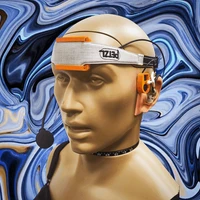
In crowded settings, the human brain can focus on speech from a target speaker, given prior knowledge of how they sound. We introduce a novel intelligent hearable system that achieves this capability, enabling target speech hearing to ignore all interfering speech and noise, but the target speaker. A naive approach is to require a clean speech example to enroll the target speaker. This is however not well aligned with the hearable application domain since obtaining a clean example is challenging in real world scenarios, creating a unique user interface problem. We present the first enrollment interface where the wearer looks at the target speaker for a few seconds to capture a single, short, highly noisy, binaural example of the target speaker. This noisy example is used for enrollment and subsequent speech extraction in the presence of interfering speakers and noise. Our system achieves a signal quality improvement of 7.01 dB using less than 5 seconds of noisy enrollment audio and can process 8 ms of audio chunks in 6.24 ms on an embedded CPU. Our user studies demonstrate generalization to real-world static and mobile speakers in previously unseen indoor and outdoor multipath environments. Finally, our enrollment interface for noisy examples does not cause performance degradation compared to clean examples, while being convenient and user-friendly. Taking a step back, this paper takes an important step towards enhancing the human auditory perception with artificial intelligence. We provide code and data at: https://github.com/vb000/LookOnceToHear.

  • 5 authors
·
May 10, 2024

ClearBuds: Wireless Binaural Earbuds for Learning-Based Speech Enhancement

We present ClearBuds, the first hardware and software system that utilizes a neural network to enhance speech streamed from two wireless earbuds. Real-time speech enhancement for wireless earbuds requires high-quality sound separation and background cancellation, operating in real-time and on a mobile phone. Clear-Buds bridges state-of-the-art deep learning for blind audio source separation and in-ear mobile systems by making two key technical contributions: 1) a new wireless earbud design capable of operating as a synchronized, binaural microphone array, and 2) a lightweight dual-channel speech enhancement neural network that runs on a mobile device. Our neural network has a novel cascaded architecture that combines a time-domain conventional neural network with a spectrogram-based frequency masking neural network to reduce the artifacts in the audio output. Results show that our wireless earbuds achieve a synchronization error less than 64 microseconds and our network has a runtime of 21.4 milliseconds on an accompanying mobile phone. In-the-wild evaluation with eight users in previously unseen indoor and outdoor multipath scenarios demonstrates that our neural network generalizes to learn both spatial and acoustic cues to perform noise suppression and background speech removal. In a user-study with 37 participants who spent over 15.4 hours rating 1041 audio samples collected in-the-wild, our system achieves improved mean opinion score and background noise suppression. Project page with demos: https://clearbuds.cs.washington.edu

  • 7 authors
·
Jun 27, 2022

A dataset and model for recognition of audiologically relevant environments for hearing aids: AHEAD-DS and YAMNet+

Scene recognition of audiologically relevant environments is important for hearing aids; however, it is challenging, in part because of the limitations of existing datasets. Datasets often lack public accessibility, completeness, or audiologically relevant labels, hindering systematic comparison of machine learning models. Deploying these models on resource-constrained edge devices presents another challenge. Our solution is two-fold: we leverage several open source datasets to create AHEAD-DS, a dataset designed for scene recognition of audiologically relevant environments, and introduce YAMNet+, a sound recognition model. AHEAD-DS aims to provide a standardised, publicly available dataset with consistent labels relevant to hearing aids, facilitating model comparison. YAMNet+ is designed for deployment on edge devices like smartphones connected to hearing devices, such as hearing aids and wireless earphones with hearing aid functionality; serving as a baseline model for sound-based scene recognition. YAMNet+ achieved a mean average precision of 0.83 and accuracy of 0.93 on the testing set of AHEAD-DS across fourteen categories of audiologically relevant environments. We found that applying transfer learning from the pretrained YAMNet model was essential. We demonstrated real-time sound-based scene recognition capabilities on edge devices by deploying YAMNet+ to an Android smartphone. Even with a Google Pixel 3 (a phone with modest specifications, released in 2018), the model processes audio with approximately 50ms of latency to load the model, and an approximate linear increase of 30ms per 1 second of audio. Our website and code https://github.com/Australian-Future-Hearing-Initiative .

  • 5 authors
·
Aug 14, 2025

AI-based Wearable Vision Assistance System for the Visually Impaired: Integrating Real-Time Object Recognition and Contextual Understanding Using Large Vision-Language Models

Visual impairment affects the ability of people to live a life like normal people. Such people face challenges in performing activities of daily living, such as reading, writing, traveling and participating in social gatherings. Many traditional approaches are available to help visually impaired people; however, these are limited in obtaining contextually rich environmental information necessary for independent living. In order to overcome this limitation, this paper introduces a novel wearable vision assistance system that has a hat-mounted camera connected to a Raspberry Pi 4 Model B (8GB RAM) with artificial intelligence (AI) technology to deliver real-time feedback to a user through a sound beep mechanism. The key features of this system include a user-friendly procedure for the recognition of new people or objects through a one-click process that allows users to add data on new individuals and objects for later detection, enhancing the accuracy of the recognition over time. The system provides detailed descriptions of objects in the user's environment using a large vision language model (LVLM). In addition, it incorporates a distance sensor that activates a beeping sound using a buzzer as soon as the user is about to collide with an object, helping to ensure safety while navigating their environment. A comprehensive evaluation is carried out to evaluate the proposed AI-based solution against traditional support techniques. Comparative analysis shows that the proposed solution with its innovative combination of hardware and AI (including LVLMs with IoT), is a significant advancement in assistive technology that aims to solve the major issues faced by the community of visually impaired people

  • 6 authors
·
Dec 28, 2024

Treble10: A high-quality dataset for far-field speech recognition, dereverberation, and enhancement

Accurate far-field speech datasets are critical for tasks such as automatic speech recognition (ASR), dereverberation, speech enhancement, and source separation. However, current datasets are limited by the trade-off between acoustic realism and scalability. Measured corpora provide faithful physics but are expensive, low-coverage, and rarely include paired clean and reverberant data. In contrast, most simulation-based datasets rely on simplified geometrical acoustics, thus failing to reproduce key physical phenomena like diffraction, scattering, and interference that govern sound propagation in complex environments. We introduce Treble10, a large-scale, physically accurate room-acoustic dataset. Treble10 contains over 3000 broadband room impulse responses (RIRs) simulated in 10 fully furnished real-world rooms, using a hybrid simulation paradigm implemented in the Treble SDK that combines a wave-based and geometrical acoustics solver. The dataset provides six complementary subsets, spanning mono, 8th-order Ambisonics, and 6-channel device RIRs, as well as pre-convolved reverberant speech scenes paired with LibriSpeech utterances. All signals are simulated at 32 kHz, accurately modelling low-frequency wave effects and high-frequency reflections. Treble10 bridges the realism gap between measurement and simulation, enabling reproducible, physically grounded evaluation and large-scale data augmentation for far-field speech tasks. The dataset is openly available via the Hugging Face Hub, and is intended as both a benchmark and a template for next-generation simulation-driven audio research.

  • 5 authors
·
Oct 27, 2025

Prediction of speech intelligibility with DNN-based performance measures

This paper presents a speech intelligibility model based on automatic speech recognition (ASR), combining phoneme probabilities from deep neural networks (DNN) and a performance measure that estimates the word error rate from these probabilities. This model does not require the clean speech reference nor the word labels during testing as the ASR decoding step, which finds the most likely sequence of words given phoneme posterior probabilities, is omitted. The model is evaluated via the root-mean-squared error between the predicted and observed speech reception thresholds from eight normal-hearing listeners. The recognition task consists of identifying noisy words from a German matrix sentence test. The speech material was mixed with eight noise maskers covering different modulation types, from speech-shaped stationary noise to a single-talker masker. The prediction performance is compared to five established models and an ASR-model using word labels. Two combinations of features and networks were tested. Both include temporal information either at the feature level (amplitude modulation filterbanks and a feed-forward network) or captured by the architecture (mel-spectrograms and a time-delay deep neural network, TDNN). The TDNN model is on par with the DNN while reducing the number of parameters by a factor of 37; this optimization allows parallel streams on dedicated hearing aid hardware as a forward-pass can be computed within the 10ms of each frame. The proposed model performs almost as well as the label-based model and produces more accurate predictions than the baseline models.

  • 5 authors
·
Mar 17, 2022

Do uHear? Validation of uHear App for Preliminary Screening of Hearing Ability in Soundscape Studies

Studies involving soundscape perception often exclude participants with hearing loss to prevent impaired perception from affecting experimental results. Participants are typically screened with pure tone audiometry, the "gold standard" for identifying and quantifying hearing loss at specific frequencies, and excluded if a study-dependent threshold is not met. However, procuring professional audiometric equipment for soundscape studies may be cost-ineffective, and manually performing audiometric tests is labour-intensive. Moreover, testing requirements for soundscape studies may not require sensitivities and specificities as high as that in a medical diagnosis setting. Hence, in this study, we investigate the effectiveness of the uHear app, an iOS application, as an affordable and automatic alternative to a conventional audiometer in screening participants for hearing loss for the purpose of soundscape studies or listening tests in general. Based on audiometric comparisons with the audiometer of 163 participants, the uHear app was found to have high precision (98.04%) when using the World Health Organization (WHO) grading scheme for assessing normal hearing. Precision is further improved (98.69%) when all frequencies assessed with the uHear app is considered in the grading, which lends further support to this cost-effective, automated alternative to screen for normal hearing.

  • 6 authors
·
Jul 16, 2022

LipVoicer: Generating Speech from Silent Videos Guided by Lip Reading

Lip-to-speech involves generating a natural-sounding speech synchronized with a soundless video of a person talking. Despite recent advances, current methods still cannot produce high-quality speech with high levels of intelligibility for challenging and realistic datasets such as LRS3. In this work, we present LipVoicer, a novel method that generates high-quality speech, even for in-the-wild and rich datasets, by incorporating the text modality. Given a silent video, we first predict the spoken text using a pre-trained lip-reading network. We then condition a diffusion model on the video and use the extracted text through a classifier-guidance mechanism where a pre-trained ASR serves as the classifier. LipVoicer outperforms multiple lip-to-speech baselines on LRS2 and LRS3, which are in-the-wild datasets with hundreds of unique speakers in their test set and an unrestricted vocabulary. Moreover, our experiments show that the inclusion of the text modality plays a major role in the intelligibility of the produced speech, readily perceptible while listening, and is empirically reflected in the substantial reduction of the WER metric. We demonstrate the effectiveness of LipVoicer through human evaluation, which shows that it produces more natural and synchronized speech signals compared to competing methods. Finally, we created a demo showcasing LipVoicer's superiority in producing natural, synchronized, and intelligible speech, providing additional evidence of its effectiveness. Project page and code: https://github.com/yochaiye/LipVoicer

  • 5 authors
·
Jun 5, 2023

LibriVAD: A Scalable Open Dataset with Deep Learning Benchmarks for Voice Activity Detection

Robust Voice Activity Detection (VAD) remains a challenging task, especially under noisy, diverse, and unseen acoustic conditions. Beyond algorithmic development, a key limitation in advancing VAD research is the lack of large-scale, systematically controlled, and publicly available datasets. To address this, we introduce LibriVAD - a scalable open-source dataset derived from LibriSpeech and augmented with diverse real-world and synthetic noise sources. LibriVAD enables systematic control over speech-to-noise ratio, silence-to-speech ratio (SSR), and noise diversity, and is released in three sizes (15 GB, 150 GB, and 1.5 TB) with two variants (LibriVAD-NonConcat and LibriVAD-Concat) to support different experimental setups. We benchmark multiple feature-model combinations, including waveform, Mel-Frequency Cepstral Coefficients (MFCC), and Gammatone filter bank cepstral coefficients, and introduce the Vision Transformer (ViT) architecture for VAD. Our experiments show that ViT with MFCC features consistently outperforms established VAD models such as boosted deep neural network and convolutional long short-term memory deep neural network across seen, unseen, and out-of-distribution (OOD) conditions, including evaluation on the real-world VOiCES dataset. We further analyze the impact of dataset size and SSR on model generalization, experimentally showing that scaling up dataset size and balancing SSR noticeably and consistently enhance VAD performance under OOD conditions. All datasets, trained models, and code are publicly released to foster reproducibility and accelerate progress in VAD research.

  • 5 authors
·
Dec 19, 2025

Autonomous In-Situ Soundscape Augmentation via Joint Selection of Masker and Gain

The selection of maskers and playback gain levels in a soundscape augmentation system is crucial to its effectiveness in improving the overall acoustic comfort of a given environment. Traditionally, the selection of appropriate maskers and gain levels has been informed by expert opinion, which may not representative of the target population, or by listening tests, which can be time-consuming and labour-intensive. Furthermore, the resulting static choices of masker and gain are often inflexible to the dynamic nature of real-world soundscapes. In this work, we utilized a deep learning model to perform joint selection of the optimal masker and its gain level for a given soundscape. The proposed model was designed with highly modular building blocks, allowing for an optimized inference process that can quickly search through a large number of masker and gain combinations. In addition, we introduced the use of feature-domain soundscape augmentation conditioned on the digital gain level, eliminating the computationally expensive waveform-domain mixing process during inference time, as well as the tedious pre-calibration process required for new maskers. The proposed system was validated on a large-scale dataset of subjective responses to augmented soundscapes with more than 440 participants, ensuring the ability of the model to predict combined effect of the masker and its gain level on the perceptual pleasantness level.

  • 6 authors
·
Apr 29, 2022

Tiny Transformers for Environmental Sound Classification at the Edge

With the growth of the Internet of Things and the rise of Big Data, data processing and machine learning applications are being moved to cheap and low size, weight, and power (SWaP) devices at the edge, often in the form of mobile phones, embedded systems, or microcontrollers. The field of Cyber-Physical Measurements and Signature Intelligence (MASINT) makes use of these devices to analyze and exploit data in ways not otherwise possible, which results in increased data quality, increased security, and decreased bandwidth. However, methods to train and deploy models at the edge are limited, and models with sufficient accuracy are often too large for the edge device. Therefore, there is a clear need for techniques to create efficient AI/ML at the edge. This work presents training techniques for audio models in the field of environmental sound classification at the edge. Specifically, we design and train Transformers to classify office sounds in audio clips. Results show that a BERT-based Transformer, trained on Mel spectrograms, can outperform a CNN using 99.85% fewer parameters. To achieve this result, we first tested several audio feature extraction techniques designed for Transformers, using ESC-50 for evaluation, along with various augmentations. Our final model outperforms the state-of-the-art MFCC-based CNN on the office sounds dataset, using just over 6,000 parameters -- small enough to run on a microcontroller.

  • 4 authors
·
Mar 22, 2021

A Dataset of Dynamic Reverberant Sound Scenes with Directional Interferers for Sound Event Localization and Detection

This report presents the dataset and baseline of Task 3 of the DCASE2021 Challenge on Sound Event Localization and Detection (SELD). The dataset is based on emulation of real recordings of static or moving sound events under real conditions of reverberation and ambient noise, using spatial room impulse responses captured in a variety of rooms and delivered in two spatial formats. The acoustical synthesis remains the same as in the previous iteration of the challenge, however the new dataset brings more challenging conditions of polyphony and overlapping instances of the same class. The most important difference of the new dataset is the introduction of directional interferers, meaning sound events that are localized in space but do not belong to the target classes to be detected and are not annotated. Since such interfering events are expected in every real-world scenario of SELD, the new dataset aims to promote systems that deal with this condition effectively. A modified SELDnet baseline employing the recent ACCDOA representation of SELD problems accompanies the dataset and it is shown to outperform the previous one. The new dataset is shown to be significantly more challenging for both baselines according to all considered metrics. To investigate the individual and combined effects of ambient noise, interferers, and reverberation, we study the performance of the baseline on different versions of the dataset excluding or including combinations of these factors. The results indicate that by far the most detrimental effects are caused by directional interferers.

  • 6 authors
·
Jun 13, 2021

Preliminary assessment of a cost-effective headphone calibration procedure for soundscape evaluations

The introduction of ISO 12913-2:2018 has provided a framework for standardized data collection and reporting procedures for soundscape practitioners. A strong emphasis was placed on the use of calibrated head and torso simulators (HATS) for binaural audio capture to obtain an accurate subjective impression and acoustic measure of the soundscape under evaluation. To auralise the binaural recordings as recorded or at set levels, the audio stimuli and the headphone setup are usually calibrated with a HATS. However, calibrated HATS are too financially prohibitive for most research teams, inevitably diminishing the availability of the soundscape standard. With the increasing availability of soundscape binaural recording datasets, and the importance of cross-cultural validation of the soundscape ISO standards, e.g.\ via the Soundscape Attributes Translation Project (SATP), it is imperative to assess the suitability of cost-effective headphone calibration methods to maximise availability without severely compromising on accuracy. Hence, this study objectively examines an open-circuit voltage (OCV) calibration method in comparison to a calibrated HATS on various soundcard and headphone combinations. Preliminary experiments found that calibration with the OCV method differed significantly from the reference binaural recordings in sound pressure levels, whereas negligible differences in levels were observed with the HATS calibration.

  • 7 authors
·
May 10, 2022

Sparks of Large Audio Models: A Survey and Outlook

This survey paper provides a comprehensive overview of the recent advancements and challenges in applying large language models to the field of audio signal processing. Audio processing, with its diverse signal representations and a wide range of sources--from human voices to musical instruments and environmental sounds--poses challenges distinct from those found in traditional Natural Language Processing scenarios. Nevertheless, Large Audio Models, epitomized by transformer-based architectures, have shown marked efficacy in this sphere. By leveraging massive amount of data, these models have demonstrated prowess in a variety of audio tasks, spanning from Automatic Speech Recognition and Text-To-Speech to Music Generation, among others. Notably, recently these Foundational Audio Models, like SeamlessM4T, have started showing abilities to act as universal translators, supporting multiple speech tasks for up to 100 languages without any reliance on separate task-specific systems. This paper presents an in-depth analysis of state-of-the-art methodologies regarding Foundational Large Audio Models, their performance benchmarks, and their applicability to real-world scenarios. We also highlight current limitations and provide insights into potential future research directions in the realm of Large Audio Models with the intent to spark further discussion, thereby fostering innovation in the next generation of audio-processing systems. Furthermore, to cope with the rapid development in this area, we will consistently update the relevant repository with relevant recent articles and their open-source implementations at https://github.com/EmulationAI/awesome-large-audio-models.

  • 11 authors
·
Aug 24, 2023

HiFi-HARP: A High-Fidelity 7th-Order Ambisonic Room Impulse Response Dataset

We introduce HiFi-HARP, a large-scale dataset of 7th-order Higher-Order Ambisonic Room Impulse Responses (HOA-RIRs) consisting of more than 100,000 RIRs generated via a hybrid acoustic simulation in realistic indoor scenes. HiFi-HARP combines geometrically complex, furnished room models from the 3D-FRONT repository with a hybrid simulation pipeline: low-frequency wave-based simulation (finite-difference time-domain) up to 900 Hz is used, while high frequencies above 900 Hz are simulated using a ray-tracing approach. The combined raw RIRs are encoded into the spherical-harmonic domain (AmbiX ACN) for direct auralization. Our dataset extends prior work by providing 7th-order Ambisonic RIRs that combine wave-theoretic accuracy with realistic room content. We detail the generation pipeline (scene and material selection, array design, hybrid simulation, ambisonic encoding) and provide dataset statistics (room volumes, RT60 distributions, absorption properties). A comparison table highlights the novelty of HiFi-HARP relative to existing RIR collections. Finally, we outline potential benchmarks such as FOA-to-HOA upsampling, source localization, and dereverberation. We discuss machine learning use cases (spatial audio rendering, acoustic parameter estimation) and limitations (e.g., simulation approximations, static scenes). Overall, HiFi-HARP offers a rich resource for developing spatial audio and acoustics algorithms in complex environments.

  • 2 authors
·
Oct 24, 2025

PASE: Leveraging the Phonological Prior of WavLM for Low-Hallucination Generative Speech Enhancement

Generative models have shown remarkable performance in speech enhancement (SE), achieving superior perceptual quality over traditional discriminative approaches. However, existing generative SE approaches often overlook the risk of hallucination under severe noise, leading to incorrect spoken content or inconsistent speaker characteristics, which we term linguistic and acoustic hallucinations, respectively. We argue that linguistic hallucination stems from models' failure to constrain valid phonological structures and it is a more fundamental challenge. While language models (LMs) are well-suited for capturing the underlying speech structure through modeling the distribution of discrete tokens, existing approaches are limited in learning from noise-corrupted representations, which can lead to contaminated priors and hallucinations. To overcome these limitations, we propose the Phonologically Anchored Speech Enhancer (PASE), a generative SE framework that leverages the robust phonological prior embedded in the pre-trained WavLM model to mitigate hallucinations. First, we adapt WavLM into a denoising expert via representation distillation to clean its final-layer features. Guided by the model's intrinsic phonological prior, this process enables robust denoising while minimizing linguistic hallucinations. To further reduce acoustic hallucinations, we train the vocoder with a dual-stream representation: the high-level phonetic representation provides clean linguistic content, while a low-level acoustic representation retains speaker identity and prosody. Experimental results demonstrate that PASE not only surpasses state-of-the-art discriminative models in perceptual quality, but also significantly outperforms prior generative models with substantially lower linguistic and acoustic hallucinations.

  • 5 authors
·
Nov 17, 2025

WavChat: A Survey of Spoken Dialogue Models

Recent advancements in spoken dialogue models, exemplified by systems like GPT-4o, have captured significant attention in the speech domain. Compared to traditional three-tier cascaded spoken dialogue models that comprise speech recognition (ASR), large language models (LLMs), and text-to-speech (TTS), modern spoken dialogue models exhibit greater intelligence. These advanced spoken dialogue models not only comprehend audio, music, and other speech-related features, but also capture stylistic and timbral characteristics in speech. Moreover, they generate high-quality, multi-turn speech responses with low latency, enabling real-time interaction through simultaneous listening and speaking capability. Despite the progress in spoken dialogue systems, there is a lack of comprehensive surveys that systematically organize and analyze these systems and the underlying technologies. To address this, we have first compiled existing spoken dialogue systems in the chronological order and categorized them into the cascaded and end-to-end paradigms. We then provide an in-depth overview of the core technologies in spoken dialogue models, covering aspects such as speech representation, training paradigm, streaming, duplex, and interaction capabilities. Each section discusses the limitations of these technologies and outlines considerations for future research. Additionally, we present a thorough review of relevant datasets, evaluation metrics, and benchmarks from the perspectives of training and evaluating spoken dialogue systems. We hope this survey will contribute to advancing both academic research and industrial applications in the field of spoken dialogue systems. The related material is available at https://github.com/jishengpeng/WavChat.

  • 19 authors
·
Nov 14, 2024

SonicSim: A customizable simulation platform for speech processing in moving sound source scenarios

The systematic evaluation of speech separation and enhancement models under moving sound source conditions typically requires extensive data comprising diverse scenarios. However, real-world datasets often contain insufficient data to meet the training and evaluation requirements of models. Although synthetic datasets offer a larger volume of data, their acoustic simulations lack realism. Consequently, neither real-world nor synthetic datasets effectively fulfill practical needs. To address these issues, we introduce SonicSim, a synthetic toolkit de-designed to generate highly customizable data for moving sound sources. SonicSim is developed based on the embodied AI simulation platform, Habitat-sim, supporting multi-level adjustments, including scene-level, microphone-level, and source-level, thereby generating more diverse synthetic data. Leveraging SonicSim, we constructed a moving sound source benchmark dataset, SonicSet, using the Librispeech, the Freesound Dataset 50k (FSD50K) and Free Music Archive (FMA), and 90 scenes from the Matterport3D to evaluate speech separation and enhancement models. Additionally, to validate the differences between synthetic data and real-world data, we randomly selected 5 hours of raw data without reverberation from the SonicSet validation set to record a real-world speech separation dataset, which was then compared with the corresponding synthetic datasets. Similarly, we utilized the real-world speech enhancement dataset RealMAN to validate the acoustic gap between other synthetic datasets and the SonicSet dataset for speech enhancement. The results indicate that the synthetic data generated by SonicSim can effectively generalize to real-world scenarios. Demo and code are publicly available at https://cslikai.cn/SonicSim/.

  • 6 authors
·
Oct 2, 2024 2

SonicVisionLM: Playing Sound with Vision Language Models

There has been a growing interest in the task of generating sound for silent videos, primarily because of its practicality in streamlining video post-production. However, existing methods for video-sound generation attempt to directly create sound from visual representations, which can be challenging due to the difficulty of aligning visual representations with audio representations. In this paper, we present SonicVisionLM, a novel framework aimed at generating a wide range of sound effects by leveraging vision-language models(VLMs). Instead of generating audio directly from video, we use the capabilities of powerful VLMs. When provided with a silent video, our approach first identifies events within the video using a VLM to suggest possible sounds that match the video content. This shift in approach transforms the challenging task of aligning image and audio into more well-studied sub-problems of aligning image-to-text and text-to-audio through the popular diffusion models. To improve the quality of audio recommendations with LLMs, we have collected an extensive dataset that maps text descriptions to specific sound effects and developed a time-controlled audio adapter. Our approach surpasses current state-of-the-art methods for converting video to audio, enhancing synchronization with the visuals, and improving alignment between audio and video components. Project page: https://yusiissy.github.io/SonicVisionLM.github.io/

  • 4 authors
·
Jan 9, 2024

When De-noising Hurts: A Systematic Study of Speech Enhancement Effects on Modern Medical ASR Systems

Speech enhancement methods are commonly believed to improve the performance of automatic speech recognition (ASR) in noisy environments. However, the effectiveness of these techniques cannot be taken for granted in the case of modern large-scale ASR models trained on diverse, noisy data. We present a systematic evaluation of MetricGAN-plus-voicebank denoising on four state-of-the-art ASR systems: OpenAI Whisper, NVIDIA Parakeet, Google Gemini Flash 2.0, Parrotlet-a using 500 medical speech recordings under nine noise conditions. ASR performance is measured using semantic WER (semWER), a normalized word error rate (WER) metric accounting for domain-specific normalizations. Our results reveal a counterintuitive finding: speech enhancement preprocessing degrades ASR performance across all noise conditions and models. Original noisy audio achieves lower semWER than enhanced audio in all 40 tested configurations (4 models x 10 conditions), with degradations ranging from 1.1% to 46.6% absolute semWER increase. These findings suggest that modern ASR models possess sufficient internal noise robustness and that traditional speech enhancement may remove acoustic features critical for ASR. For practitioners deploying medical scribe systems in noisy clinical environments, our results indicate that preprocessing audio with noise reduction techniques might not just be computationally wasteful but also be potentially harmful to the transcription accuracy.

  • 11 authors
·
Dec 19, 2025