|
|
--- |
|
|
title: MedRAX2 |
|
|
emoji: 🏥 |
|
|
colorFrom: blue |
|
|
colorTo: green |
|
|
sdk: gradio |
|
|
sdk_version: 6.1.0 |
|
|
python_version: "3.12" |
|
|
app_file: app.py |
|
|
pinned: false |
|
|
license: mit |
|
|
disable_embedding: false |
|
|
startup_duration_timeout: 1h |
|
|
--- |
|
|
|
|
|
<h1 align="center"> |
|
|
🤖 MedRAX-2: Medical Reasoning Agent for Chest X-ray |
|
|
</h1> |
|
|
<p align="center"> <a href="https://arxiv.org/abs/2502.02673" target="_blank"><img src="https://img.shields.io/badge/arXiv-ICML 2025-FF6B6B?style=for-the-badge&logo=arxiv&logoColor=white" alt="arXiv"></a> <a href="https://github.com/bowang-lab/MedRAX"><img src="https://img.shields.io/badge/GitHub-Code-4A90E2?style=for-the-badge&logo=github&logoColor=white" alt="GitHub"></a> <a href="https://huggingface.co/datasets/wanglab/chest-agent-bench"><img src="https://img.shields.io/badge/HuggingFace-Dataset-FFBF00?style=for-the-badge&logo=huggingface&logoColor=white" alt="HuggingFace Dataset"></a> </p> |
|
|
|
|
|
 |
|
|
|
|
|
<br> |
|
|
|
|
|
## Abstract |
|
|
Chest X-rays (CXRs) play an integral role in driving critical decisions in disease management and patient care. While recent innovations have led to specialized models for various CXR interpretation tasks, these solutions often operate in isolation, limiting their practical utility in clinical practice. We present MedRAX, the first versatile AI agent that seamlessly integrates state-of-the-art CXR analysis tools and multimodal large language models into a unified framework. MedRAX dynamically leverages these models to address complex medical queries without requiring additional training. To rigorously evaluate its capabilities, we introduce ChestAgentBench, a comprehensive benchmark containing 2,500 complex medical queries across 7 diverse categories. Our experiments demonstrate that MedRAX achieves state-of-the-art performance compared to both open-source and proprietary models, representing a significant step toward the practical deployment of automated CXR interpretation systems. |
|
|
<br><br> |
|
|
|
|
|
|
|
|
## MedRAX |
|
|
MedRAX is built on a robust technical foundation: |
|
|
- **Core Architecture**: Built on LangChain and LangGraph frameworks |
|
|
- **Language Models**: Supports multiple LLM providers including OpenAI (GPT-4o), Google (Gemini), and xAI (Grok) models |
|
|
- **Deployment**: Supports both local and cloud-based deployments |
|
|
- **Interface**: Production-ready interface built with Gradio |
|
|
- **Modular Design**: Tool-agnostic architecture allowing easy integration of new capabilities |
|
|
|
|
|
### Integrated Tools |
|
|
- **Visual QA**: Utilizes CheXagent and LLaVA-Med for complex visual understanding and medical reasoning |
|
|
- **MedGemma VQA**: Advanced medical visual question answering using Google's MedGemma 4B model for comprehensive medical image analysis across multiple modalities |
|
|
- **Segmentation**: Employs MedSAM2 (advanced medical image segmentation) and PSPNet model trained on ChestX-Det for precise anatomical structure identification |
|
|
- **Grounding**: Uses Maira-2 for localizing specific findings in medical images |
|
|
- **Report Generation**: Implements SwinV2 Transformer trained on CheXpert Plus for detailed medical reporting |
|
|
- **Disease Classification**: Leverages DenseNet-121 from TorchXRayVision for detecting 18 pathology classes |
|
|
- **X-ray Generation**: Utilizes RoentGen for synthetic CXR generation |
|
|
- **Web Browser**: Provides web search capabilities and URL content retrieval using Google Custom Search API |
|
|
- **DuckDuckGo Search**: Offers privacy-focused web search capabilities using DuckDuckGo search engine for medical research, fact-checking, and accessing current medical information without API keys |
|
|
- **Python Sandbox**: Executes Python code in a secure, stateful sandbox environment using `langchain-sandbox` and Pyodide. Supports custom data analysis, calculations, and dynamic package installations. Pre-configured with medical analysis packages including pandas, numpy, pydicom, SimpleITK, scikit-image, Pillow, scikit-learn, matplotlib, seaborn, and openpyxl. **Requires Deno runtime.** |
|
|
- **Utilities**: Includes DICOM processing, visualization tools, and custom plotting capabilities |
|
|
<br><br> |
|
|
|
|
|
|
|
|
## ChestAgentBench |
|
|
We introduce ChestAgentBench, a comprehensive evaluation framework with 2,500 complex medical queries across 7 categories, built from 675 expert-curated clinical cases. The benchmark evaluates complex multi-step reasoning in CXR interpretation through: |
|
|
|
|
|
- Detection |
|
|
- Classification |
|
|
- Localization |
|
|
- Comparison |
|
|
- Relationship |
|
|
- Diagnosis |
|
|
- Characterization |
|
|
|
|
|
Download the benchmark: [ChestAgentBench on Hugging Face](https://huggingface.co/datasets/wanglab/chest-agent-bench) |
|
|
``` |
|
|
huggingface-cli download wanglab/chestagentbench --repo-type dataset --local-dir chestagentbench |
|
|
``` |
|
|
|
|
|
Unzip the Eurorad figures to your local `MedMAX` directory. |
|
|
``` |
|
|
unzip chestagentbench/figures.zip |
|
|
``` |
|
|
|
|
|
To evaluate with different models, set the appropriate API key in your `.env` file (see the "Environment Variable Setup" section for details) and run the quickstart script. |
|
|
|
|
|
**Example with GPT-4o:** |
|
|
``` |
|
|
python quickstart.py \ |
|
|
--model gpt-4o \ |
|
|
--temperature 0.2 \ |
|
|
--max-cases 2 \ |
|
|
--log-prefix gpt-4o \ |
|
|
--use-urls |
|
|
``` |
|
|
|
|
|
|
|
|
<br> |
|
|
|
|
|
## Installation |
|
|
### Prerequisites |
|
|
- Python 3.8+ |
|
|
- [Deno](https://docs.deno.com/runtime/getting_started/installation/): Required for the Python Sandbox tool. Install using: |
|
|
```bash |
|
|
# macOS/Linux |
|
|
curl -fsSL https://deno.land/install.sh | sh |
|
|
|
|
|
# Windows (PowerShell) |
|
|
irm https://deno.land/install.ps1 | iex |
|
|
``` |
|
|
- CUDA/GPU for best performance |
|
|
|
|
|
### Installation Steps |
|
|
```bash |
|
|
# Clone the repository |
|
|
git clone https://github.com/bowang-lab/MedRAX.git |
|
|
cd MedRAX |
|
|
|
|
|
# Install package |
|
|
pip install -e . |
|
|
``` |
|
|
|
|
|
### Environment Variable Setup |
|
|
Create a `.env` file in the root of your project directory. MedRAX will automatically load variables from this file, making it a secure way to manage your API keys. |
|
|
|
|
|
Below is an example `.env` file. Copy this into a new file named `.env`, and fill in the values for the services you intend to use. |
|
|
|
|
|
```env |
|
|
# ------------------------- |
|
|
# LLM Provider Credentials |
|
|
# ------------------------- |
|
|
# Pick ONE provider and fill in the required keys. |
|
|
|
|
|
# OpenAI |
|
|
OPENAI_API_KEY= |
|
|
OPENAI_BASE_URL= # Optional: for custom endpoints or local LLMs e.g. http://localhost:11434/v1 |
|
|
|
|
|
# Google |
|
|
GOOGLE_API_KEY= |
|
|
|
|
|
# OpenRouter |
|
|
OPENROUTER_API_KEY= |
|
|
OPENROUTER_BASE_URL= # Optional: Defaults to https://openrouter.ai/api/v1 |
|
|
|
|
|
# xAI |
|
|
XAI_API_KEY= |
|
|
|
|
|
# ------------------------- |
|
|
# Tool-specific API Keys |
|
|
# ------------------------- |
|
|
|
|
|
# MedicalRAGTool (Optional) |
|
|
# Requires a Cohere account for embeddings and a Pinecone account for the vector database. |
|
|
COHERE_API_KEY= |
|
|
PINECONE_API_KEY= |
|
|
|
|
|
# WebBrowserTool (Optional) |
|
|
# Requires Google Custom Search API credentials. |
|
|
GOOGLE_SEARCH_API_KEY= |
|
|
GOOGLE_SEARCH_ENGINE_ID= |
|
|
|
|
|
# MedGemma VQA Tool (Optional) |
|
|
# URL for the MedGemma FastAPI service |
|
|
MEDGEMMA_API_URL= |
|
|
``` |
|
|
|
|
|
### Getting Started |
|
|
```bash |
|
|
# Start the Gradio interface |
|
|
python main.py |
|
|
``` |
|
|
or if you run into permission issues |
|
|
```bash |
|
|
sudo -E env "PATH=$PATH" python main.py |
|
|
``` |
|
|
You need to setup the `model_dir` inside `main.py` to the directory where you want to download or already have the weights of above tools from Hugging Face. |
|
|
Comment out the tools that you do not have access to. |
|
|
Make sure to setup your OpenAI API key in `.env` file! |
|
|
<br><br><br> |
|
|
|
|
|
|
|
|
## Tool Selection and Initialization |
|
|
|
|
|
MedRAX supports selective tool initialization, allowing you to use only the tools you need. Tools can be specified when initializing the agent (look at `main.py`): |
|
|
|
|
|
```python |
|
|
selected_tools = [ |
|
|
"ImageVisualizerTool", |
|
|
"TorchXRayVisionClassifierTool", # Renamed from ChestXRayClassifierTool |
|
|
"ArcPlusClassifierTool", # New ArcPlus classifier |
|
|
"ChestXRaySegmentationTool", |
|
|
"PythonSandboxTool", # Python code execution |
|
|
"WebBrowserTool", # Web search and URL access |
|
|
"DuckDuckGoSearchTool", # Privacy-focused web search |
|
|
# Add or remove tools as needed |
|
|
] |
|
|
|
|
|
agent, tools_dict = initialize_agent( |
|
|
"medrax/docs/system_prompts.txt", |
|
|
tools_to_use=selected_tools, |
|
|
model_dir="/model-weights" |
|
|
) |
|
|
``` |
|
|
|
|
|
<br><br> |
|
|
## Automatically Downloaded Models |
|
|
|
|
|
The following tools will automatically download their model weights when initialized: |
|
|
|
|
|
### Classification Tool |
|
|
```python |
|
|
# TorchXRayVision-based classifier (original) |
|
|
TorchXRayVisionClassifierTool(device=device) |
|
|
``` |
|
|
|
|
|
### Segmentation Tool |
|
|
```python |
|
|
ChestXRaySegmentationTool(device=device) |
|
|
``` |
|
|
|
|
|
### Grounding Tool |
|
|
```python |
|
|
XRayPhraseGroundingTool( |
|
|
cache_dir=model_dir, |
|
|
temp_dir=temp_dir, |
|
|
load_in_8bit=True, |
|
|
device=device |
|
|
) |
|
|
``` |
|
|
- Maira-2 weights download to specified `cache_dir` |
|
|
- 8-bit and 4-bit quantization available for reduced memory usage |
|
|
|
|
|
### LLaVA-Med Tool |
|
|
```python |
|
|
LlavaMedTool( |
|
|
cache_dir=model_dir, |
|
|
device=device, |
|
|
load_in_8bit=True |
|
|
) |
|
|
``` |
|
|
- Automatic weight download to `cache_dir` |
|
|
- 8-bit and 4-bit quantization available for reduced memory usage |
|
|
|
|
|
### Report Generation Tool |
|
|
```python |
|
|
ChestXRayReportGeneratorTool( |
|
|
cache_dir=model_dir, |
|
|
device=device |
|
|
) |
|
|
``` |
|
|
|
|
|
### Visual QA Tool |
|
|
```python |
|
|
XRayVQATool( |
|
|
cache_dir=model_dir, |
|
|
device=device |
|
|
) |
|
|
``` |
|
|
- CheXagent weights download automatically |
|
|
|
|
|
### MedGemma VQA Tool |
|
|
```python |
|
|
MedGemmaAPIClientTool( |
|
|
device=device, |
|
|
cache_dir=model_dir, |
|
|
api_url=MEDGEMMA_API_URL) |
|
|
) |
|
|
``` |
|
|
- Uses Google's MedGemma 4B instruction-tuned model for comprehensive medical image analysis |
|
|
- Specialized for chest X-rays, dermatology, ophthalmology, and pathology images |
|
|
- Provides radiologist-level medical reasoning and diagnosis assistance |
|
|
- Supports up to 128K context length and 896x896 image resolution |
|
|
- 4-bit quantization available (~4GB VRAM) with full precision option (~8GB VRAM) |
|
|
- Model weights download automatically when the service starts |
|
|
|
|
|
### MedSAM2 Tool |
|
|
```python |
|
|
MedSAM2Tool( |
|
|
device=device, |
|
|
cache_dir=model_dir, |
|
|
temp_dir=temp_dir |
|
|
) |
|
|
``` |
|
|
- Advanced medical image segmentation using MedSAM2 (adapted from Meta's SAM2) |
|
|
- Supports interactive prompting with box coordinates, point clicks, or automatic segmentation |
|
|
- Model weights automatically downloaded from HuggingFace (wanglab/MedSAM2) |
|
|
|
|
|
### Python Sandbox Tool |
|
|
```python |
|
|
# Tool name for selection: "PythonSandboxTool" |
|
|
# Implementation: create_python_sandbox() -> PyodideSandboxTool |
|
|
create_python_sandbox() # Returns configured PyodideSandboxTool instance |
|
|
``` |
|
|
- **Stateful execution**: Variables, functions, and imports persist between calls |
|
|
- **Pre-installed packages**: Common medical analysis packages (pandas, numpy, pydicom, SimpleITK, scikit-image, Pillow, scikit-learn, matplotlib, seaborn, openpyxl) |
|
|
- **Dynamic package installation**: Can install additional packages using `micropip` |
|
|
- **Network access**: Enabled for package installations from PyPI |
|
|
- **Secure sandbox**: Runs in isolated Pyodide environment |
|
|
- **Requires Deno**: Must have Deno runtime installed on host system |
|
|
|
|
|
### Utility Tools |
|
|
No additional model weights required: |
|
|
```python |
|
|
ImageVisualizerTool() |
|
|
DicomProcessorTool(temp_dir=temp_dir) |
|
|
WebBrowserTool() # Requires Google Search API credentials |
|
|
DuckDuckGoSearchTool() # No API key required, privacy-focused search |
|
|
``` |
|
|
<br> |
|
|
|
|
|
## Manual Setup Required |
|
|
|
|
|
### Image Generation Tool |
|
|
```python |
|
|
ChestXRayGeneratorTool( |
|
|
model_path=f"{model_dir}/roentgen", |
|
|
temp_dir=temp_dir, |
|
|
device=device |
|
|
) |
|
|
``` |
|
|
- RoentGen weights require manual setup: |
|
|
1. Contact authors: https://github.com/StanfordMIMI/RoentGen |
|
|
2. Place weights in `{model_dir}/roentgen` |
|
|
3. Optional tool, can be excluded if not needed |
|
|
|
|
|
### ArcPlus SwinTransformer-based Classifier |
|
|
```python |
|
|
ArcPlusClassifierTool( |
|
|
model_path="/path/to/Ark6_swinLarge768_ep50.pth.tar", # Optional |
|
|
num_classes=18, # Default |
|
|
device=device |
|
|
) |
|
|
``` |
|
|
|
|
|
The ArcPlus classifier requires manual setup as the pre-trained model is not publicly available for automatic download: |
|
|
|
|
|
1. **Request Access**: Visit [https://github.com/jlianglab/Ark](https://github.com/jlianglab/Ark) and request the pretrained model through their Google Forms |
|
|
2. **Download Model**: Once approved, download the `Ark6_swinLarge768_ep50.pth.tar` file |
|
|
3. **Place in Directory**: Drag the downloaded file into your `model-weights` directory |
|
|
4. **Initialize Tool**: The tool will automatically look for the model file in the specified `cache_dir` |
|
|
|
|
|
The ArcPlus model provides advanced chest X-ray classification across 6 medical datasets (MIMIC, CheXpert, NIH, RSNA, VinDr, Shenzhen) with 52+ pathology categories. |
|
|
``` |
|
|
|
|
|
### Knowledge Base Setup (MedicalRAGTool) |
|
|
|
|
|
The `MedicalRAGTool` uses a Pinecone vector database to store and retrieve medical knowledge. To use this tool, you need to set up a Pinecone account and a Cohere account. |
|
|
|
|
|
1. **Create a Pinecone Account**: |
|
|
* Sign up for a free account at [pinecone.io](https://www.pinecone.io/). |
|
|
|
|
|
2. **Create a Pinecone Index**: |
|
|
* In your Pinecone project, create a new index with the following settings: |
|
|
* **Index Name**: `medrax` (or match the `pinecone_index_name` in `main.py`) |
|
|
* **Dimensions**: `1536` (for Cohere's `embed-english-v3.0` model) |
|
|
* **Metric**: `cosine` |
|
|
|
|
|
3. **Get API Credentials**: |
|
|
* From the Pinecone dashboard, find your **API Key**. |
|
|
* Sign up for a free Cohere account at [cohere.com](https://cohere.com/) and get your **Trial API Key**. |
|
|
|
|
|
4. **Set Environment Variables**: |
|
|
* Set your API keys in the `.env` file at the root of the project. Refer to the **Environment Variable Setup** section for a complete template and instructions. |
|
|
|
|
|
5. **Data Format Requirements**: |
|
|
|
|
|
The RAG system can load documents from two sources: |
|
|
|
|
|
**Local Documents**: Place PDF, TXT, or DOCX files in a directory (default: `rag_docs/`) |
|
|
|
|
|
**HuggingFace Datasets**: Must follow this exact schema: |
|
|
```json |
|
|
{ |
|
|
"id": "unique_identifier_for_chunk", |
|
|
"title": "Document Title", |
|
|
"content": "Text content of the chunk..." |
|
|
} |
|
|
``` |
|
|
|
|
|
**Converting PDFs to HuggingFace Format**: |
|
|
|
|
|
Use the provided conversion scripts in the `scripts/` directory: |
|
|
```bash |
|
|
# Convert PDF files to HuggingFace parquet format |
|
|
python scripts/pdf_to_hf_dataset.py \ |
|
|
--input_dir /path/to/your/pdfs \ |
|
|
--output_dir /path/to/output \ |
|
|
--format parquet \ |
|
|
--chunk_size 1000 \ |
|
|
--chunk_overlap 100 |
|
|
|
|
|
**Configuration Example**: |
|
|
```python |
|
|
rag_config = RAGConfig( |
|
|
model="command-r-plus", |
|
|
embedding_model="embed-v4.0", |
|
|
pinecone_index_name="medrax", |
|
|
local_docs_dir="rag_docs/", # Local PDFs/docs |
|
|
huggingface_datasets=["your-username/medical-textbooks"], # HF datasets |
|
|
chunk_size=1000, |
|
|
chunk_overlap=100, |
|
|
retriever_k=7 |
|
|
) |
|
|
``` |
|
|
|
|
|
<br> |
|
|
|
|
|
## Configuration Notes |
|
|
|
|
|
### Required Parameters |
|
|
- `model_dir` or `cache_dir`: Base directory for model weights that Hugging Face uses |
|
|
- `temp_dir`: Directory for temporary files |
|
|
- `device`: "cuda" for GPU, "cpu" for CPU-only |
|
|
|
|
|
### Memory Management |
|
|
- Consider selective tool initialization for resource constraints |
|
|
- Use 8-bit quantization where available |
|
|
- Some tools (LLaVA-Med, Grounding) are more resource-intensive |
|
|
<br> |
|
|
|
|
|
### Language Model Options |
|
|
MedRAX supports multiple language model providers. Configure your API keys in the `.env` file as described in the **Environment Variable Setup** section. |
|
|
|
|
|
#### OpenAI Models |
|
|
Supported prefixes: `gpt-` and `chatgpt-` |
|
|
|
|
|
#### Google Gemini Models |
|
|
Supported prefix: `gemini-` |
|
|
|
|
|
#### OpenRouter Models (Open Source & Proprietary) |
|
|
Supported prefix: `openrouter-` |
|
|
|
|
|
Access many open source and proprietary models via [OpenRouter](https://openrouter.ai/). |
|
|
|
|
|
#### xAI Grok Models |
|
|
Supported prefix: `grok-` |
|
|
|
|
|
**Note:** Tool compatibility may vary with open-source models. For best results with tools, we recommend using OpenAI, Google Gemini, or xAI Grok models. |
|
|
|
|
|
#### Local LLMs |
|
|
If you are running a local LLM using frameworks like [Ollama](https://ollama.com/) or [LM Studio](https://lmstudio.ai/), you can configure the `OPENAI_BASE_URL` in your `.env` file to point to your local endpoint (e.g., `http://localhost:11434/v1`). |
|
|
|
|
|
#### Tool-Specific Configuration |
|
|
|
|
|
**WebBrowserTool**: Requires Google Custom Search API credentials, which can be set in the `.env` file. |
|
|
|
|
|
**DuckDuckGoSearchTool**: No API key required. Uses DuckDuckGo's privacy-focused search engine for medical research and fact-checking. |
|
|
|
|
|
**PythonSandboxTool**: Requires Deno runtime installation: |
|
|
```bash |
|
|
# Verify Deno is installed |
|
|
deno --version |
|
|
``` |
|
|
|
|
|
**Custom Python Sandbox Configuration**: |
|
|
```python |
|
|
from medrax.tools import create_python_sandbox |
|
|
|
|
|
# Create custom sandbox with additional packages |
|
|
custom_sandbox = create_python_sandbox( |
|
|
pip_packages=["your-package", "another-package"], |
|
|
stateful=True, # Maintain state between calls |
|
|
allow_net=True, # Allow network access for package installation |
|
|
) |
|
|
``` |
|
|
<br> |
|
|
|
|
|
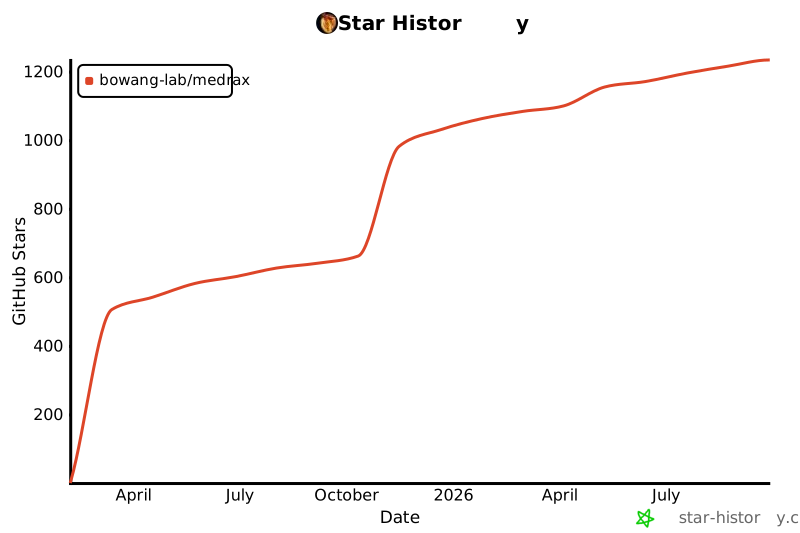
## Star History |
|
|
<div align="center"> |
|
|
|
|
|
[](https://star-history.com/#bowang-lab/MedRAX&Date) |
|
|
|
|
|
</div> |
|
|
<br> |
|
|
|
|
|
|
|
|
## Authors |
|
|
- **Adibvafa Fallahpour**¹²³⁴ * ([email protected]) |
|
|
- ****Jun Ma****²³ * |
|
|
- **Alif Munim**³⁵ * |
|
|
- ****Hongwei Lyu****³ |
|
|
- ****Bo Wang****¹²³⁶ |
|
|
|
|
|
¹ Department of Computer Science, University of Toronto, Toronto, Canada <br> |
|
|
² Vector Institute, Toronto, Canada <br> |
|
|
³ University Health Network, Toronto, Canada <br> |
|
|
⁴ Cohere, Toronto, Canada <br> |
|
|
⁵ Cohere Labs, Toronto, Canada <br> |
|
|
⁶ Department of Laboratory Medicine and Pathobiology, University of Toronto, Toronto, Canada |
|
|
|
|
|
<br> |
|
|
* Equal contribution |
|
|
<br><br> |
|
|
|
|
|
|
|
|
## Citation |
|
|
If you find this work useful, please cite our paper: |
|
|
```bibtex |
|
|
@misc{fallahpour2025medraxmedicalreasoningagent, |
|
|
title={MedRAX: Medical Reasoning Agent for Chest X-ray}, |
|
|
author={Adibvafa Fallahpour and Jun Ma and Alif Munim and Hongwei Lyu and Bo Wang}, |
|
|
year={2025}, |
|
|
eprint={2502.02673}, |
|
|
archivePrefix={arXiv}, |
|
|
primaryClass={cs.LG}, |
|
|
url={https://arxiv.org/abs/2502.02673}, |
|
|
} |
|
|
``` |
|
|
|
|
|
--- |
|
|
<p align="center"> |
|
|
Made with ❤️ at University of Toronto, Vector Institute, and University Health Network |
|
|
</p> |
|
|
# Force rebuild - Wed Dec 17 16:49:57 GMT 2025 |
|
|
|